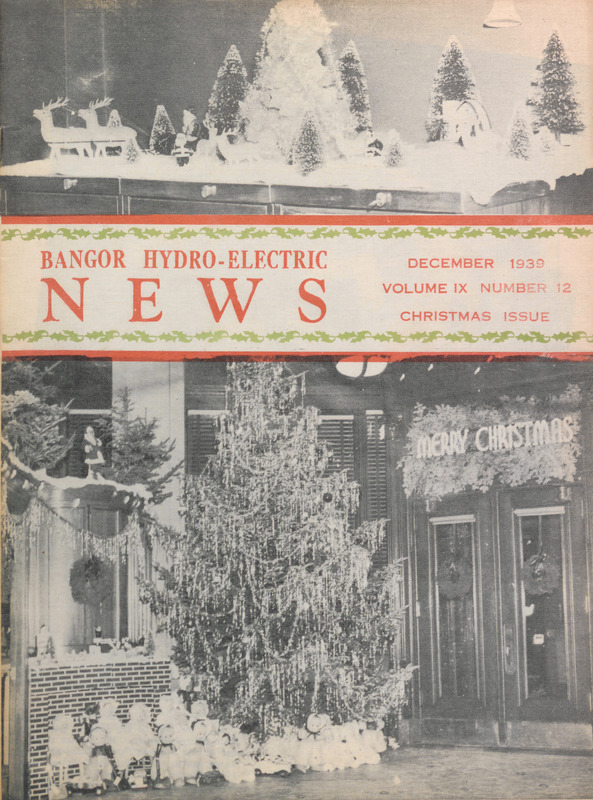
Many photos of the offices at various Bangor Hydro locations adorned in holiday decorations. Also several photos of the children of employees attending Christmas parties at the company offices, including over a dozen at the Bangor Hydro office at the corner of State and Exchange Street in Bangor.
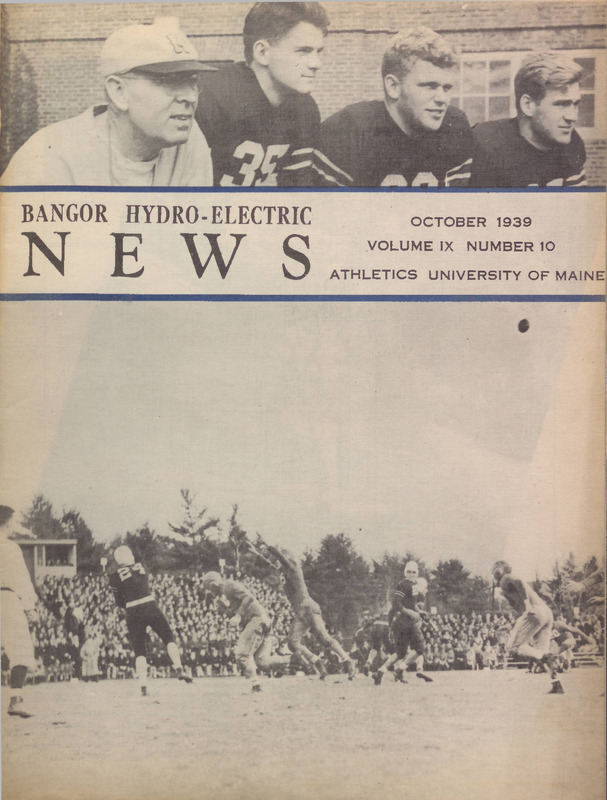
Dozens of photographs of the University of Maine, Orono, campus from 1939. Also, photographs of men's and women's athetics at the university, including a team photo of the 1939 football team, action scenes of the Bates-U-Maine football game, and pictures of women's field hockey and tennis action. In a separate section, a Bangor electrical crew installs underground cables in downtown Bangor.
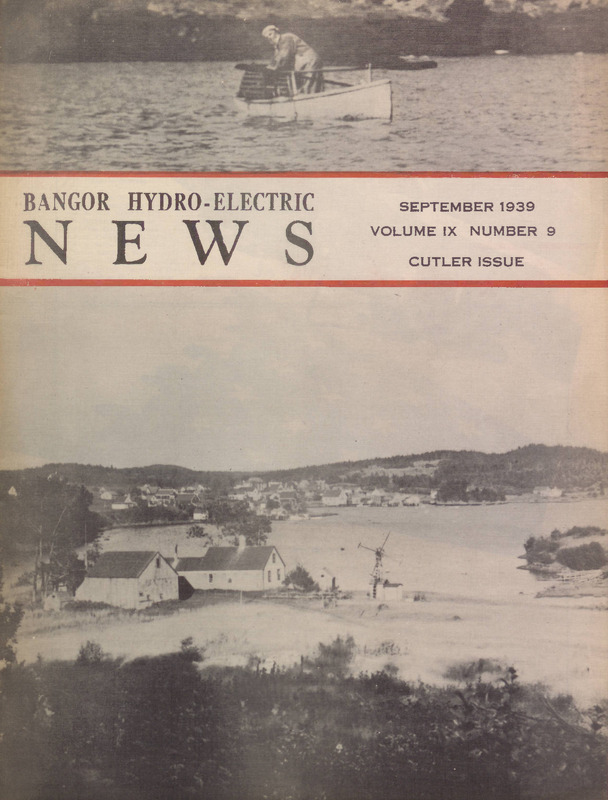
This issue covers in depth the undertaking of bringing electricity of the town of Cutler, Maine. The history of Cutler and profiiles about residents of the town at the time are also detailed.
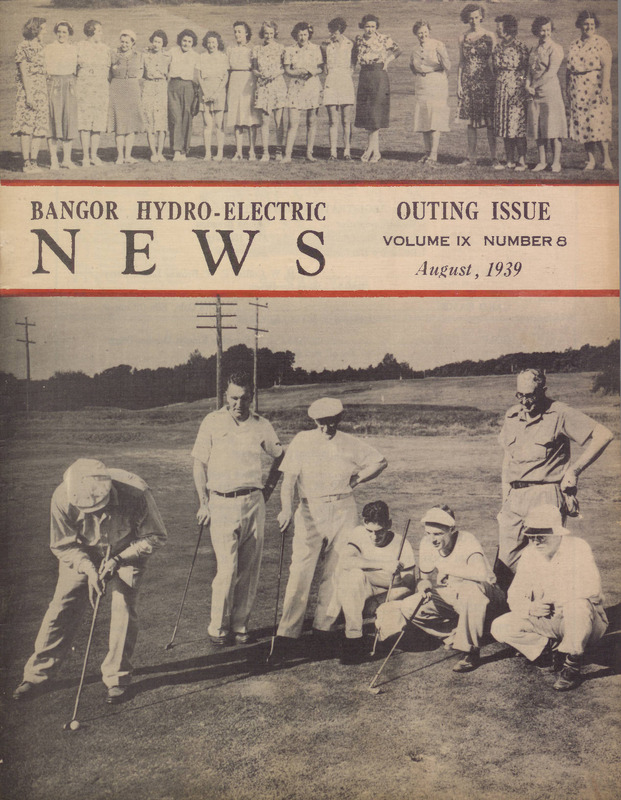
Features many photos of employees and employees' family members at the company's annual outing at Lucerne-in-Maine. Competitions were held in a variety of sports such as softball, archery, swimming, horseshoes, golf, and more.
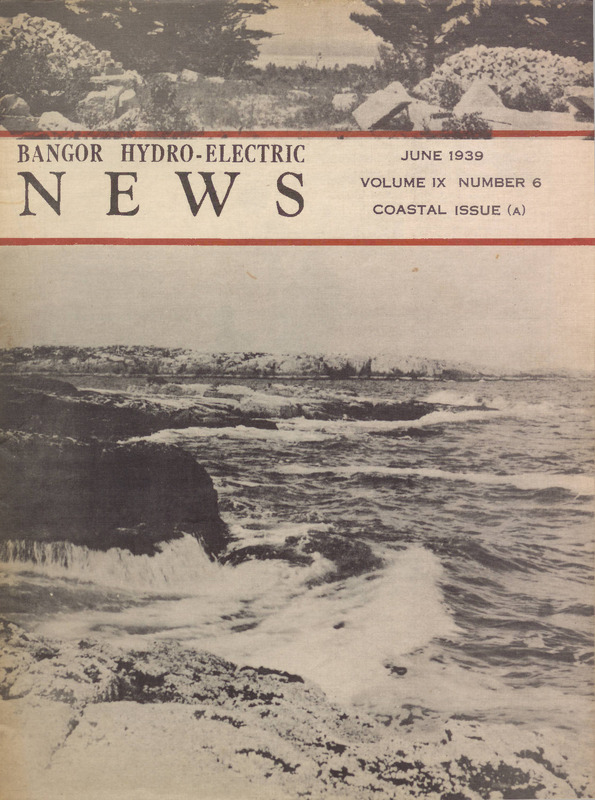
Features photographs of coastal Maine east of Ellsworth, including images from Sullivan, Winter Harbor, Frenchman's Bay, and Franklin. Includes stories about Fred Crane, "Builder of Boats and Models," the Austin castle in Franklin, and the granite quarries in Sullivan and Franklin.
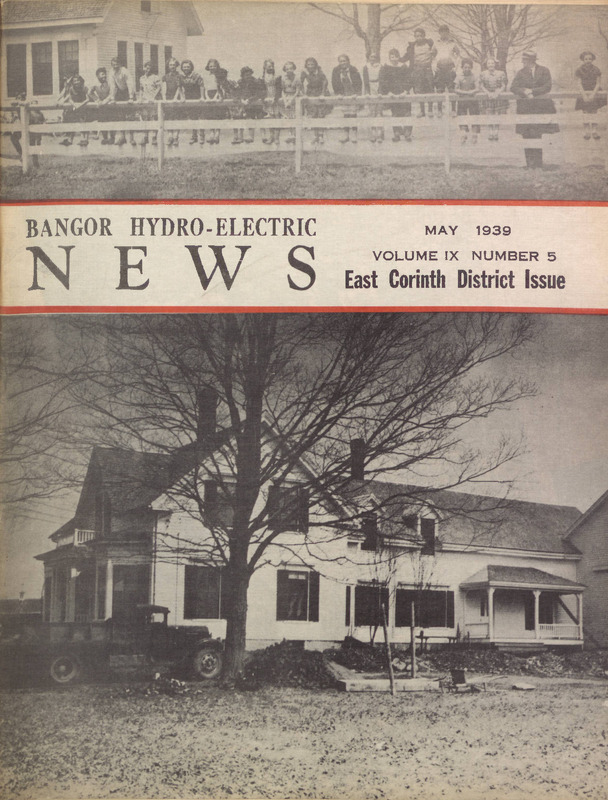
Highlights the opening of a branch office of Bangor Hydro-Electric Company at East Corinth, providing service also to Kenduskeag, Glenburn, Bradford, Charleston, Garland, and Exeter. Includes a story and photos about the Hall Brothers Poultry Farm in Garland, a photo of an H.C. Baxter & Brothers Canning Plant, and street scenes in Charleston.
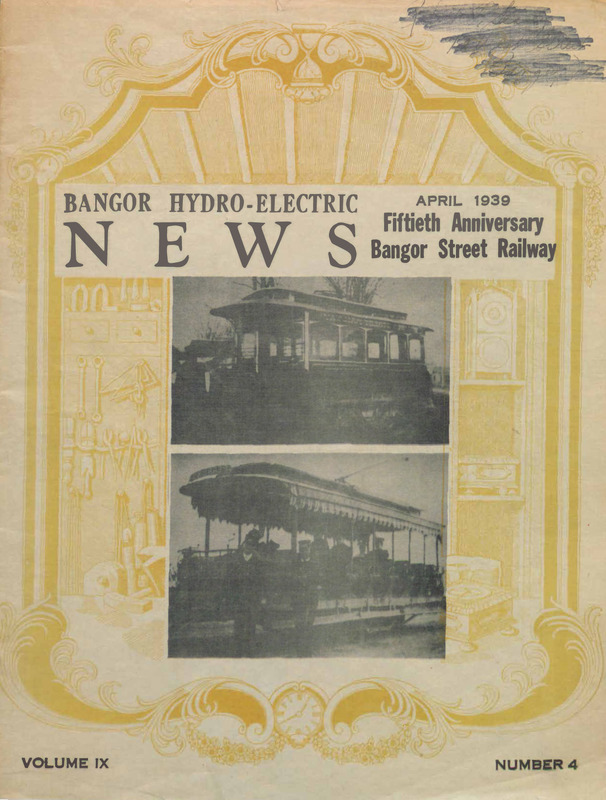
Provides a detailed and photographic history of the origins of the Bangor Street Railway from the original meetings in 1887 of city government to pursue the railway, to the 1889 introduction of the railway (the second such street railway in the U.S.), to expansion in the 1890s.
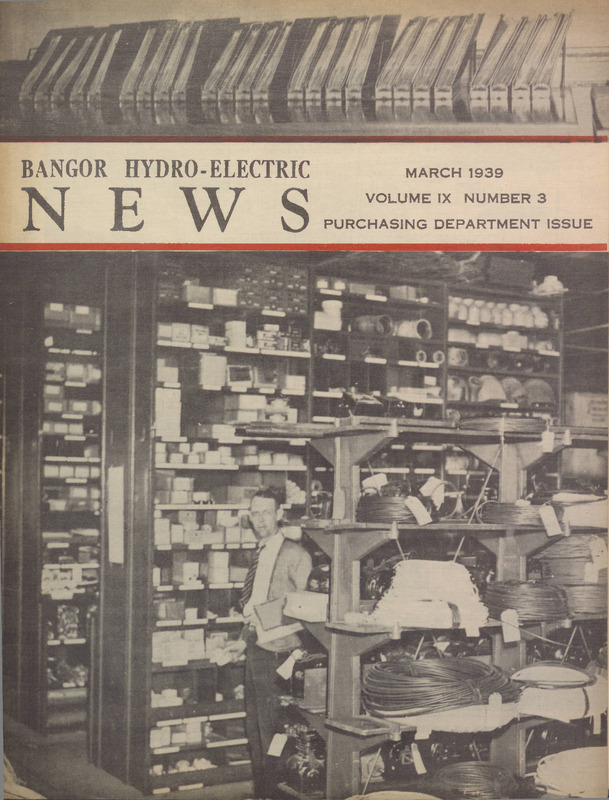
Walks the reader through the process the purchasing department undergoes to order 3,000 pounds of wire. Also includes a feature about the Quarter Century Club for Bangor Hydro employees with over twenty-five years of service to the company.
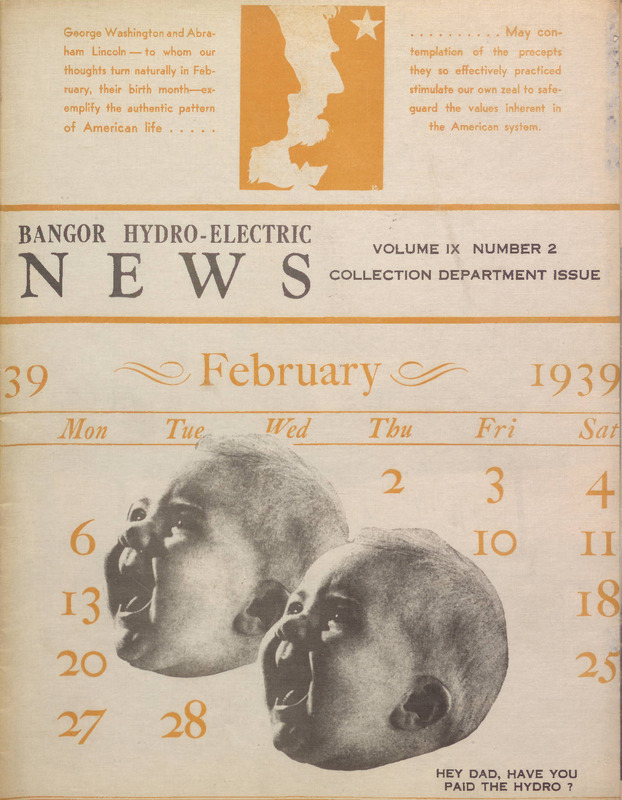
Covers the operations of the collection department, including the process for disconnection of electric service. $2.00 would be charged for reconnection of electricitiy. Issue also includes a safety program in Millinocket, a photo array of Milford employees from the late 19th century, the grand opening of an office in Bar Harbor, and more.
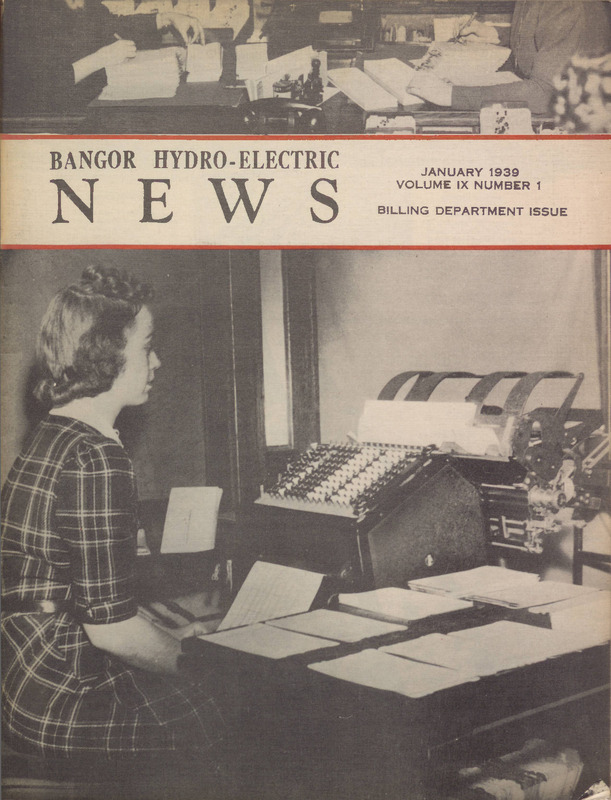
Shows the life of an electric bill from start to finish through the employees and the machines they use--machines such as a Multilith press, a graphotype machine, and addressograph machine, a postal permit and sealing machine, and a Burrough's billing machine.
"The good old Christmas spirit burst upon the Company in full force as the excited voices of 170 children echoed though offices and halls. Christmas carols, the hum of mechanical toys, and gay notes from many harmonicas seemed to blend into one happy Yuletide song as the management of Hydro entertained the children, from 2 to 12 years of age, of all divisions in the Bangor division." Many photographs from the party are included, as is the original invitation to the staff party.
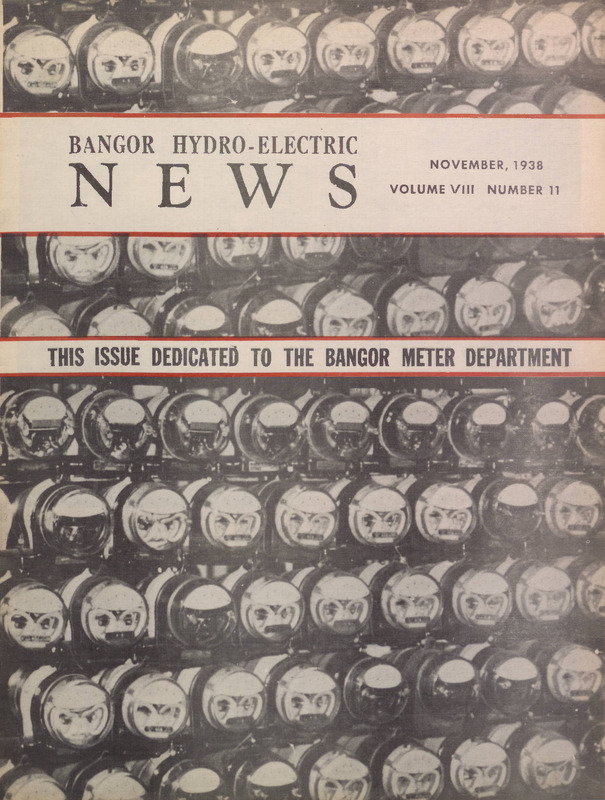
"There is something more than just training and education and environment that makes one man a good engineer and another man a clever merchant; one woman an accomplished seamstress and the next a cook with a reputation. Same are "born" engineers, "born" merchants or "born" cooks. Probably we all start thinking from the same point, the same zero hour or call it what you will. You think along one angle and I think along another, and, remember, there are 360 degrees on the compass. That doesn't mean that we have to think in opposite directions. It may be that we just don't quite see eye to eye. All of which leads to the statement that without doubt 99.9 per cent of our customers think that the meters we install in their homes or places of business are such complicated pieces of mechanism that a man must have six or eight University or Technical Institution diplomas before he can look a meter in the face without going dizzy."
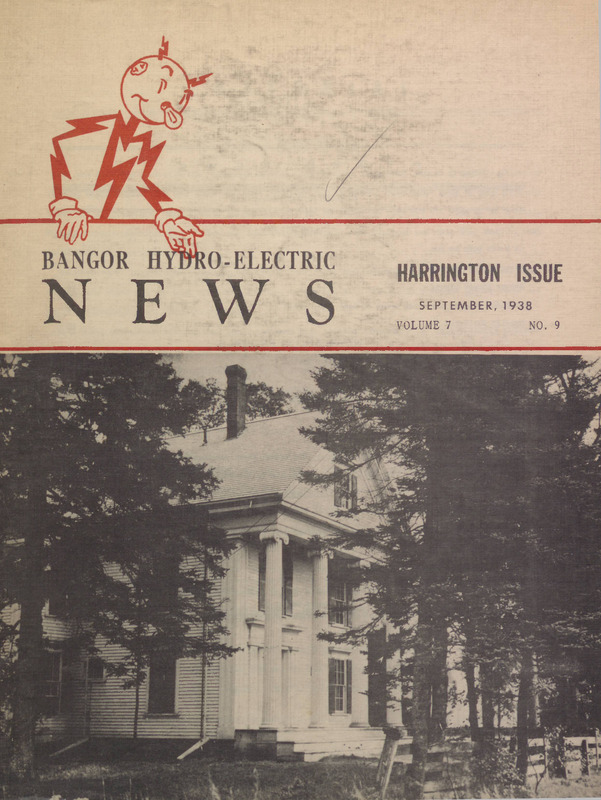
Features a history of Harrington, many photographs of the Harrington sites and buildings of the time, and the announcement of Reddy Kilowatt joining the Bangor Hydro team.
Sample paragraph: "Such a panaramic picture brings to mind the inevitable comparison of today and yesterday. Of the advances made by civilization, from the time of that first Xmas illuminated by that brilliant star. From then until a comparatively few years ago, illuminated decoration was accomplished with wax candles. Hundreds of lives every year was the price exacted by sudden fires. Then the color scheme was a pale yellow shingin on green wreaths or glass ornaments. Now we get any effect that we desire by proper choice of colored light bulbs. The flexibility and safeness of electricity not only for Christmas lighting but as a household servant cannot be over-emphasized. And as yet we know comparitively little of what electricity can be made to do."
Our Railway: This issue of the Bangor Hydro-Electric News is dedicated to our Railway Department. It is therefore fitting and proper that we should comment upon the place and importance of our Railway in the communities which it serves. In this day when it seems that everybody in the world has an automobile and that motorized transportation is well nigh universal, it is well to point out that our Railway was the second street railway to be established in the United States. The first car was operated in April 1889. Service has continued from that time on. At the present time our Railway carries over three million passengers a year. Our cars travel over a million miles a year in the performance of their services and it takes then more than one hundred and twenty thousand hours in service to maintain their schedules.
Covers the history of the carbarn (garage for the street cars of the Bangor Street Railway) as well as featuring several pictures of the workers responsible for every aspect of the street cars, from the stockkeeper to the iron workers to the blacksmith to the electricians and the carpenters and the mechanics.
Includes the words to the Bangor Hydro Song (to tune "Among My Souvenirs"): This Bangor Hydro crowd / Will raise their voices loud / With Joy and glee to be here on thls glorious day / Our friendships stand the test / Our men are of the beat / Our girls will alwayes be within our memorles / We all work with a will / Wishes we try to fill / And we all do our best / For perfect satisfaction / This happy company / In many years to be / Will live in memory among our souvenirs.
Includes the announcement of new home construction projects by Bangor Hydro in Bangor, including on Royal Road -- a picture of a home at 114 Royal Road is featured on the December 1937 cover of Bangor Hydro Electric News. "Early this week construction is being started on the first Kelvin Home in Maine. It is being erected by the Bangor Hydro-Electric Company, end as announced by President Edward M. Graham, its completion will help to point the way toward moderate cost homes that will offer the latest and most modern facilities for cutting the cost of better living. This first Kelvin Home will be located on Royal Road in the Fairmount section of Bangor. Charles R. Gordon is the real estate agent and William H. McPherson is the contractor-builder. Mr. Graham and other officials have inspected several of the Kelvin Homes erected in other sections of the country and at Detroit they have seen the results of study by Kelvinator'e own research and engineering departments in their work with a number of the country's leading architects and builders. This home will have efficient, economical equipment for year 'round air-conditioning, electric cooking, refrigeration, and water heating and is so designed and constructed that it should cost the family living in this new home no more that it would cost the same family to live in an ordinary house."
Sample paragraphs: "The picture on the cover of this month's magazine shows the type of cars used when the Bangor Street Railway first started, back in the '90's. Mr. Johnson, Superintendent of Transportation, states that the motorman shown on the front platform of the car was Capt. Joe Wentworth who was the first motorman to operate on electric car in the city of Bangor, and as Bangor was the second city in the United States to have an electric street railway, Capt. Wentworth was, no doubt, the second man to operate an electric car in the United States. Capt. Joe also helped to erect the trolley wire for the Bangor Street Railway before the cars were put in operation."
Describes the festivities of the annual employee outing/retreat at Lucerne-In-Maine. Also includes reprints of an August 27, 1936, Bangor Daily News article detailing Bangor Hydro forming the first mobile relief unit in the state and the second in the entire United States.