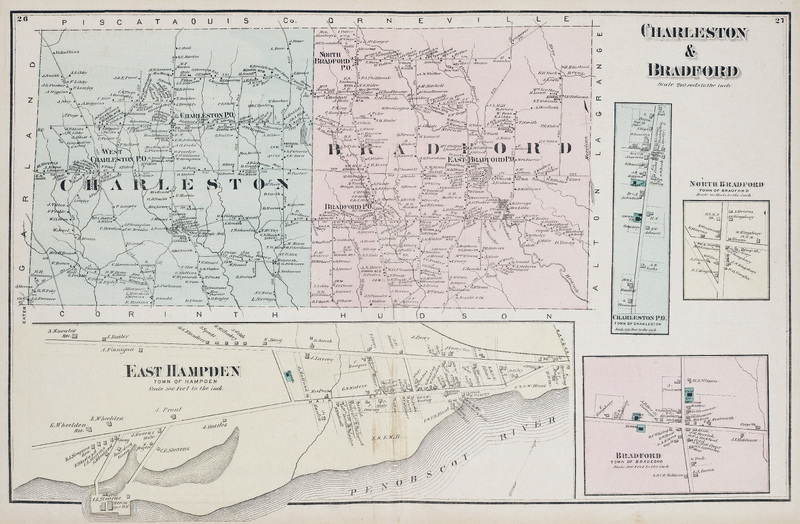
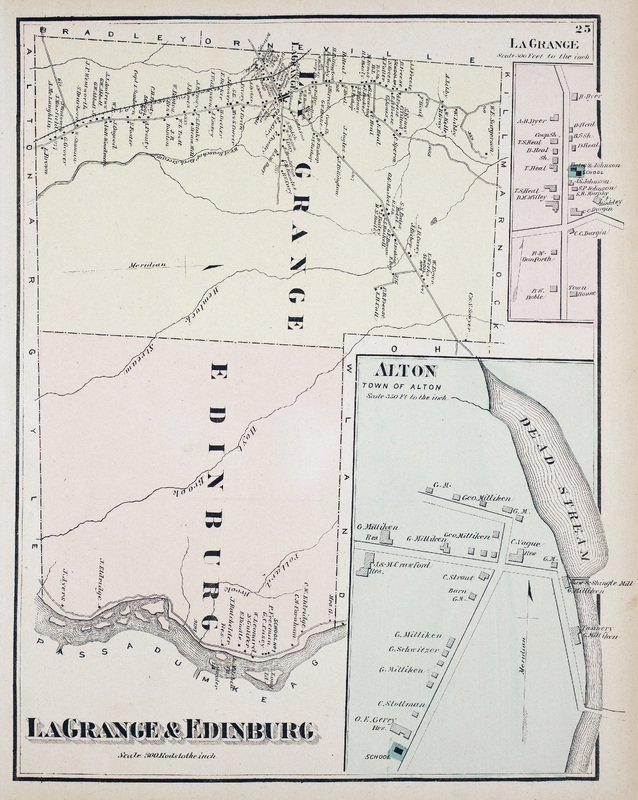
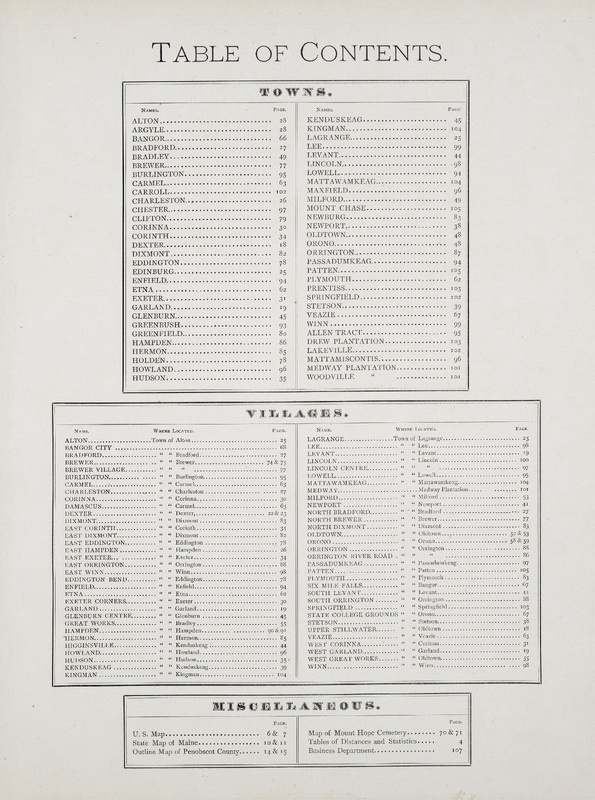
Map of Charleston and Bradford in Penobscot County, Maine. Scale 240 rods to the inch. Includes detail maps of East Hampden, Charleston, North Bradford, and Bradford.
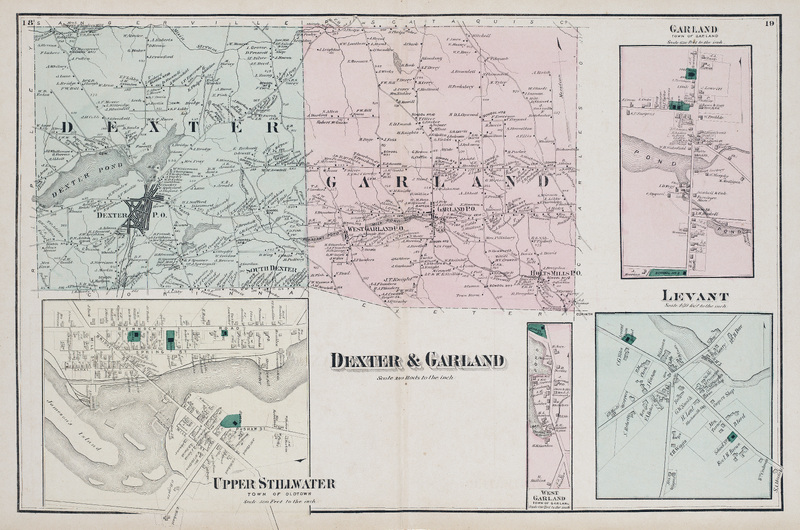
Map of Dexter and Garland in Penobscot County, Maine. Scale 240 rods to the inch. Includes detail maps of Upper Stillwater (Town of Old Town), Garland, West Garland, and Levant.
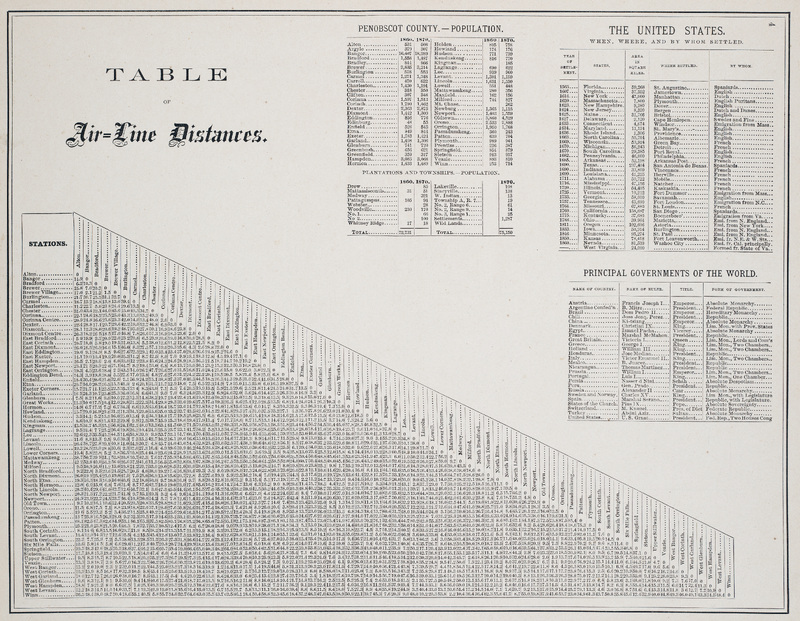
Table listing air-line distances between the towns in Penobscot County, Maine. Also includes information about the population of Penobscot County towns, plantations, and townships in 1860 and 1870.
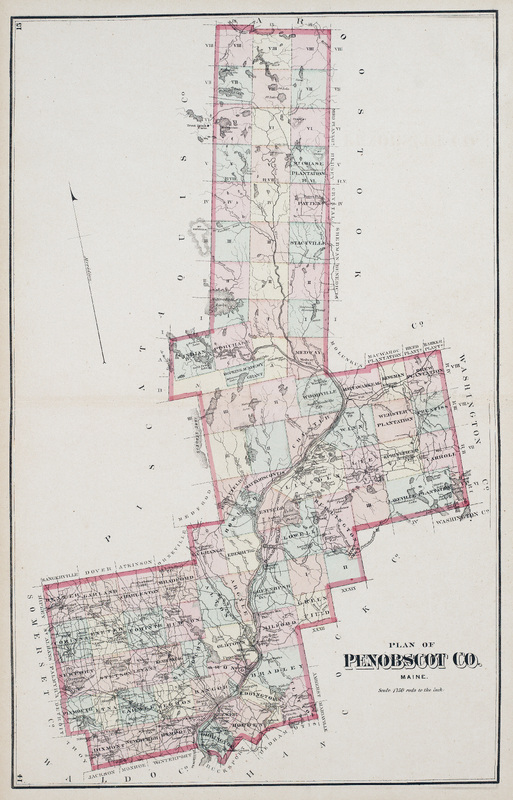
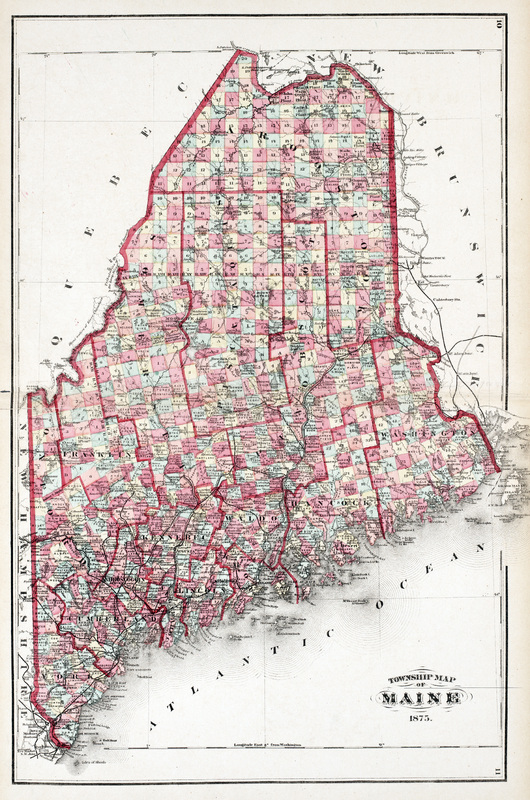
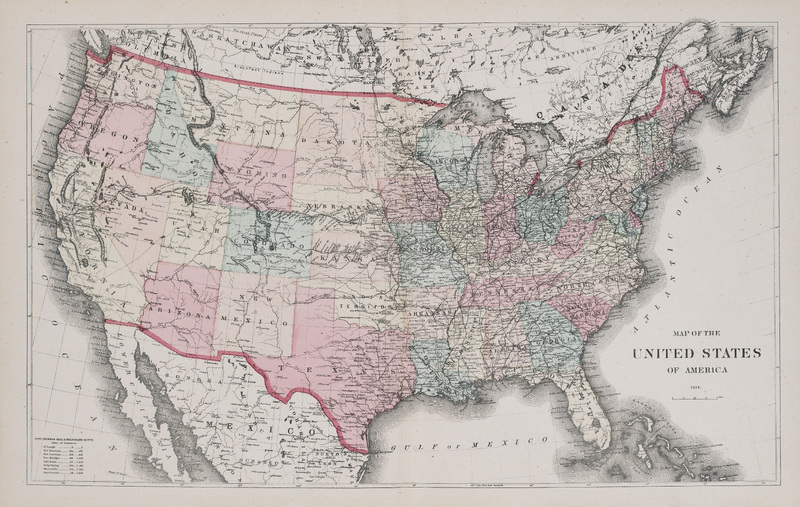
Atlas of Penobscot County, Maine. From Recent Actual Surveys & Records Under the Superintendence of W. A. Sherman. Published by Comstock & Cline, 27 Warren Street, New York. 1875.
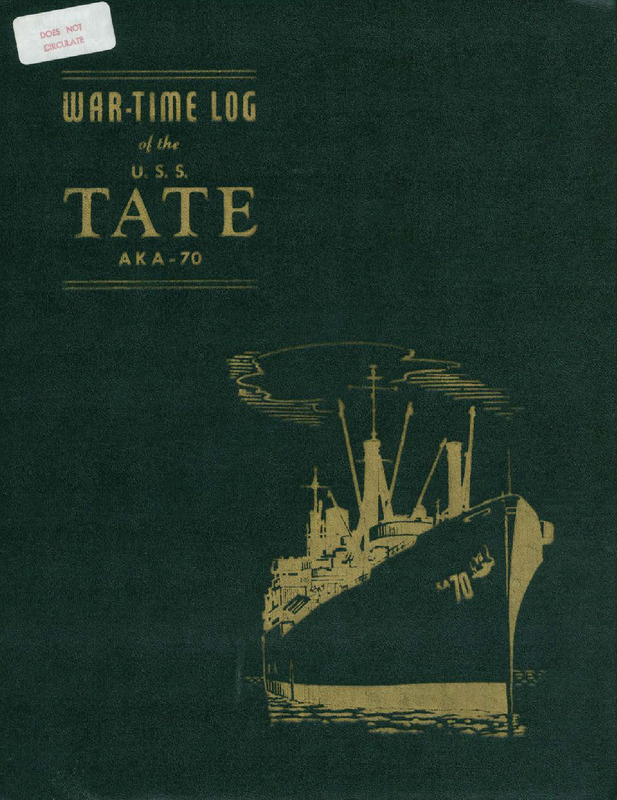
Foreword: Between these covers is preserved a record, in pictures and text, of life aboard the U.S.S. Tate during her war-time voyages, and of her many ports of call. A good ship with a good crew, she carried us through many difficult situations and did her part with honor in a great war. We shall never forget her.
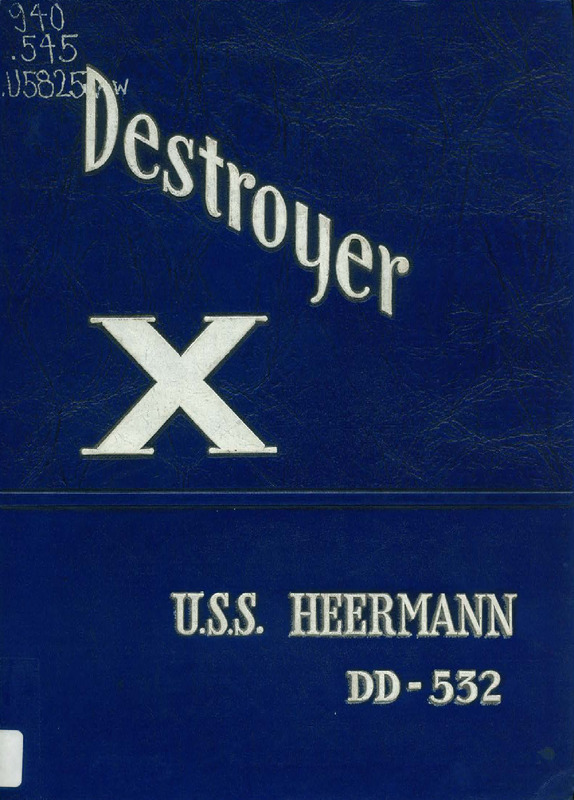
"It was the sixth of July in 1943, she had just been commissioned. Within the course of time she would be called many names, some spoken in anger, some in fear, some in pain; but now she was the U. S. S. Heermann (DD532.) The gods were pleased. The crew was like the country they served. They came from east and west, north and south. They'd been farmers, students, grocers, salesmen. They were of every color, every creed. We were lucky, there were a few old hands aboard to help build a fighting crew for a fighting ship. Then came the shakedown cruise. There is nothing under the sun like a shakedown cruise. It's indescribable but it gets results. After that period in San Diego we began to look as if we had "been born on the crest of a wave and rocked in the cradle of the deep." Shakedown gave us forewarnings of things to come and suddenly it became apparent that fighting a war was hard work and lots of it. On the first of October, after another brief session in the yard, the powers that be decided that the Heermann was ready to go out and win her spurs. So we headed out toward the islands. That last look at the Golden Gate Bridge always seems to be the one that hurts the most. All of us knew it would be many a day before we would be Stateside again, but we were ready-we had the finest ship in the Fleet and the finest group of men alive to fight it."
From The Ship's History: The writer of this history, neither an historian nor a member of the ship's company, has tried to make it an exercise in objectivity. Yet, in reading the logs and action reports, he has come to a certain feeling and conclusion. It is that the performance and accomplishment of DD663 may be directly linked to the performance and accomplishment of all her crew ... rather than to individual heroes. That her men unconsciously felt this may be seen in the name they called her with pride and a little awe. She was "Task Force 663"--a coordinated machine. To all who served in her, let that be high praise ... for DD663 herself let it be an epitaph.--Lt. William J. Colilan, Jr., U.S.N.R.
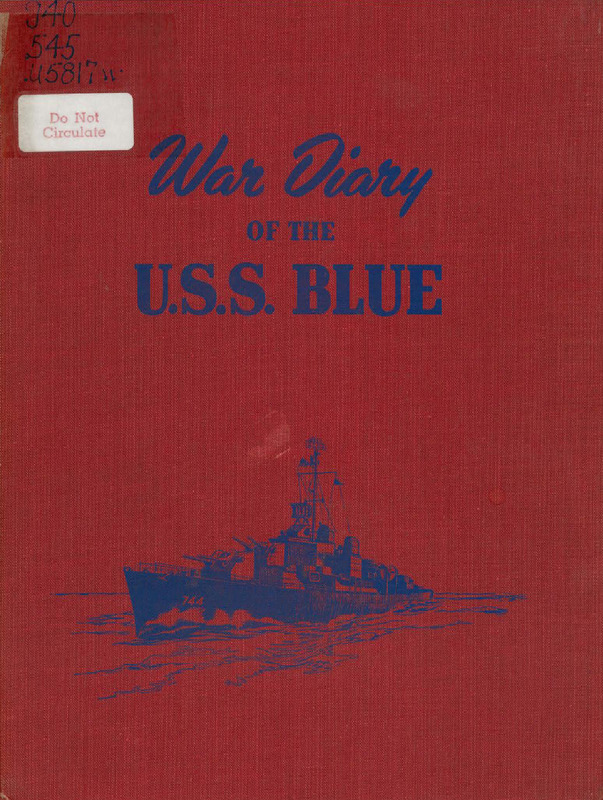
"On November 30, 1943, the destroyer Blue was launched in the Bethlehem Steel Shipyard, Staten Island, New York. She went into commission on March 20, 1944, in the New York Navy Yard, Brooklyn, New York, with nineteen officers and 3 3 5 enlisted men aboard. The Blue was one of the first 2,200 ton super-destroyers to be commissioned in the navy, and was named after the 1,500 ton U.S. S. Blue (DD387), which was sunk in the Solomon Islands Campaign in 1943. The first Blue was named in honor of the late Admiral Victor Blue and his son, Lieutenant-Commander John Stuart Blue, who was killed in action in the South Pacific."
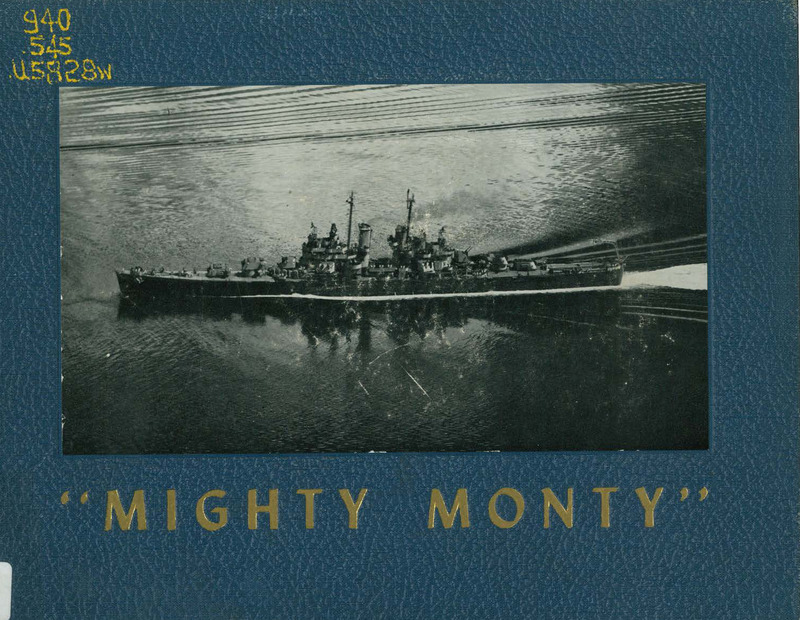
Foreword: This so-called War Diary is an honest attempt to record a brief chapter in the young life of a gallant ship. No effort has been made to glamourize her deeds; no claim has been made that she fought the war single-handed; no single incident or group has been intentionally emphasized or omitted. The Monty was a workhorse from the Solomons, through the Marianas, the Philippines, the Nansei Shoto, and into Japan proper--for thirty-six long months she successfully fulfilled her missions. So for posterity we preserve herewith her experiences, as seen from her decks and from her spotting planes. author unknown
The U.S.S. Westmoreland (APA 104) was commissioned a Navy vessel by Captain H. V. McKittrick, USN, representing the Commandant Third Naval District, at Hoboken, New Jersey, on 18 January 1945. Captain James "M" Hicks, USN, assumed command. The Westmoreland was named for the counties of that name in the States of Pennsylvania and Virginia. The latter county is the birthplace of George Washington and Robert E. Lee. The keel of the Westmoreland was laid on 7 December 1943 at Pascagoula, Mississippi, where she was built by the Ingalls Shipbuilding Corp. for the U. S. Maritime Commission. After construction was completed, she was sent to Todd Shipyards, Hoboken, New Jersey, where she was converted to an APA (Auxiliary Transport-Attack) .
Introductory Note: World War II is now history. Volumes will be written about it, covering every phase of strategy, politics, logistics. Generals, admirals, prime ministers, presidents, and historians will all have their say. But for those of us who served aboard the Ticonderoga, the war was Reveille at 0315--mail call 7000 miles from home--a TBM in the drink--two cans of beer on "beautiful Mog Mog"--basketball on the hangar deck--and 21 January 1945. The simple purpose of this book is to preserve in pictorial form the scenes, the events, and the memories of the part played by our ship and our shipmates.
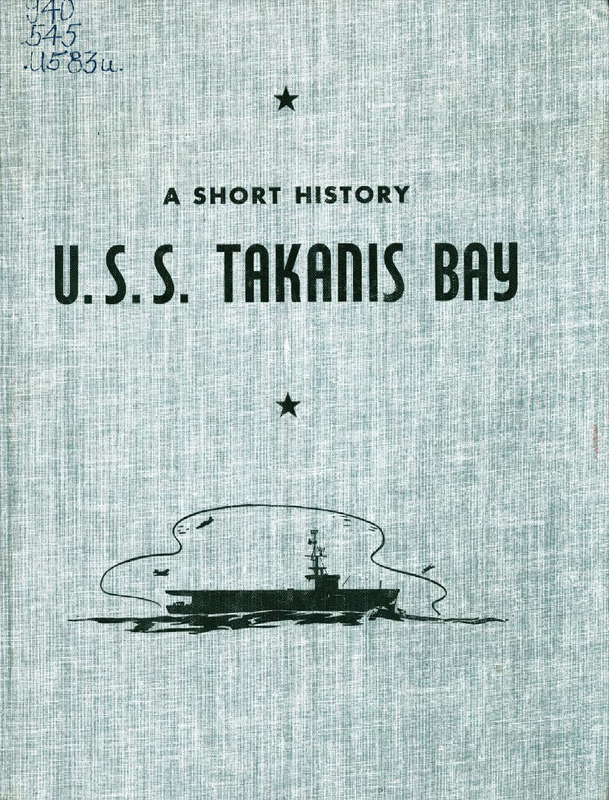
Opening Passage of "History of the Takanis Bay": The tale of the U.S.S. Takanis Bay (CVE 89) begins long before the keel of Hull 89 was laid by the Kaiser Shipbuilding Company. Like so many of the Casablanca Class carriers, the "T.B." was named for a peaceful little bay in Southeastern Alaska. Author: E.G. Hines, USNR
U.S.S. Saidor launched in March 1945 and was decommission in September 1947. The Saidor served as a photographic laboratory for the atomic bomb testing program, Operation Crossroads. This book chiefly shows photographs of the crew in action aboard the ship. Photographs are included of all the men aboard with their divisions.
Foreword: Bound in this volume is the history of your ship the U.S.S. Pasedena. This book has been written by the officers and men of the ship upon which you so gallantly served. The pictures cover the whole course of the war in which the Pasadena took part, including its launching and commissioning. The narrative is non professional and each department's History was written by one of its own officers or men. To those of you returning to civilian life this book will serve as an informal record of your service in the Navy.--Editors
On April 27, 1944, the escort carrier Makassar Strait (CVE 91), joined the United States fleet. The Navy had only recently started on the long road of island-hopping to Tokyo. On January 14, 1946, the same carrier sailed her "last mile" to a Tacoma pier, to be placed "in commission in reserve." The war had ended five months before; most of America's fighting men had been returned to their homeland. The "Mighty Mak" had completed her mission in World War II. The job was done--well done. In the twenty-and-a-half months between those two dates, the baby flattop had been called upon to serve in a great variety of assignments. She had fought in direct support of landings and invasions; given aerial protection to the vital life-lines of supply to a fleet operating far from land bases; ferried many loads of planes to vital outposts; given training to hundreds of pilots enroute to front-line carrier duty; served as an experimental station afloat; and, when the fighting was over, scurried back and forth between Pacific islands and the West Coast bringing veterans home on the "magic carpet." During this period, the Mak churned up a wake through more than 115,000 miles of Pacific ocean --a bout half way to the moon. Over fifteen thousand times Navy pilots had brought their Avengers, Wildcats, and Corsairs down on her sturdy flight deck. This was the record of the 10,000-ton box-shaped floating airfield ... This is the story of the "Mighty Mak."
From U.S.S. Herald of the Morning Log The U.S.S. Herald of the Morning built for the Maritime Commission as a C-2 cargo ship, and converted by the Navy into a medium-sized transport, spent most of her time as a Naval auxiliary in Pacific theatre amphibious operations during the war. This ship engaged in five amphibious operations, several re-enforcement runs into forward areas and was under enemy attack frequently but successfully eluded damage. Since the cessation of hostilities the Herald operated as part of the "Magic Carpet" and the Naval Transportation Service, evacuating Army and Navy personnel from the Pacific areas and carrying replacements to forward stations. Built by the Moore Drydock and Shipbuilding Company of Oakland, Calif., in the summer of 1943, she was named for the American sailing ship "Herald of the Morning" which was famous on both oceans in the second half of the 19th century as a fast and beautiful medium clipper. The new Herald made one trip to the Hawaiian Islands as a merchant cargo vessel before being taken over early in 1944 by the Navy for conversion into an auxiliary transport.