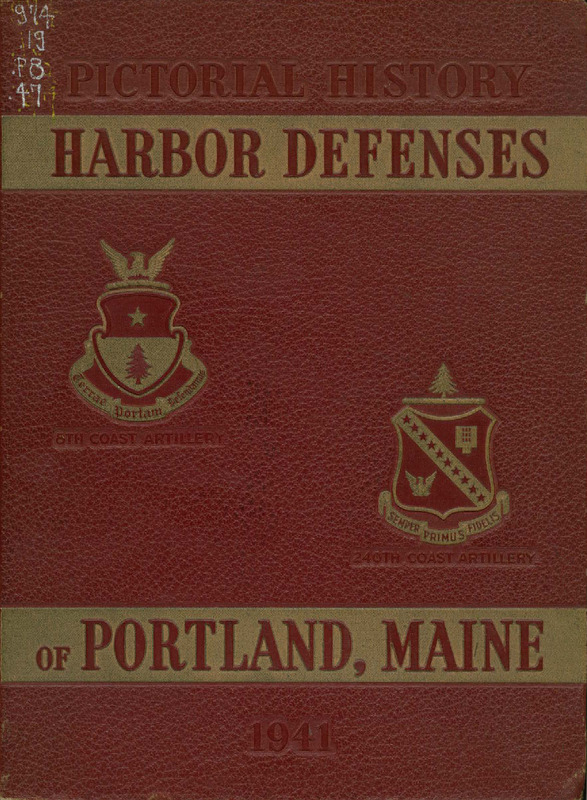
The Harbor Defense Headquarters Battery, recently authorized, was formed in May, 1941 and was composed of General Garrett, Harbor Defense Commander; Lieut. Colonel Hoge, Executive; Major Davis, Plans and Training Officer, and 2nd Lieut. Potter, Assistant Adjutant. In August Lieut. Col. Lins replaced Lieut. Col. Hoge as Harbor Defense Executive, and Colonel Hoge became Post Commander at Fort McKinley.
When he arrived in Camp White, Oregon, on that spring day in 1943 few men of the 299th Engineer Combat Battalion realized the vigor and perseverance concealed beneath the pleasant face and sto.cky body of Lt. Col. Milton A . Jewett. His easy going movements and slow speech gave no hint of his abilities which later were recognized by the highest quarters and ultimately led to the award of the Distinguished Service Cross. Colonel Jewett, we never had the time nor the place to express to you our sentiments. Therefore, we are devoting this page to you and with it our best wishes for a future as fine as your army career. -The Officers and Men of the Famous 299th
Forward "This book is not intended as a History of IX T.A.C., neither is it an evaluation of the Command's contribution to Victory in Europe. Such a story will be written elsewhere. Instead it is being composed because we--the Officers of IX T.A.C.--want to keep alive in our minds eye the fond associations and the satisfying memories of life in our Headquarters; to call to mind the genuine companionship and decent fellowship for that day when such values become good to remember. This is Duffy-s Tavern, with a 10 cent top for the best in the house, and genial Bob Straight in charge. This book is an unpretentious attempt, sketchy and incomplete though it necessarily be, to capture here and there in this series of photographs something of the associations of this period. Many of the men who did most to create this spirit of good fellowship have passed by us on the road to war. These men we salute. One word more; if at casual glance there appears a frivolous note, remember that these were not frivolous days. For there were days here too without mail, days full of the anxiety of separation, monotony and loneliness, and these were the associations which eased the Pressure when a Chaplains punch wouldn't do the trick. And to us it has a kind of symbolism. It taught us that no matter where Americans are placed they will make the best of the situation. Deeper than that, it taught us that while fighting a vicious enemy, those powers of darkness who would destroy our way of life, we could at the same time, forge a closer bond of unity between men of good will--Americans of all ranks, all shades of opinion and all religious faiths. It was, if you will, Democracy in action. Here are the scenes touching on a spirit we will never forget. Reminder of the days when, far from home and those we loved, we brought cheer to one another and carried on in the name of Justice and Peace."
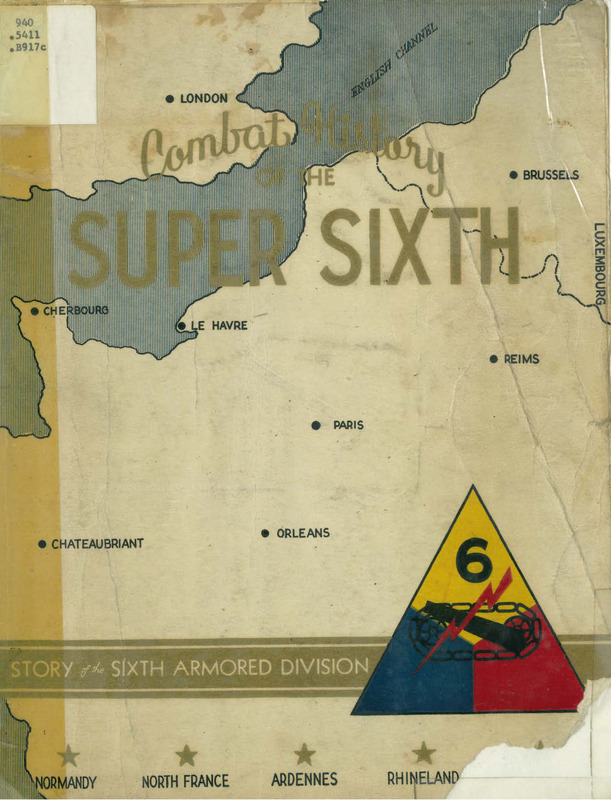
Introduction ''Combat History, The Super Sixth" is a compilation of data from many sources, but by far the greater part of the material was obtained from after-action reports prepared by the G-3 Section, 6th Armored Division, under the direction of Major Clyde J. Burk, Assistant G-3, with Lts. Hunter Haines, Chester Kneller, Bernard Yaeger, and Paul Cundiff assisting, and appears here under Section II with slight variations. Credit is given to Lt. Col. Ernest W. Mitchell Jr., G-2 of the 6th Armored Division, for his preparation of the material used as a base for Section I, the story of the 6th Armored Division, which gives the overall picture of the Division's role in combat operations in Europe, and for his permission to use same. The charts and other data presented in another section of this book were chosen from material compiled by the Office of the Chief of Staff under the direction of Captan Cyrus R. Shockey, Aide-de-Camp, and art work was done, for the most part, by Sgt. Frank X. Scalise, G-2 Section. Photographs were made by official U.S. Army Signal Corps photographers and the Publisher. To the above named individuals, and also to the staff of the Division I & E Section and Public Relations Office, the Publisher wishes to express his appreciation for the use of the material and for the cooperation which made the compilation of this history possible. Although this book is not an official publication, much of the material contained herein was taken from official records, and the remainder has been carefullv checked to avoid any misrepresentation of facts or figures. It is regrettable that this type of history does not provide for the mention of the many gallant individual achievements which so characterized the men of the 6th Armored Division, whose "esprit de Corps" was second to none in the U. S. Army. However, the reader may well see reflected in this impersonal record the loyalty, devotion, and sacrifices that made this smooth functioning, fighting team such an important member of the Armies on the Western Front, and enabled it to finish all of its missions with the satisfactory label--"Success"-- inscribed thereon. William E. Rutledge, Jr. PUBLISHER
Foreword Bound in this volume are memories of the 120th Evacuation Hospital (SM)--an evacuation hospital which served during World War II in an unusual capacity, i.e. rendering medical and, surgical aid to Political Prisoners and Displaced Personnel at Buchenwald near Weimar, Germany, and Cham, Bavaria. In that most of the members of the organization will return to civilian life, this book will serve as an informal record of their service in the army. William E. Williams, Colonel, MC Commanding
This book is for and about the men of Battery "A", 391st Armored Field Artillery Battalion. It tries to relate, in detail, what happens while a war is being fought. It tries to tell what men do and think while under the strain of battle and what they do when one battle is over and preparations are being made for the next one. It started to be a history, but histories are cold and lifeless and in a story about a group of one hundred men it is possible to include intimate details of a lot of the things that happened.
The 963rd Field Artillery Battalion originated as a component of the Connecticut Militia, which consisted of companies formed in 1639 to protect the original colonies. These companies were in turn organized in the year 1739, into the 3rd and 4th Infantry Regiments of the Connecticut Militia, which remained in colonial service until 1776. In that year they became part of the State Militia of Connecticut and served during the Revolutionary War in such historic campaigns as those around New York, The Danbury Raid, and the Battle of Saratoga.
From A Spearhead Regiment (the book's introduction): "When the blood, sweat, and dirt of war become memories, who will remember the " little things" that GI Joe did, to make war just "a memory"? We will, of course. The 90th Division through its battles and conquests will go down in the annals of history as one of the finest and bravest Division of World War II. After our return to civilian life it will give us great satisfaction to look back at ourselves as were in combat, arid to see ourselves as the heroes of the 359th, one of the great regimental combat teams of the war. We have collected many pictures; all but a few taken by GI Joe himself on the battlefield. Insofar as photography is concerned, some photos could be better, but that doesn't really matter. They show us things as they were, and as they actually happened with no dressing and special poses. They show us as we were at the time we helped make history. We have no pictures of D-Day. Men are not in the mood to take pictures while all Hell is breaking loose around them. Storming the "Heinies" well fortified positions was work enough for that day. Landing on Utah Beach amidst the heavy fire of the enemy was a remarkable achievement. There were a few pictures taken by those few men who can do their job plus under any conditions; but the pictures were unable to be located. However, those men who were on the landing need no pictures to remind them of it. Nor will those men of the 2nd Battalion who were on the transport, "Susan B. Anthony", when it struck a mine and sank on June 7th ever forget. The transport stayed afloat just long enough to enable rescue of all the men. These men were loaded swiftly into small boats amidst gun and shell fire. By the night of D plus I, the bulk of the regiment was assembled on the beach. The supporting units were ashore D plus 4. Those of you who remember this incident have a picture that is printed indelibly in your memory."
Little mention is made anywhere of the actual work of the men who operated the heavy equipment for long hours, sometimes within artillery or mortar range of the enemy, or of those who moved that equipment over long miles' of bad roads in good and bad weather, with C Rations often their only food for days. On occasion, true, these men found a "home" along the way, finding pleasure and entertainment as well as rest and comfort, but not always. No idea is given of the hours spent by clerks, handling routine matters and emergency reports, in cold (or hot) tents, or in buildings, as chance would have it. Nor of the draftsmen who made charts, preliminary drawings, drawings of changes, final drawings. Nor yet of the drivers who, with or without patience, carted officers from airfield to airfield, or from site to unsafe site in search of information, or back to Paris over ice and snow to chase supplies or attend a school. Of the cooks who fed their company three meals a day for 27 months, on the move or in permanent stations. Of the thousands of hours spent encoding, decoding, transmitting and receiving signal mes sages, or of the thousands of calls placed to Paris, "Roadbed", "Rowdy" or "Research." And yet, it takes all of that to add up to the total mission accomplished.
This booklet is dedicated to the forty-one officers and men of the Eighty-First Chemical Mortar Battalion who made the supreme sacrifice. To give a thorough account of the accomplishments of the Eighty-First Chemical Mortar Battalion would take thousands of pages. To detail the heroic deeds and meritorious service of the gallant officers and men of the Eighty-First would take more thousands of pages. A booklet the size of this could be written about each enlisted man and .each officer. It is be{ieved the history is concise, yet shows the battalion to have lived up to its motto, "Equal To The Task." • Jack W. Lipphardt, Lt. Col., C. W.S., Commanding
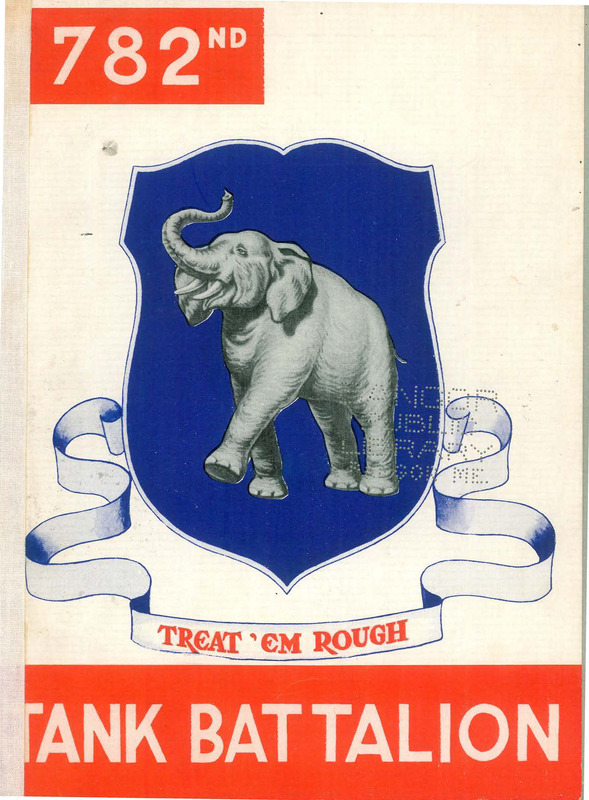
This little history from 1 February 1943 up to the time of arrival in the ETO has been prepared so that present and former members of the battalion may have a few notes to recall some of the humorous, routine and sometimes serious moments of their days in the 782nd Tank Battalion. All facts and figures are obtained from the official Battalion History which is filed in the Historical Section of the War Department, Washington, D. C. What is to follow has been reworded slightly to make easier reading and if possible to add a laugh, give credit or to add a few bits of information that would ordinarily be lacking from an official communique.
Basic training had its usual ups and downs. A lot of the boys were introduced to tanks for the first time--and took to them as smoothly as a shell fits into the breech. By the time the outfit was well into its basic education it furnished enough trained personnel to form the cadre for the 7 42nd tank Battalion. The new baby was commanded by Major Hausman, formerly S-3 of the 752nd. Command of the 752nd parent organization at this time was taken over by Major George F. Bender who had been the Battalion Executive Officer under Col. Anderson. Most of the kinks of basic training had been ironed out when 752nd left Fort Lewis on April 13, 1942, headed for the Desert Training Center at Camp Young, near Indio, California. Here we started the rough work which was to result in one of the best trained tank outfits in the open market. The outfit was part of the first Tank Group which also included the 755th Tank Battalion. Notes: (1) Includes roster and (2) written while the battalion was stationed in Italy
This Brigade was organized September 23, 1940. The Commanding General is Brigadier General William A. March. It is composed of the Headquarters Battery, 73rd Field Artillery Brigade (Corps) from Philadelphia, Pennsylvania, the 141st Field Artillery (the Washington Artillery) from New Orleans, and the 166th Field Artillery drawn mainly from in and around Philadelphia, Pennsylvania, and from what is known as up-state Pennsylvania. The 155mm gun, tractor drawn regiment, the 190th Field Artillery, was formerly the 103rd Cavalry and is composed of units from the central and western part of the state of Pennsylvania. The Brigade Headquarters, when formed, was converted from the Headquarters 22nd Cavalry Division, Headquarters 52nd Cavalry Brigade and Headquarters 122nd Medical Squadron which had a history dating back to 1921, having been so organized when the National Guard of the United States was reorganized under the National Defense Act.
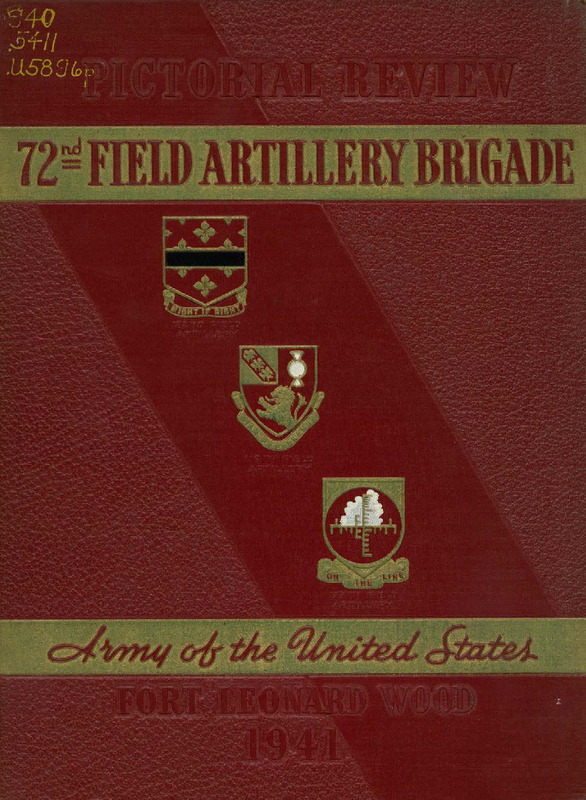
The 72nd Field Artillery Brigade, although composed of veteran troops, is a comparatively new organization. It is made up of the 119th Field Artillery, the 177th Field Artillery, and the 182nd Field Artillery and was formed in September, 1940, under the command of Colonel Joseph H. Lewis, who has since been promoted to the rank of Brigadier General. General Lewis formerly commanded the 57th Field Artillery Brigade. The 119th Field Artillery, a World War Artillery Regiment of the 32nd Division, was converted from a light artillery regiment to a 155 millimeter gun regiment by Special Order 224, Adjutant General's Office, State of Michigan, September 18, 1940, and assigned to the 72nd Field Artillery Brigade. It is commanded by Colonel Glenn W. Carey. The 182nd Field Artillery, formerly medium artillery of the Sixth Corps, was likewise transferred to the 72nd Field Artillery Brigade, remaining a 155 millimeter howitzer regiment. Colonel George V. N. Lothrop is in command. Fire power was completed by the addition of the second Howitzer Regiment, the 177th Field Artillery. The regiment was formed from ,all the Michigan units of the First Squadron, 106th Cavalry, and of the 107th Quartermaster Regiment, and is commanded by Colonel Russell G. Simpson. On the 7th day of April, 1941, the 72nd Field Artillery Brigade was inducted into Federal Service in accordance with a Presidential Order dated January 11, 1941. Induction having been completed, the Brigade proceeded by rail and motor convoy to Fort Knox, Kentucky, where it began the early stages of its preliminary training. While at Fort Knox, the Brigade lived under canvas and experienced many uncomfortable periods of inclement weather, which alternately subjected the personnel to deep mud and fine dust, indoors and out. The Brigade remained at Fort Knox until June 1, 1941, and then proceeded to its first permanent station at Fort Leonard Wood, Missouri, arriving there June 2nd.
The first companies of the Regiment entered combat on the twenty-third of October, 1944. They relieved elements of the 315th Infantry Regiment of the 79th Division east of Luneville, France, in the vicinity of Embermenil. The Regiment occupied dug-in positions in Le Remabois and in the eastern part of the Foret de Parroy. In the last week of October and the first weeks of November, with a series of night attacks, the First Battalion drove the Germans from their remaining strongholds in the forest. By continued and active patrolling, the Germans were kept from any effective offensive action in this part of the line. One of the more daring patrols of this time was made on 31 October by four men from Company E: S/Sgt. R. B. Lawrence and Harold L. Hunt and Pfc. Collie R. Martin and John F. Larkin. These men volunteered to investigate a patch of woods that was suspected of concealing a mortar position. The patrol moved into the woods and, upon discovering more of the enemy than had been anticipated, withdrew and directed an artillery concentration on the area.
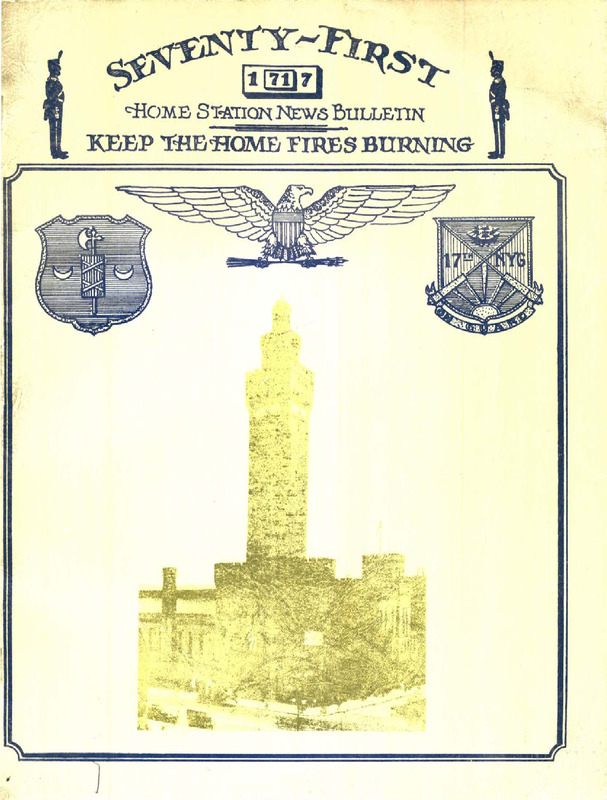
From the opening pages: "The Home Station News Bulletin is the brain child of Captain Donald P. Sherman, who has had service in the seventy-first infantry since December 22, 1911, who served through the first World War with the 54th Pioneer Infantry with service in the Meuse Argonne and the army of occupation and who, remained at his position as Superintendent of the Armory at Thirty-Third Street and Park Avenue during World War II. The bulletin was conceived and carried on as a medium for keeping in touch with all the members of the seventy-first who were scattered throughout the entire world. It's first edition appeared in November 1942, and consisted of a three page mimeographed news sheet sent to seventy-five known addresses. It continued to be published in mimeographed form for the first year and then graduated to a photo offset job. This was made possible through the offer of Mr. Silverman of the Progressive Photo Offset Company to publish it at cost. Mr. Silverman continued to publish the bulletin at cost up to the final copy and including this souvenir edition. Our hats off to Mr. Silverman for a grand job." Donald P. Sherman
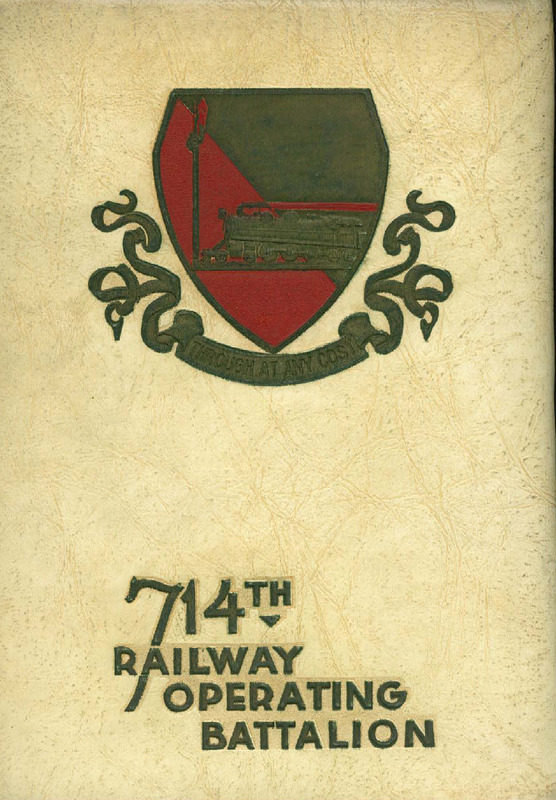
A liaison officer was flown to Alaska ahead of the unit and arrangements were completed by him for the housing, messing and deployment of the troops upon arrival. On the 3rd of April, 1943, the outfit sailed into the beautiful harbor of Seward. The Navy Transport Chaumont was our home for those hectic days at sea and not very many of the boys escaped the inevitable sea-sickness. The sighs of relief were plainly audible when the Chaumont finally docked at Seward and the G.l.s came streaming down the gang-plank. The Alaska Railroad, which is owned by the Federal Government and Operated by Department of the Interior, proved to be a most important rail line in our operations against the Japs. It was the only means at hand for supplying the interior of Alaska with personnel and material for the defense of the territory and for setting up the offensive structure for our later moves against the Nipponese. The civilian personnel, even in peace times, had never been sufficient to adequately maintain and operate the line. Consequently, when war came, what few civilians remained were totally unable to keep this vital supply line going. Maintenance of the line was at a very low ebb, to such an extent that many of the structures were unsafe for operation. The mechanical personnel could not begin to cope with the problem of keeping the power and cars in shape for hauling war supplies, and the operating men were very few in number. So few were they that they couldn't have kept the trains rolling if they worked continuously twenty-four hours at a stretch, day after day. The result was a tremendous back-log of material piled up at the port of Seward and the port of Whittier had not been opened for through traffic." For more than twenty-five months, the men of the 714th kept on the job and made the Alaska Railroad tick. Their efforts were duly appreciated and were finally recognized shortly before the unit returned to the States. By command of Lieutenant General. Delos C. Emmons, Commanding General of the Alaskan Department, the 714th was awarded the Meritorious Service Unit Plaque on 4 April, 1945 and entered the United States on the 24th of May, 1945. --page 13
Foreword: Reminiscent of another era ... this book will mellow with the years--and serve as a reminder of the days of our youth. It will enable us to turn back the pages that the years have tended to shroud in darkness and forgetfulnes, reviving dormant memories and clearing the haze from images and situations long since recorded and now stored away. It has often been said that "time changes everything." Disagreeable details, fatiguing marches, and the "G.I." way of doing things will become vague and distorted in our mind's eye, and thence emerge in our fancy as being the good old days." Our rehabilitation, necessitated by the war. has torn down barriers which formerly restricted our vision and understanding and has given our outlook a broader scope. This conflict accelerated the tempo of our lives and will influence the channel our careers shall follow when the war is over. The staff. therefore, feels that the occasion warrants the publication of this book. We hope that we have successfully mirrored the aims and activities of the 507th Parachute Infantry. To the men of the regiment. good luck and--Godspeed.
The 506th Parachute Infantry was activated on 20 July 1942. Prior to this date a small cadre of officers and non-commissioned officers were quartered in a wall tent area which had been euphoniusly named "Camp Toombs". On the shoulders of these officers and men rested the responsibility of forming and training the great regiment which was later to make the camp's new name a famous one--"Toccoa". Toccoa was the heat of the Georgia summer and fifty torturous minutes three days a week, pounding six miles up and down a mountain. Toccoa was murderous twenty mile forced marches done at 130 per minute. Toccoa was where men and officers learned how to take and give orders. But above all Toccoa was the crucible which forged the spirit of this regiment, and where men discovered they could go much further and do much much more than they ever imagined.
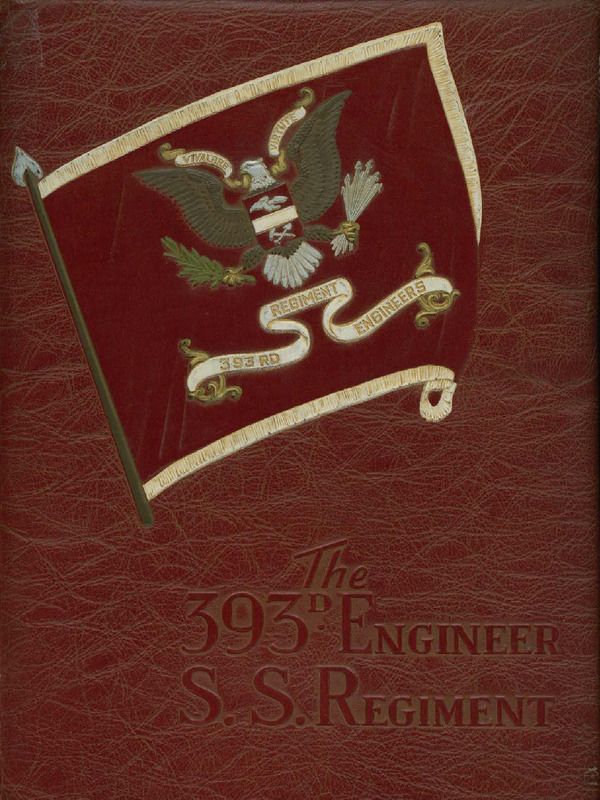
The history of the 393rd is a story of a hard working organization. It was not the fortune of the 393rd to become distinguished in combat. Its record is a good one made so because of the work it did. In the story of such units as the 393rd we see part of the work of a great Corps and even then we see the Corps as itself part of a great Army. It was and is the contributions of all the parts that made Victory possible. It is difficult in such a volume as this to pick out individuals for special mention. Our purpose is to tell the story of the Regiment. All members have contributed to that story. There was the work of those who had the problem of planning and leadership. There was the work of the men, those whom we call privates but without whom no work would ever be done. Out of all this, the "editor" assumes to "dedicate" this volume to the Junior Officers of the 393rd. The burden of adverse conditions fell upon them and it was because of their resourcefulness and labor and leadership that the work always moved forward. In compiling this history, the chief source has been the "secret log" of the regiment. Major Carleton and Captain Gurney deserve recognition for their work in keep this "log". Captain Gurney must also be mentioned for the work of his sketches. To Sgt. De Angelus goes mention for his work in photography and to T/4 Edward H. Owen for the use of his, "History of Company D." The Chaplain--Editor, Harold A. Mercier
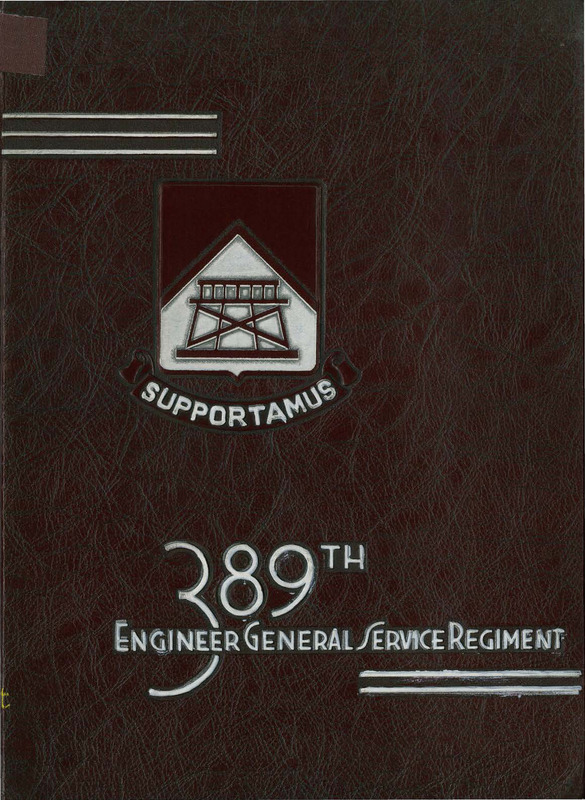
Now the 389th has completed her mission, our use in the service of our country is over. We have seen rivers to cross and have crossed them; roads to be built and they have been made whole; rail-lines to operate and construct and we have done so with a smile even through hardships and in the face of disaster, but our banners have remained unfurled and our spirits have not weakened. The peace, yea the glorious peace, that comes with Victory is now, ours to behold and adore. Home-town United States of America is now safe from infamous attack by would be aggressors, our shores are safe, the lights are on again all over the world, the sea lanes are clear of U-boats, and our world is again ready to build anew on the principles of the four freedoms: Freedom from fear, freedom from want, freedom from hunger, and freedom from force. So we can, as we are doing daily, lose the identity of soldiers and resume our civilian activities for a better America and a better world. Still, we will always remember the 389th, for what she has been and will continue to be in our hearts. Keeping always in mind that, if ever, and we pray not, any aggressors or would-be rulers seek to invade our shores, we will rise and in the words of our motto: "Supportamus," we will defend and protect our country's pride. So long fellows and good, smooth sailing.


![752nd Tank [Batallion]](https://bangorhistory.org/files/large/c8a6ab79ecff667f54b27c434f60def7af30b402.jpg)