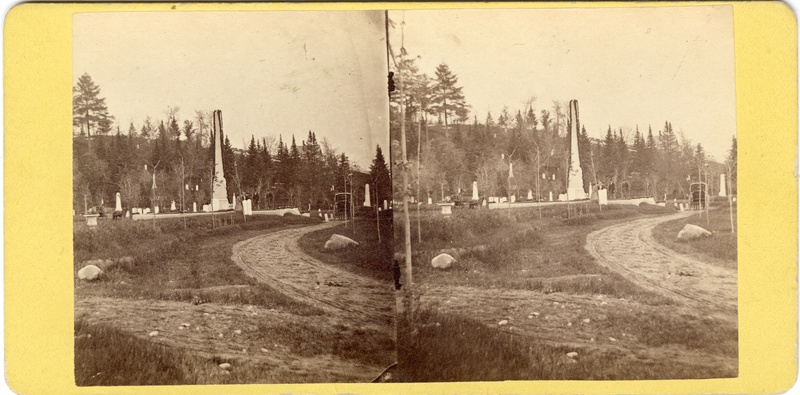
Preface: Coeval with the existence of Bangor as a City in 1834, or about that time, the prevailing sentiment of its citizens strongly favored the selection of new cemetery grounds for the burial of its dead. This sentiment having been successful in the establishment of Mt. Hope Cemetery as the result, many thousands of its citizens have since found there a resting place for their bodies, including the largest portion of those then alive, besides thousands of others since born or otherwise become inhabitants of the city. The history of the Cemetery has thus become one of great interest to the people generally, and the duty would seem to be imposed upon some one to see that the work of compiling such history should be performed, not only for the present inhabitants, but for those who may succeed the present during the long ages of the future. The undersigned having been one of the very few, now alive, who were present at the dedication of the Cemetery, and for a half century since having been continuously entrusted, as Treasurer, with the collection and disbursement of its funds, and having had a prominent part to perform in the purchase of its premises and in the sale and conveyances of its very numerous lots, which have, during all such half century, been disposed of to citizens and others, the work thus alluded to would seem to be very appropriately chargeable to him. Freely accepting the call, he respectfully submits the following report.--Albert W. Paine
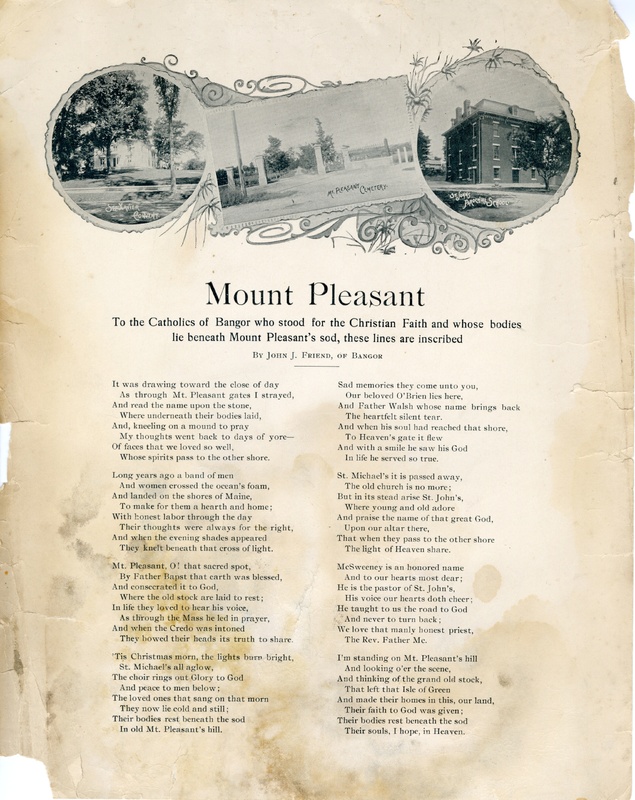
To the Catholics of Bangor who stood for the Christian Faith and whose bodies lie beneath Mount Pleasant's sod, these lines are inscribed. First stanza: It was drawing toward the close of day As through Mt. Pleasant gates I strayed, And read the name upon the stone, Where underneath their bodies laid, And, kneeling on a mound to pray My thoughts went back to days of yore–Of faces that we loved so well, Whose spirits pass to the other shore.
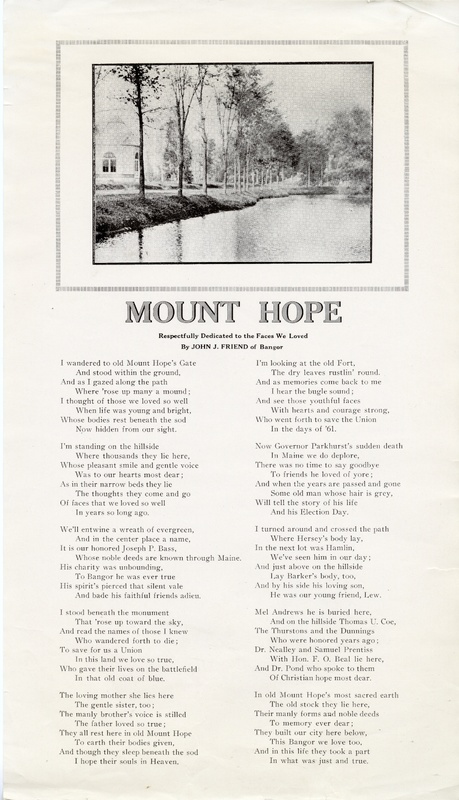
Respectfully dedicated to the faces we loved. First stanza: I wandered to old Mount Hope's Gate And stood within the ground, And as I gazed along the path Where ‘rose up many a mound; I thought of those we loved so well When life was young and bright, Whose bodies rest beneath the sod Now hidden from our sight.
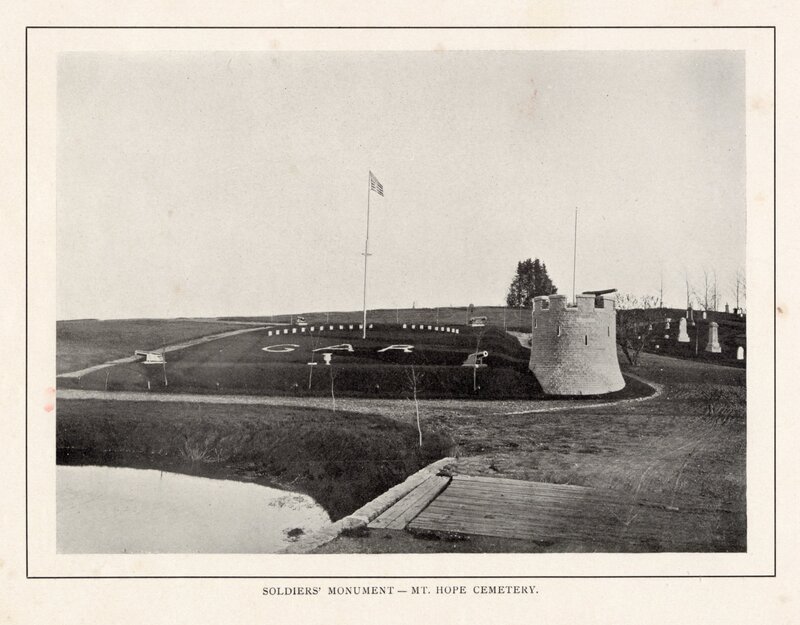
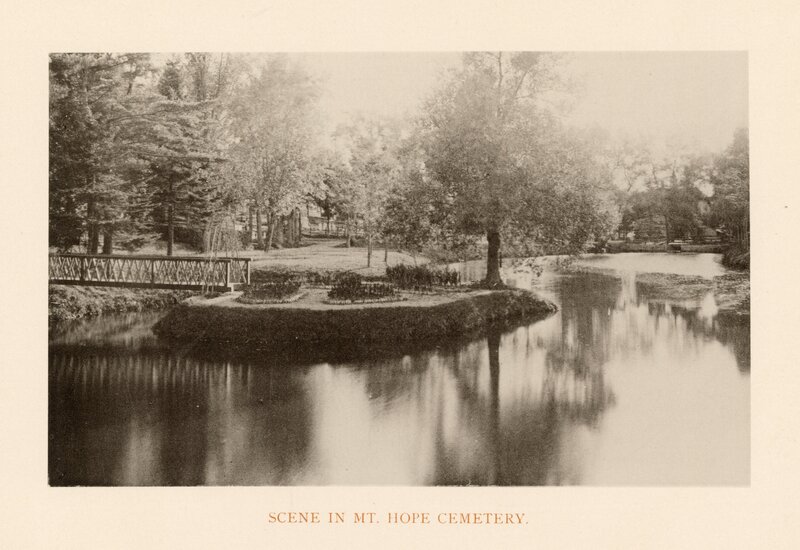
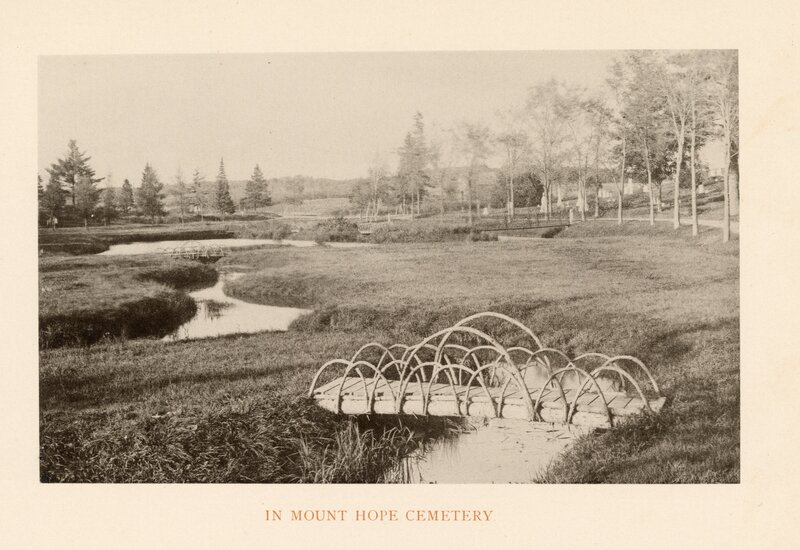
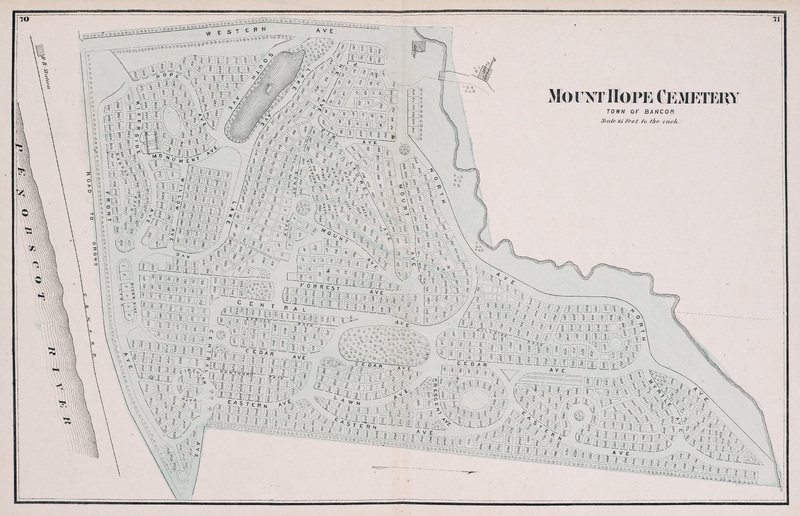
Soldiers Monument, a 20-foot high obelisk near the entrance of the Mount Hope Cemetery, may be the oldest Civil War monument in the United States. It was dedicated in 1864, when the body of Bangor native Stephen Decatur Carpenter was laid to rest. Although his body was moved to a family plot at their request in 1881, those killed in action as well as veterans filled the plot, and in 1907 the Grand Army of the Republic fort and monument was dedicated, followed in 1960 by the 2nd Maine Regiment memorial near the gates of the cemetery. Mount Hope Cemetery was itself something of a trend-setter; inspired by the Mount Auburn Cemetery in Massachusetts, it became the second-oldest garden cemetery in the nation when it was consecrated in 1836, covering one hundred acres.