Explore history through the digital collections of the Bangor Public Library and our community partners in Bangor, Maine
World War II Posters
Title
World War II Posters
Description
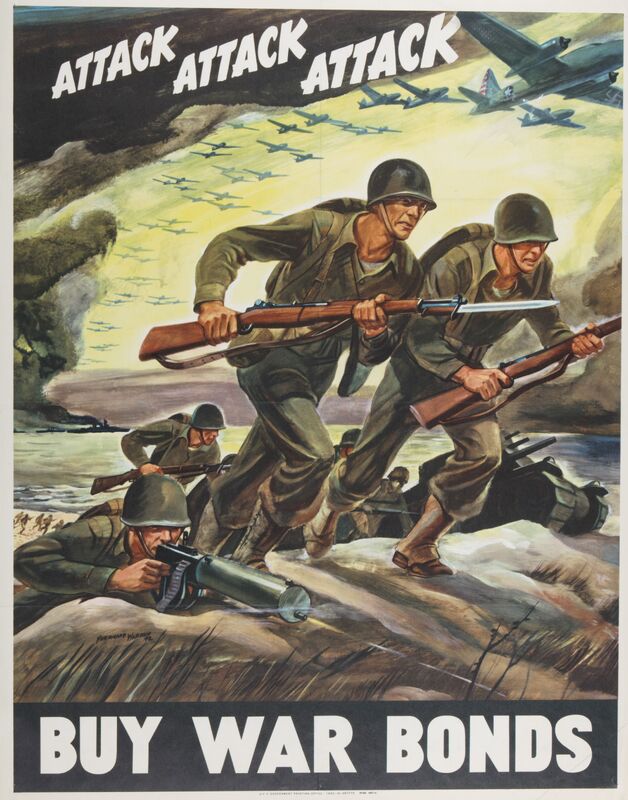
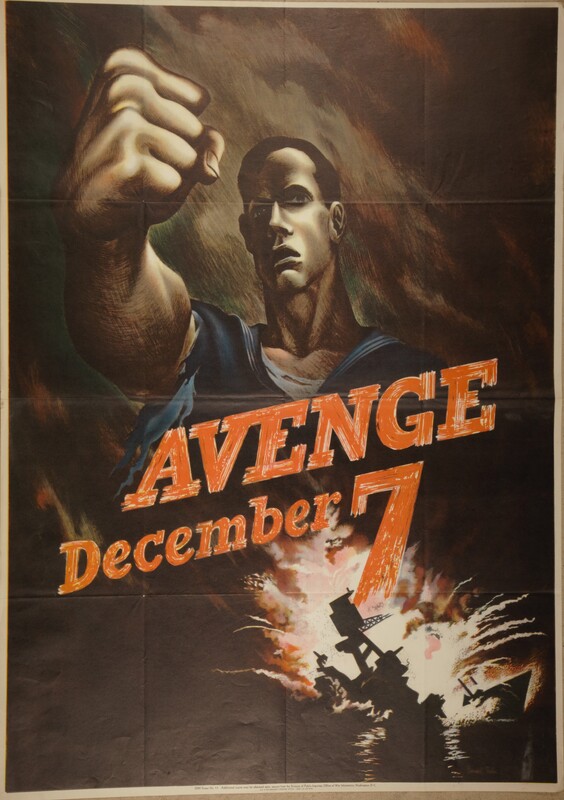
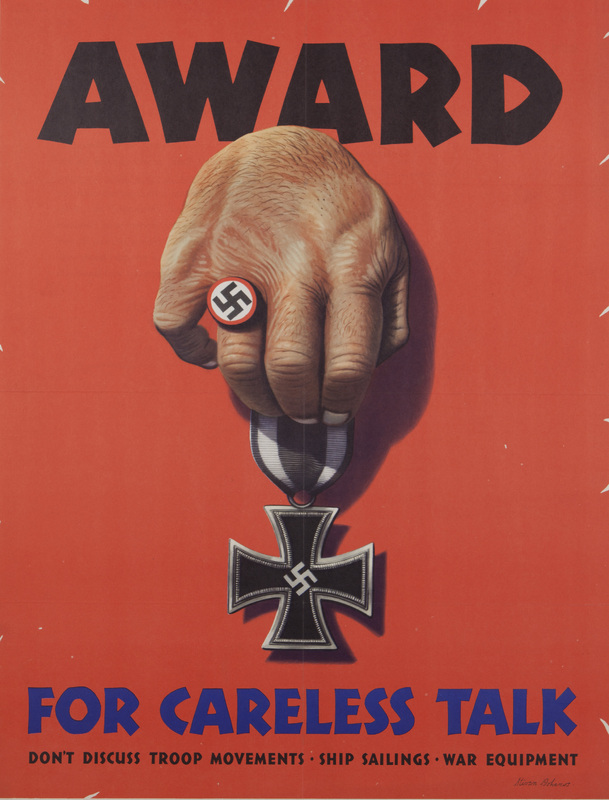
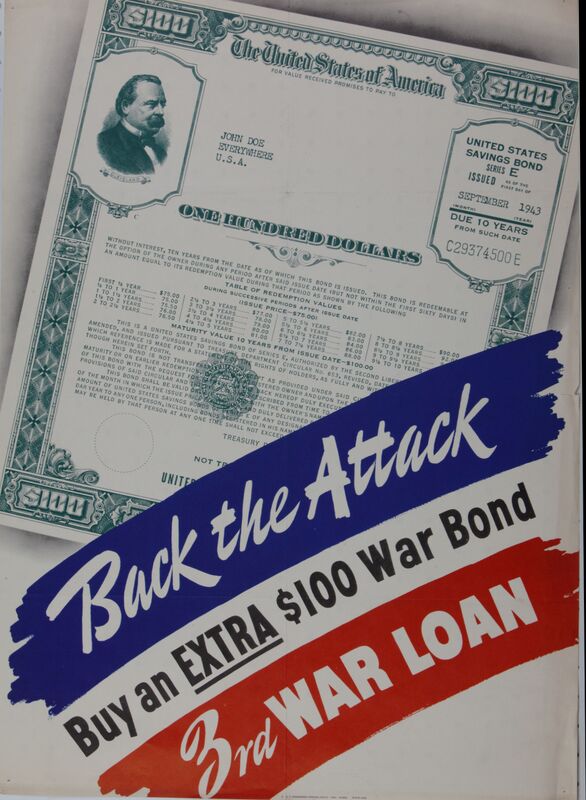
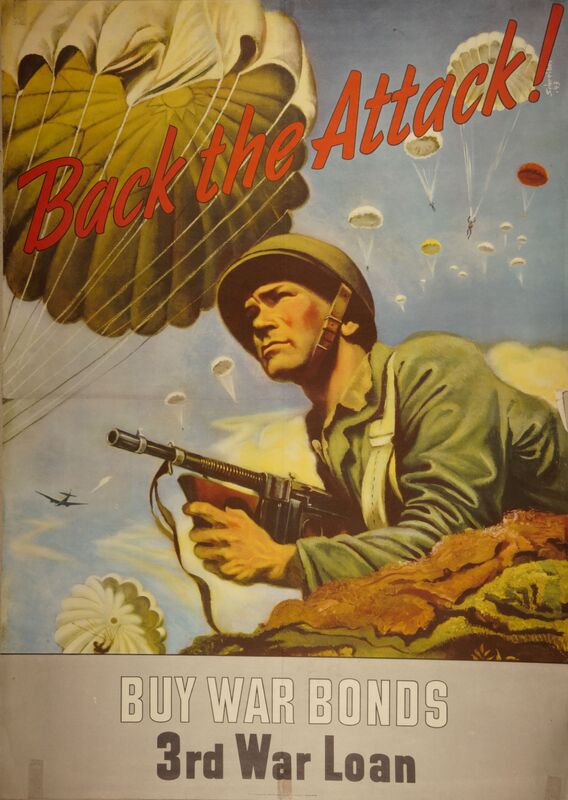
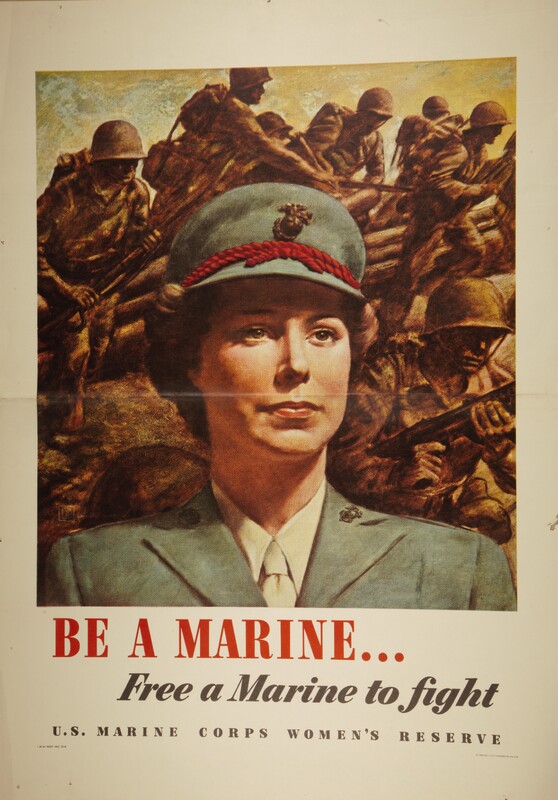
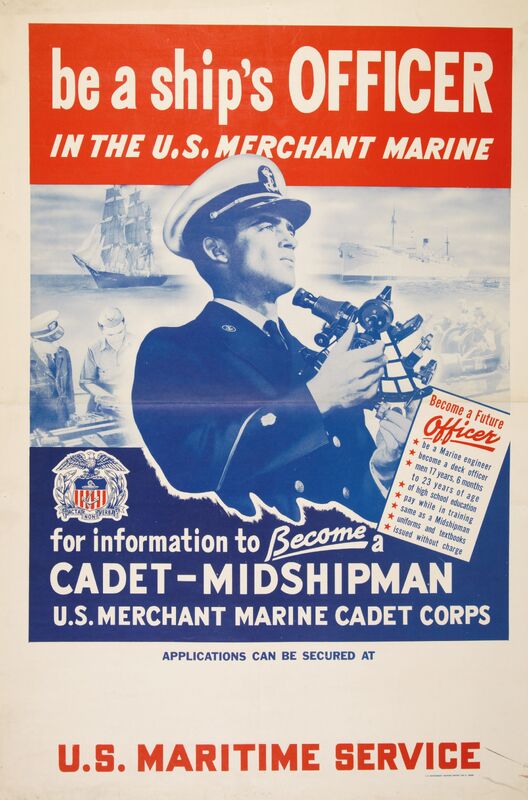
Posters used to promote the war effort among Americans on the home front. Bangor Public Library acquired its collection of war posters through the efforts of L. Felix Ranlett, a World War I veteran and librarian from 1937 to 1962. These posters were digitized through a collaboration with Raymond H. Fogler Library at the University of Maine with the support of Eugene and Barbara Daigle.
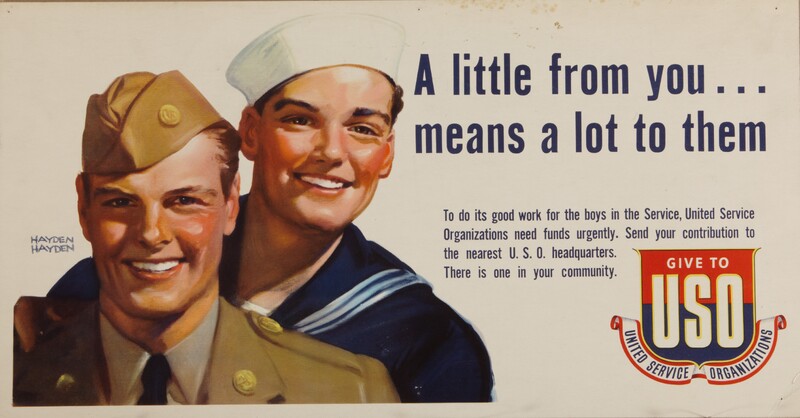
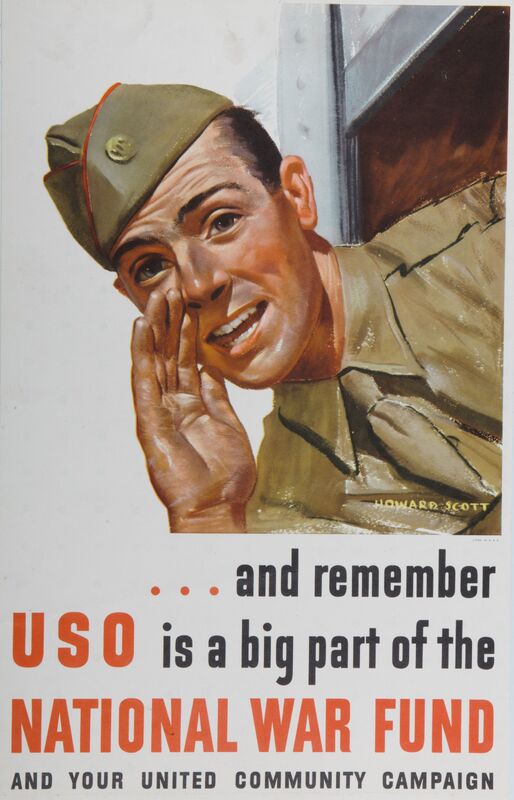
To do its good work for the boys in the Service, United Service Organizations need funds urgently. Send your contribution to the nearest U. S. O. headquarters. There is one in your community. Give to United Service Organizations.
In this fourth year of war the need for food is greater than ever before. I call upon every American to help increase the Nation's food supply ... By growing larger and better victory gardens and seeing them through to the harvest. By preserving our food at home or in a community canning center. By conserving food in every possible way--wasting not an ounce. Our food will make a real contribution to the final victory and the peace. There can be no lasting peace in a hungry world. Harry S. Truman, the President of the United States of America.
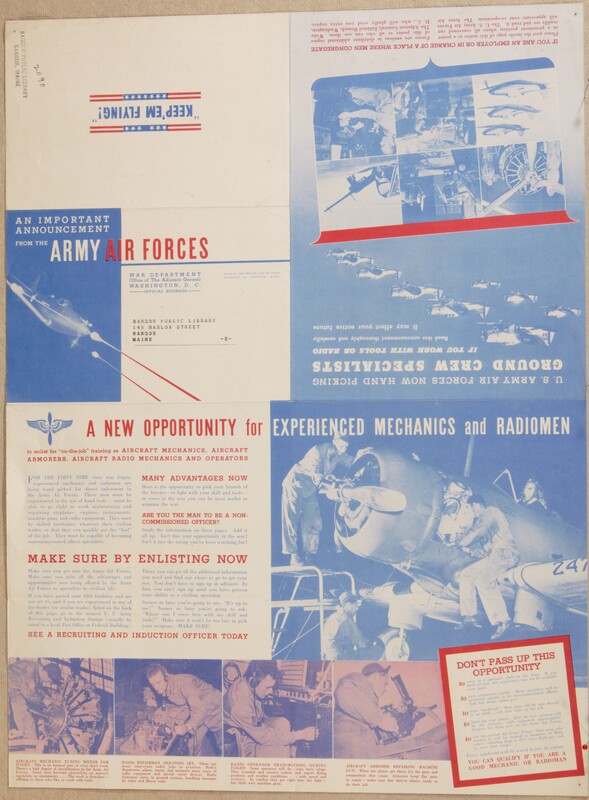
For the first time since war began, experienced mechanics and radiomen are being hand picked for direct enlistment in the Army Air Forces. These men must be experienced in the use of hand tools--must be able to go right to work maintaining and repairing airplanes, engines, instruments, machine guns, and radio equipment. They must be skilled mechanics, whatever their civilian trades, so that they can quickly get the "feel" of the job. They must be capable of becoming noncommissioned officer specialists...
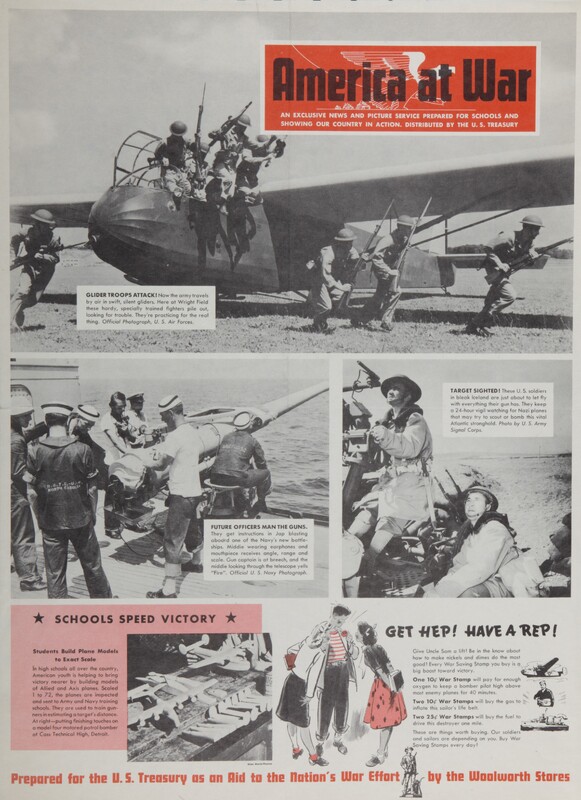
Glider Troop Attack! Now the army travels by air in swift, silent gliders. Here at Wright Field these hardy, specially trained fighters pile out, looking for trouble. They're practicing for the real thing. Official Photograph, U.S. Air Forces. Future Officers Man the Guns. They get instructions in Jap blasting aboard one of the Navy's new battle-ships. Middie wearing earphones and mouthpiece receives angle, range and scale. Gun captain is at breech, and the middie looking through the telescope yells "Fire". Official U.S. Navy Photograph. Target Sighted! These U.S. soldiers in bleak Iceland are just about to let fly with everything their gun has. They keep a 24-hour vigil watching for Nazi planes that may try to scout or bomb this vital Atlantic stronghold. Photo by U.S. Army Signal Corps. Schools Speed Victory. Students Build Plane Models to Exact Scale. In high schools all over the country, American youth is helping to bring victory nearer by building models of Allied and Axis planes. Scaled 1 to 72, the planes are inspected and sent to Army and Navy training schools. They are used to train gunners in estimating a target's distance. At right--putting finishing touches on a model four motored patrol bomber at Cass Technical High, Detroit. Get Hep! Have a Rep! Give Uncle Sam a lift! Be in the know about how to make nickels and dimes do the most good! Every War Saving Stamp you buy is a big boost toward victory. One 10 War Stamp will pay for enough oxygen to keep a bomber pilot high above most enemy planes for 40 minutes. Two 10 War Stamps will buy the gas to inflate this sailor's life belt. Two 25 War Stamps will buy the fuel to drive this destroyer one mile. These are things worth buying. Our soldiers and sailors are depending on you. Buy War Saving Stamps every day!
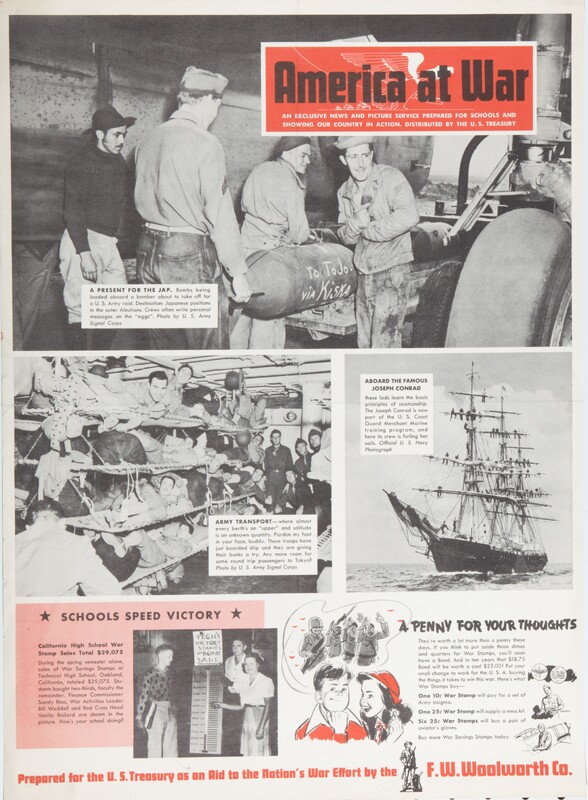
A Present for the Jap. Bombs being loaded aboard a bomber about to take off for a U.S. Army raid. Destination: Japanese positions in the outer Aleutians. Crews often write personal messages on the "eggs". Photo by U.S. Army Signal Corps. Army Transport--where almost every berth's an "upper" and solitude is an unknown quantity. Pardon my foot in your face, buddy. These troops have just boarded ship and they are giving their bunks a try. Any more room for some round trip passengers to Tokyo? Photo by U.S. Army Signal Corps. Aboard the Famous Joseph Conrad these lads learn the basic principles of seamanship. The Joseph Conrad is now part of the U.S. Coast Guard Merchant Marine training program, and here its crew is furling her sails. Official U.S. Navy Photograph. Schools Speed Victory California High School War Stamp Sales Total $29,075. During the spring semester alone, sales of War Savings Stamps at Technical High School, Oakland, California, totaled $29,075. Students bought two-thirds, faculty the remainder. Finance Commissioner Sandy Ross, War Activities Leader Bill Waddell and Red Cross Head Vanita Bailard are shown in the picture. How's your school doing? A Penny for Your Thoughts. They're worth a lot more than a penny these days. If you think to put aside those dimes and quarters for War Stamps, you'll soon have a Bond. And in ten years that $18.75 Bond will be worth a cool $25.00! Put your small change to work for the U.S. A. buying the things it takes to win this war. Here's what War Stamps buy--One 10 War Stamp will pay for a set of Army insignia. One 25 War Stamp will supply a mess kit. Six 25 War Stamps will buy a pair of aviator's gloves. Buy more War Savings Stamps today.
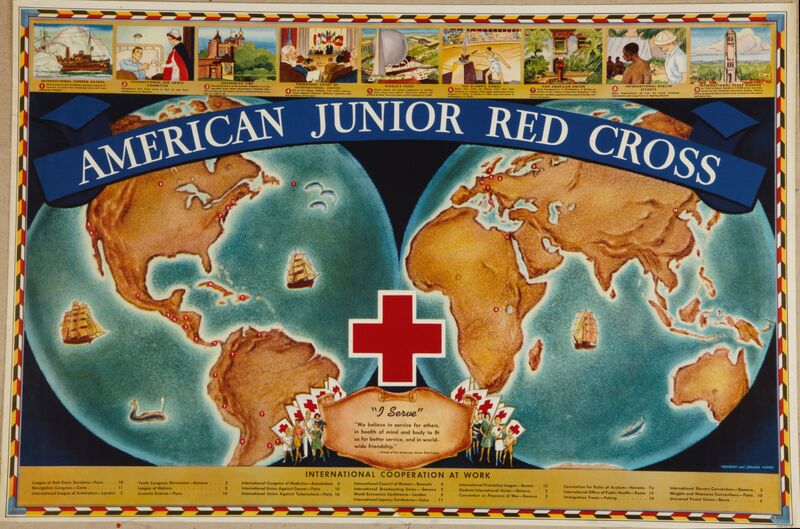
"We believe in service for others, in health of mind and body to fit us for better service, and in world-wide friendship."--Creed of the American Junior Red Cross.
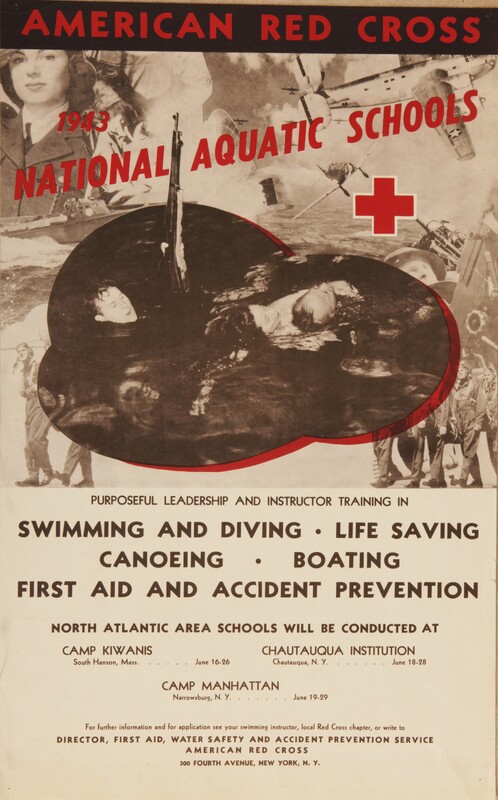
Purposeful leadership and instructor training in: Swimming and diving, life saving, canoeing, boating, first aid and accident prevention. North Atlantic area schools will be conducted at: Camp Kiwanis, South Hansen, Mass, June 16-26. Chautauqua Institution, Chautauque, N.Y., June 18-28. Camp Manhattan, Narrowsburg, N.Y., June 19-29. For further information and for applications see your swimming instructor, local Red Cross chapter, or write to: Director, First Aid, Water Safety and Accident Prevention Service, American Red Cross, 300 Fourth Avenue, New York, N.Y.
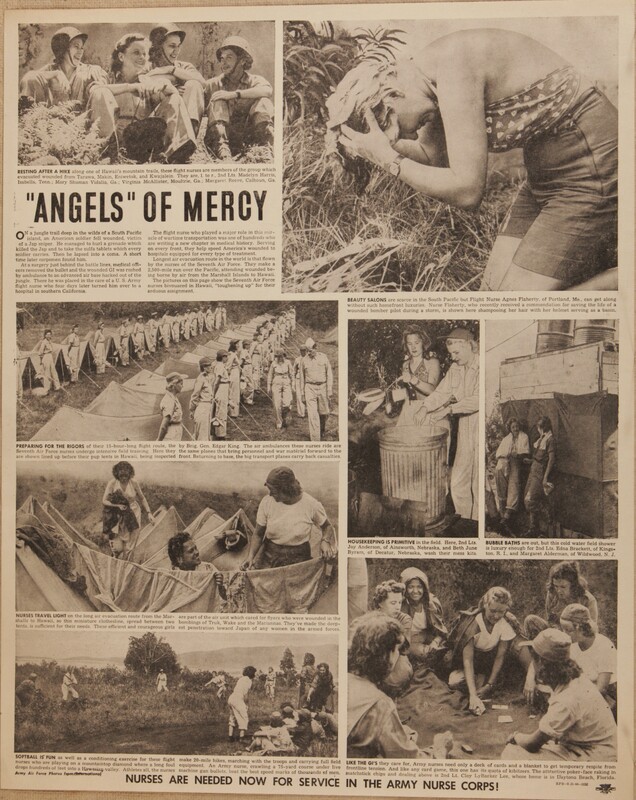
Nurses are needed now for service in the Army Nurse Corps! ... On a jungle trail deep in the wilds of a South Pacific island, an American soldier fell wounded, victim of a Jap sniper. He managed to hurl a grenade which killed the Jap and to take the sulfa tablets which every soldier carries. Then he lapsed into a coma. A short time later corpsmen found him. At a surgery just behind the battle lines, medical officers removed the bullet and the wounded GI was rushed by ambulance to an advanced air base hacked out of the jungle. There he was placed in the care of a U. S. Army flight nurse who four days later turned him over to a hospital in southern California. The flight nurse who played a major role in this miracle of wartime transportation was one of hundreds who are writing a new chapter in medical history. Serving on every front, they help speed America's wounded to hospitals equipped for every type of treatment. Longest air evacuation route in the world is that flown by the nurses of the Seventh Air Force. They make a 2,500-mile run over the Pacific, attending wounded being borne by air from the Marshall Islands to Hawaii. The pictures on this page show the Seventh Air Force nurses bivouaced in Hawaii, "toughening up" for their arduous assignment.