Explore history through the digital collections of the Bangor Public Library and our community partners in Bangor, Maine
Bangor Public Library, 1970: A Photographic Tour
Title
Bangor Public Library, 1970: A Photographic Tour
Description
Photographs from an album created by librarian Marjorie Anne Moore. "I have tried to give the viewers of these photos a bird's-eye-view of some of the highlights of the activities carried out in their library."
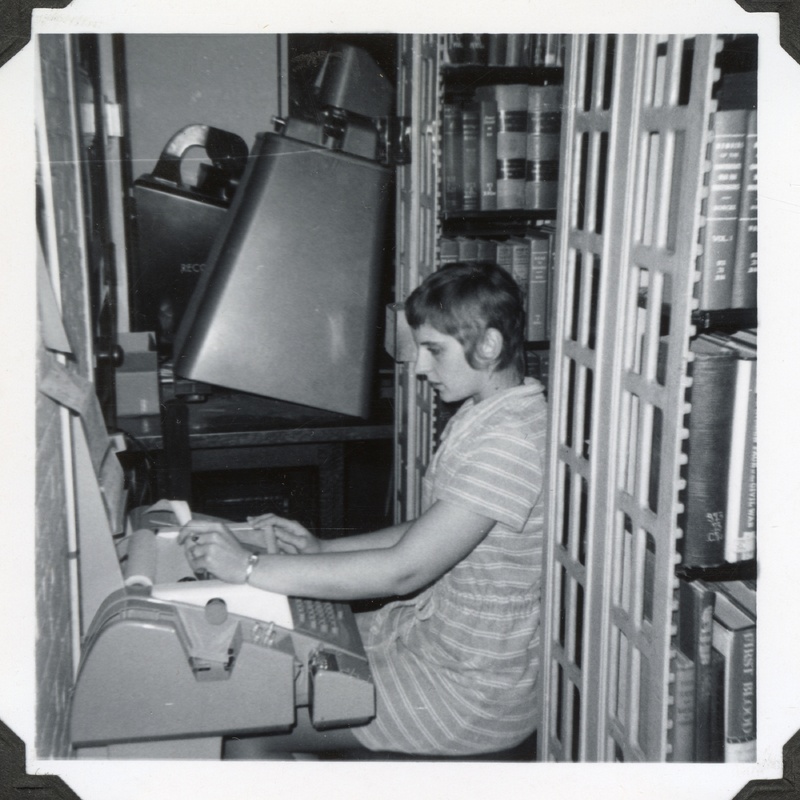
Bangor Public Library is part of an informal but effective state-wide system of cooperating libraries. With the TWX machine (Teletypewriter Exchange Service) interlibrary loan procedures are greatly facilitated. Mrs. Sue Wight, Circulation assistant, receives a request for books which will be sent out by mail the following day.
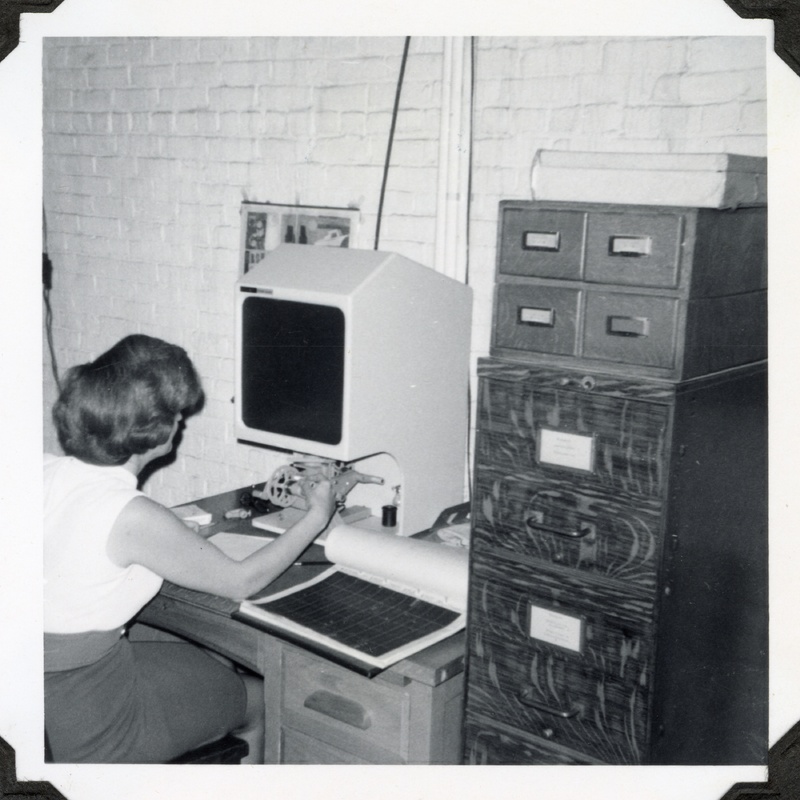
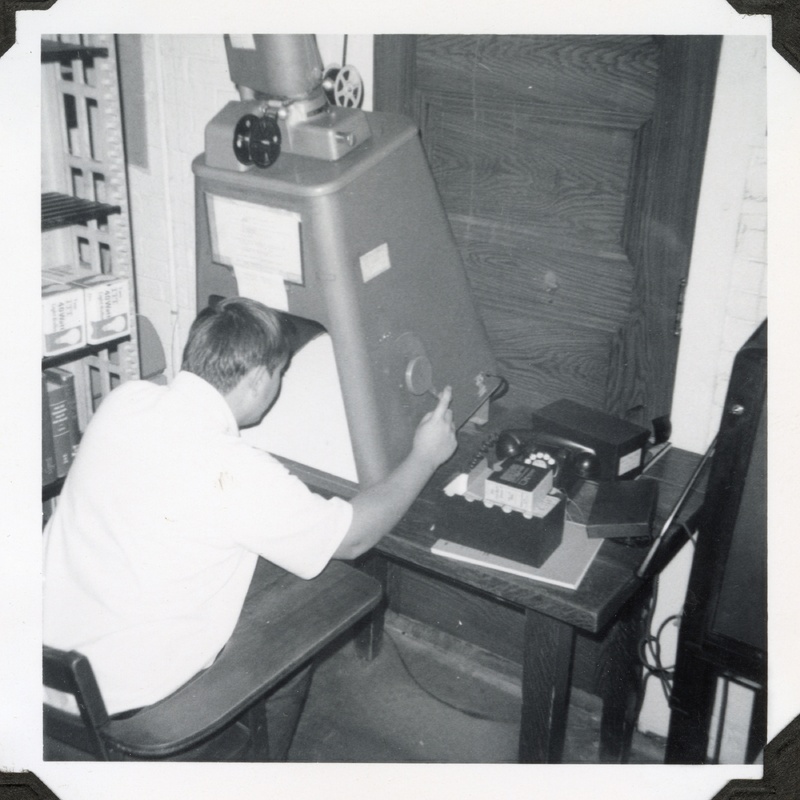
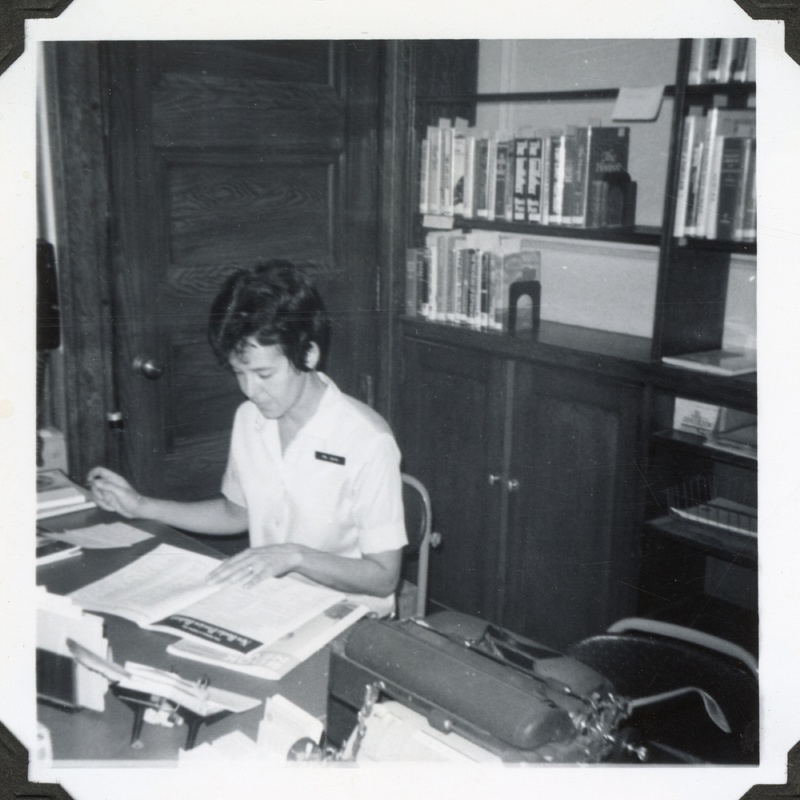
With the new charge out system in operation at the Circulation desk and all transactions being recorded on film, a need arose for a special reader in order to find out what books were over-due and for which over-due notices must be sent. This daily routine of "reading the film" is carried out by Mrs. Reta Schreiber, Circulation assistant.
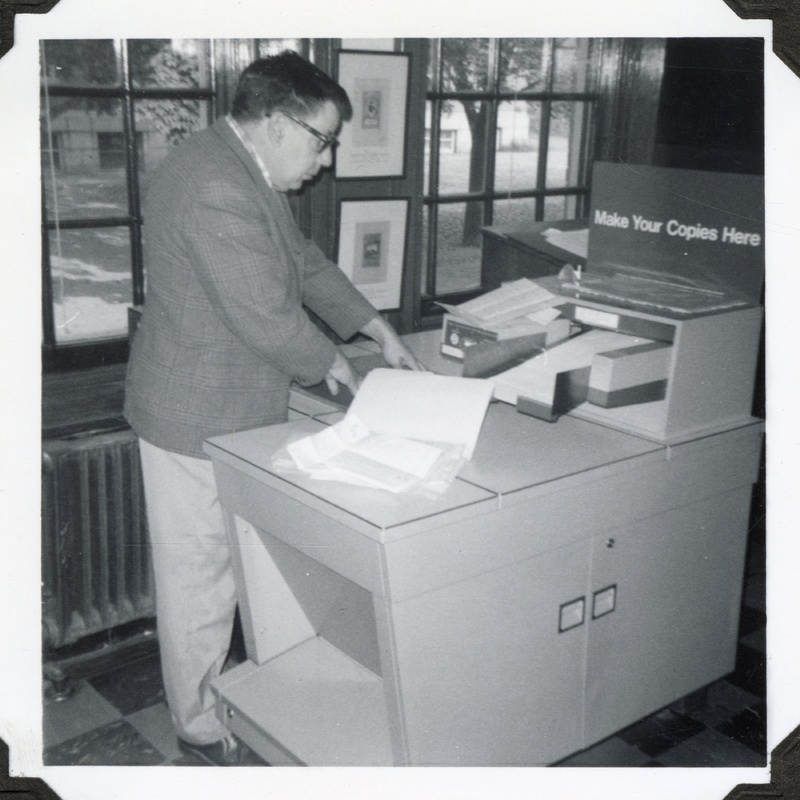
The Xerox 914 Copier gets a daily work out by the general public. Mr. James Vickery, Brewer High School teacher, finds it helpful in copying some research material that cannot be taken from the library. The machine is also used by the Catalog Depatment for reproducing catalog cards.
Many researchers find the need for consulting newspapers which are on film. The Recordax film reader machine enables the user to read the films of Bangor's local paper the Bangor Daily News back to 1836 as well as the New York Times back to 1851. A few periodicals, other newspapers, and genealogical records are also on film.
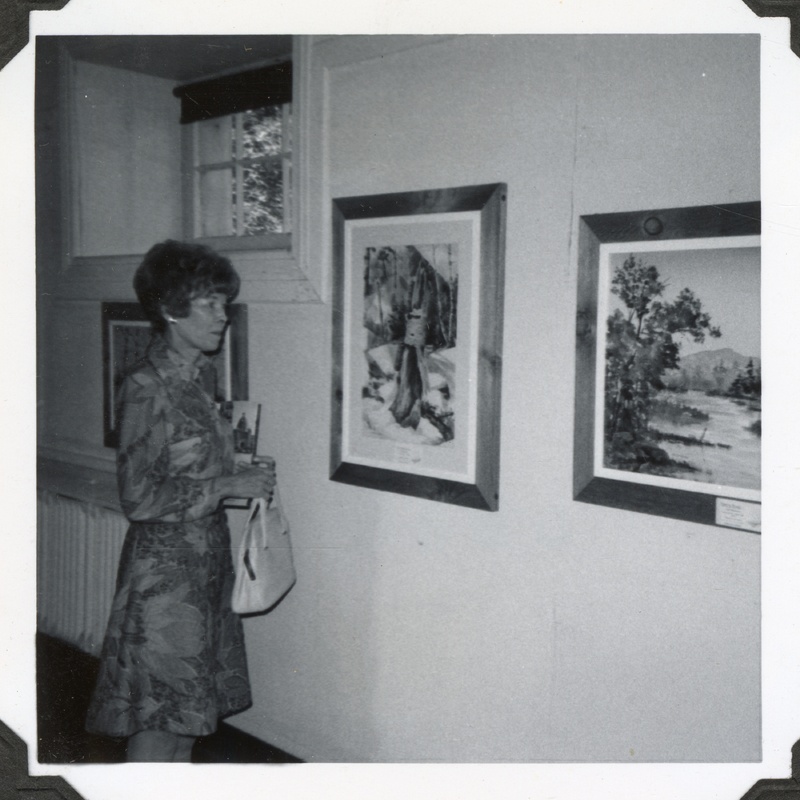
One finds not only books in a library but also lovely paintings. Mrs. Barbara Byrnes, former Bangor Public Library employee, enjoys the paintings in one of the many art exhibits displayed throughout the year in the second floor lecture hall.
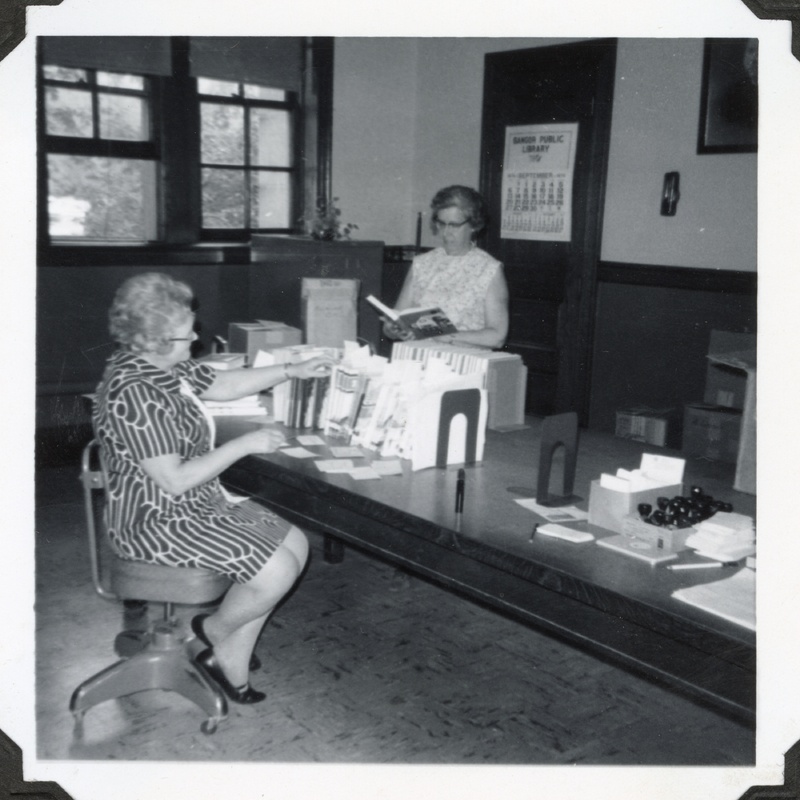
Services of the library through the Extension Department extend out into the community in many ways through the purchases for school libraries, services in hospitals and through services to public and private agencies. Chief of the Extension Department, Miss Ruth Dole (standing) and her first assistant, Mrs. Evelyn Jordan, process the books before they are routed on their various ways.
Few people who see Mrs. Faith Burrill putting on the daily newspapers or putting away new magazines realize that each one must first be recorded as having been received in the Periodicals and Binding Department. Mrs. Burrill, First Assistant in this department, performs this task daily since the library subscribes to over 2000 periodicals and 21 newspapers.
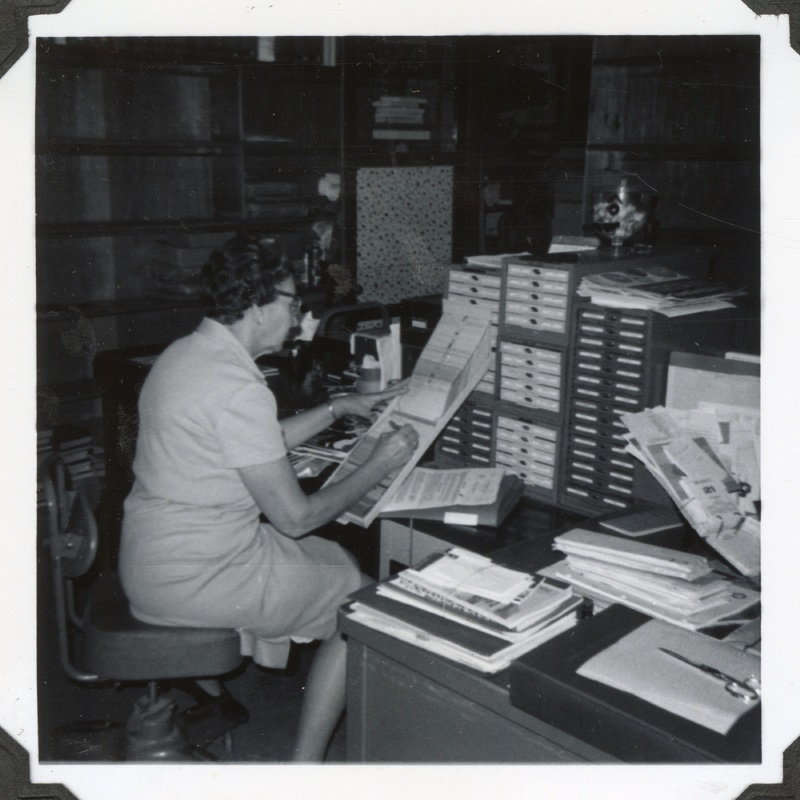
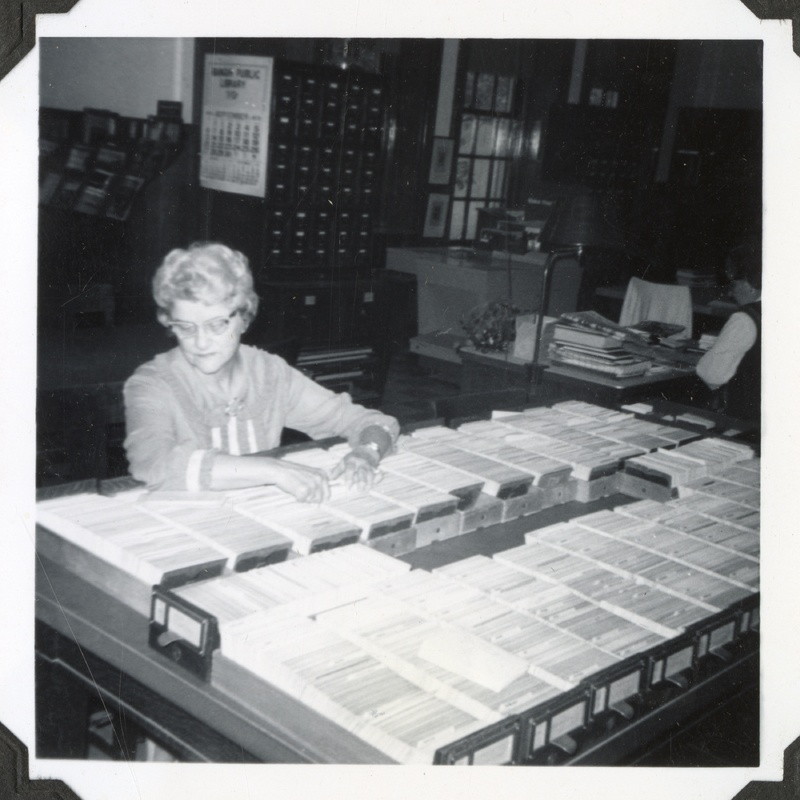
Part-time assistant Mrs. Charlotte Bowler has the daily task of filing new catalog cards in the public card catalog drawers. In excess of 27,000 cards per year are filed in all the catalogs (adult, children's and shelf lists).
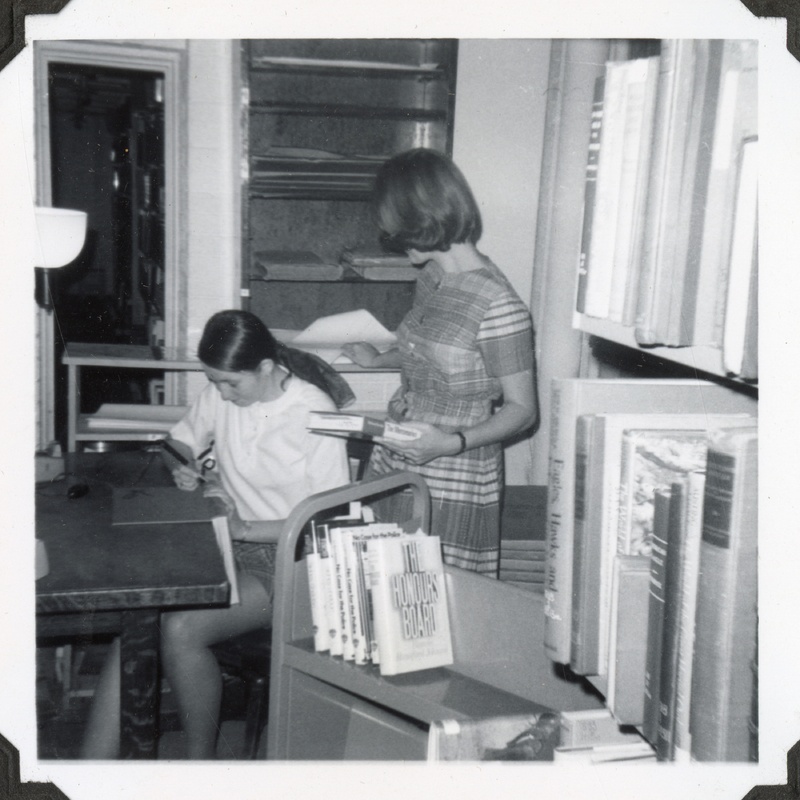
Catalog Department assistant, Miss Shirley Cadorette uses the electric stylus to write the call number on the spine of an older book, while Mrs. Jame Shaw selects the appropriate size plastic dust jacket for one of the newer books. It is interesting to note that when plastic jackets were first used in 1956, the circulation figures rose by 11,000 in the 1957 statistics.
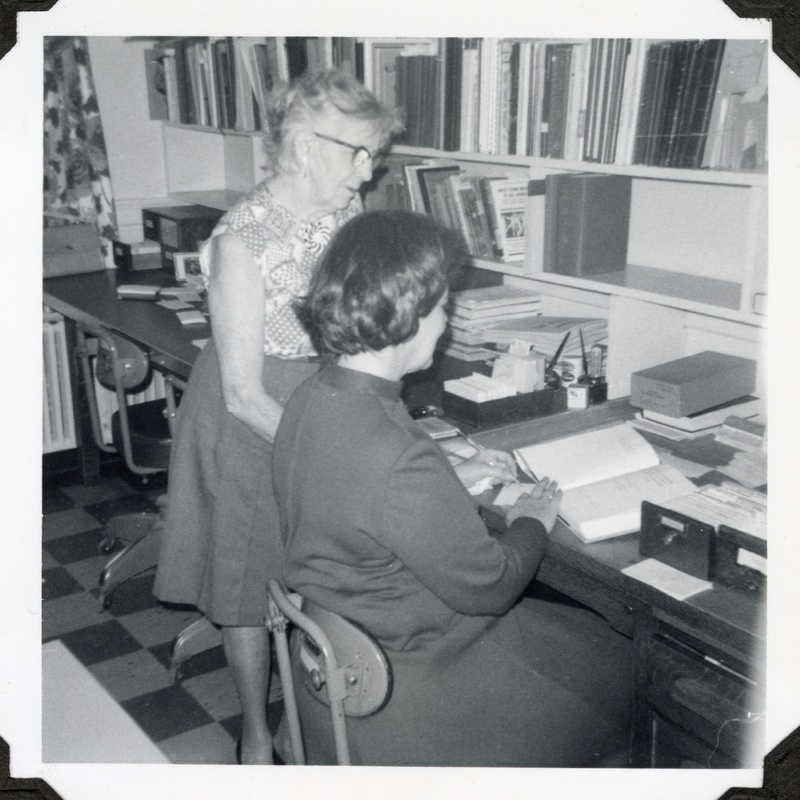
First assistant, Mrs. Marie McDonough (seated) consults with the Head of the Catalog Department, Miss Marion Cluff, on what Library of Congress subject headings should be used in connection with the book in question.
Miss Charlotte Torrey (seated), Chief of Accessions and Classification, decides on the Dewey Decimal Classification number to assign to a book, while her first assistant, Mrs, Dorrice Wetzler, checks the shelf list to make sure the number has not been used for another book.
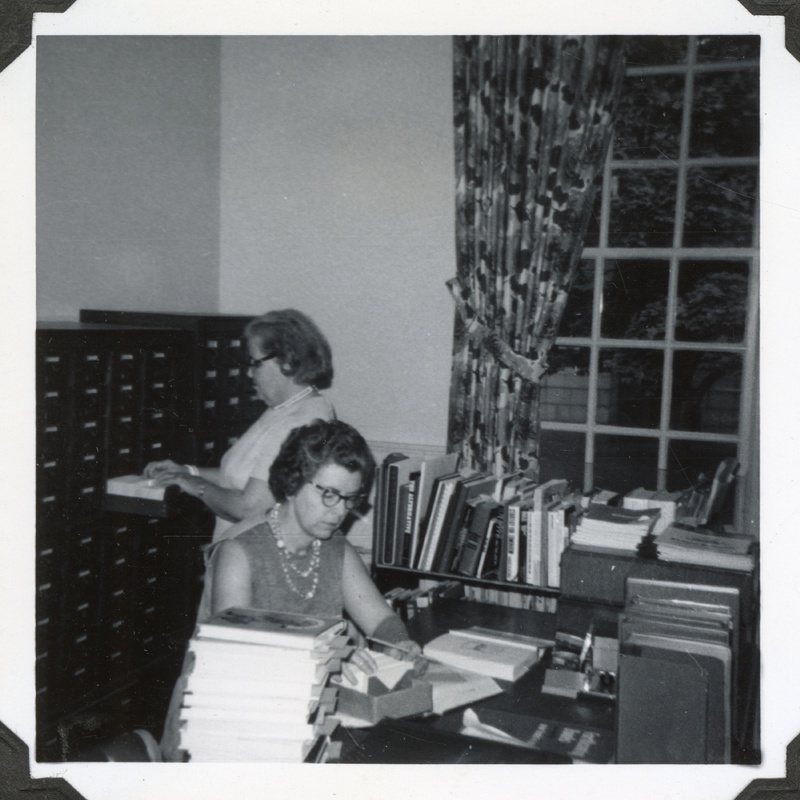
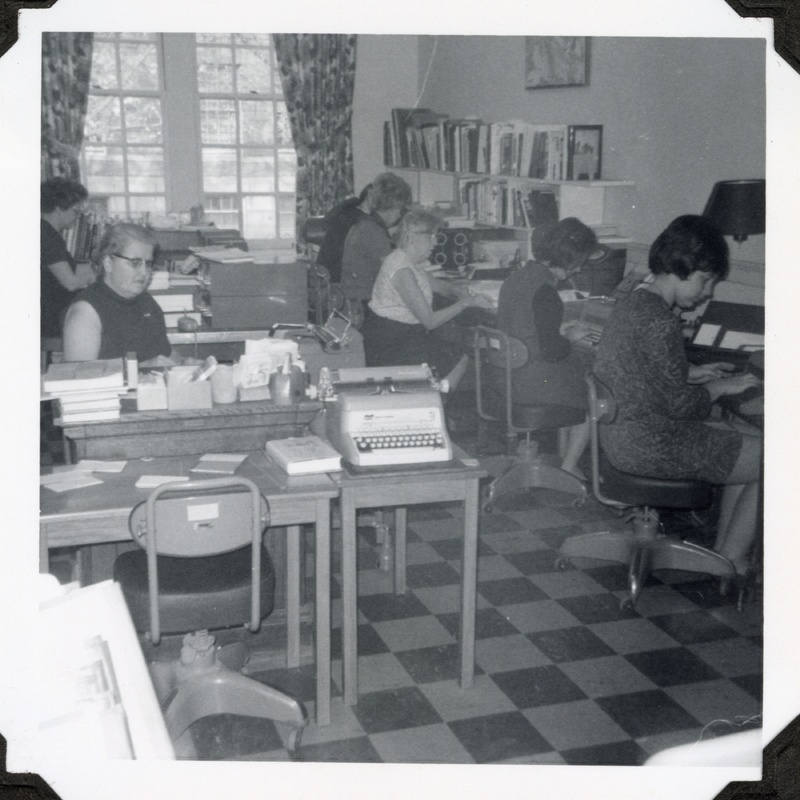
Accessions and Classification Department and Catalog Department share the same quarters. Here the books are processed first in the Accessions and Classification Department on the left, and then turned over to the Catalog Department on the right.
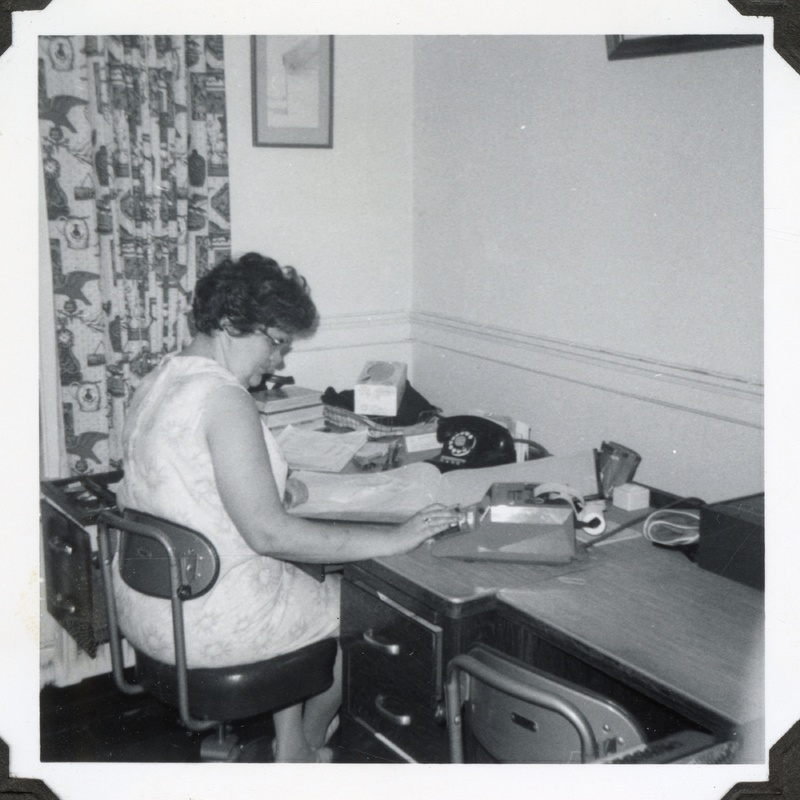
Since all books are bought from endowment income, quite a bit of bookkeeping is involved when working on the book bills. Miss Frances Michaud, Office assistant, tackles the task with the aid of her very handy adding machine.
With a $100,000 per year book budget and over 20,000 books bought in 1969 alone, Miss Shirley Fields, Administrative Assistant, is kept quite busy. Here she is checking in new books as they are received into the library from the publishers.
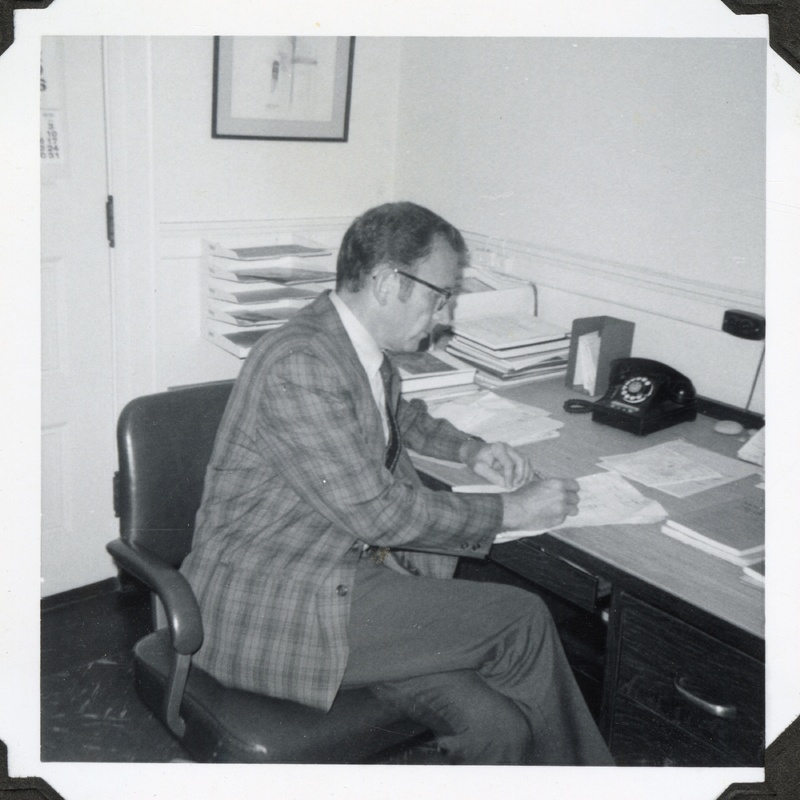
Finding a place for twenty-seven full time employees and eleven part-time employees requires the skilled training of a master schedule maker. Mr. Robert Woodward, Librarian, fills this requirement and thus keeps the operations of the library running smoothly.
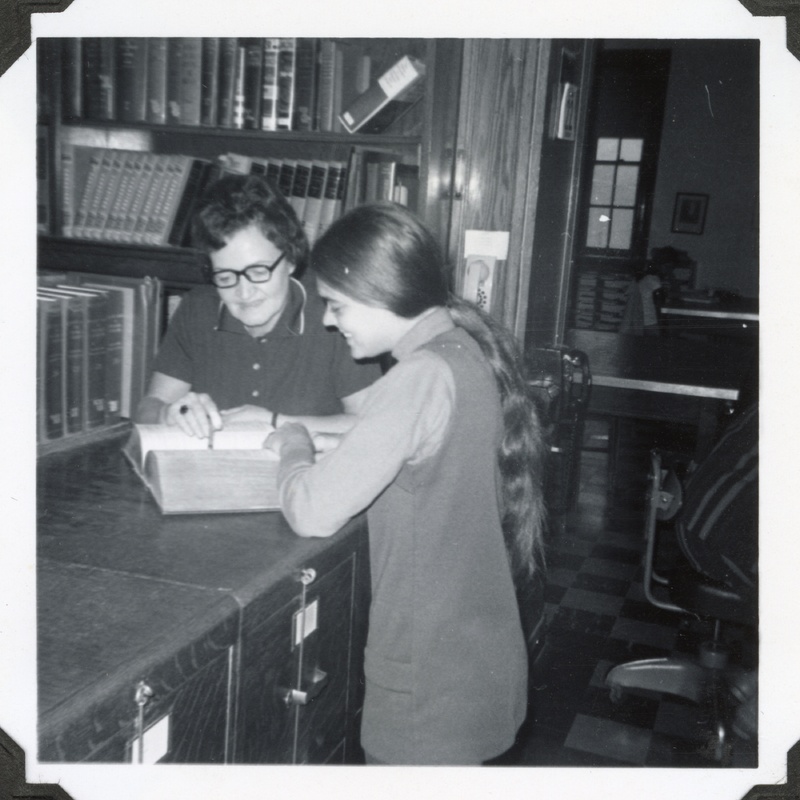
One of the numerous services the assistants in the Reference Department perform is instruction in the use of the Reader's Guide to Periodical Literature. Mrs. Hilde Szikszai (left), Reference Department assistant, explains to a student the meaning of some of the terms used in the entries.
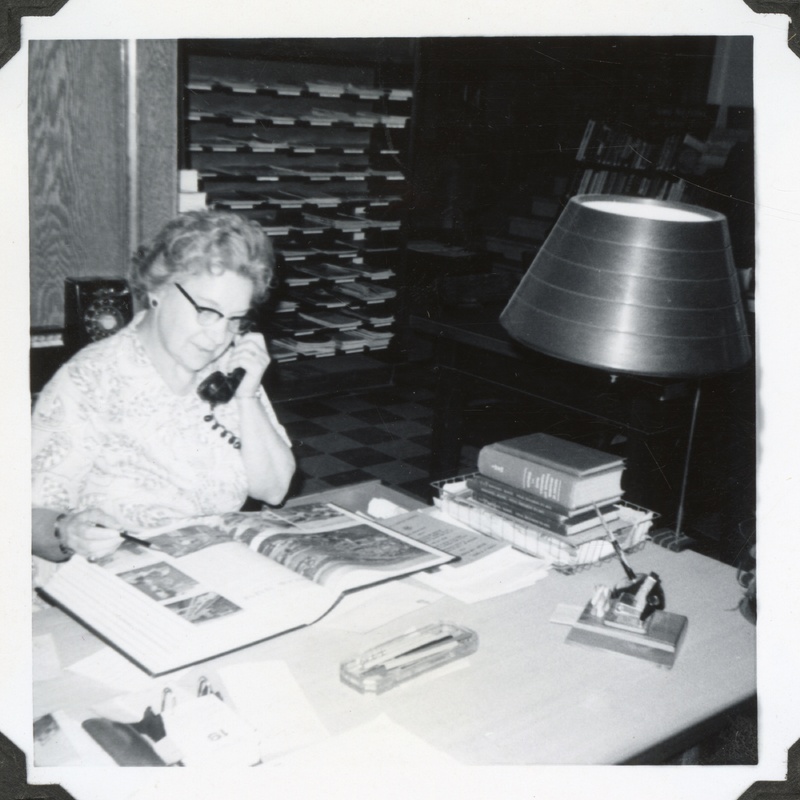
Over 14,000 in person, telephone, and mail inquiries on all subjects come to the Reference Department yearly. Mrs. Dorothea Flagg, Reference Librarian, answers by phone one of the many questions asked of the information center.
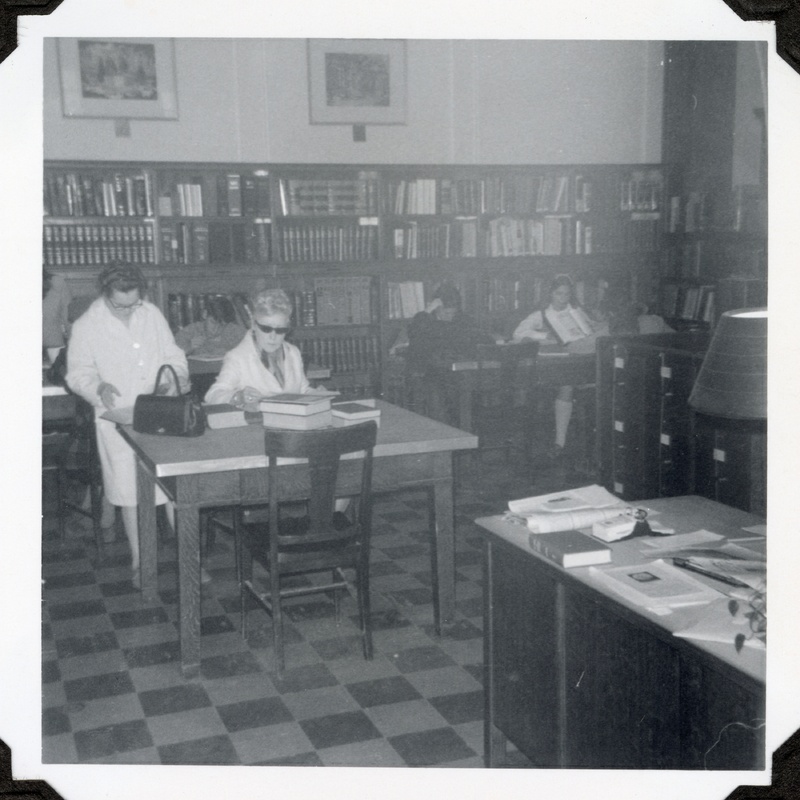
The Reference Department is a beehive of activity with adult patrons in the foreground working on genealogical research while high school students in the background use reference books to help finish term papers.
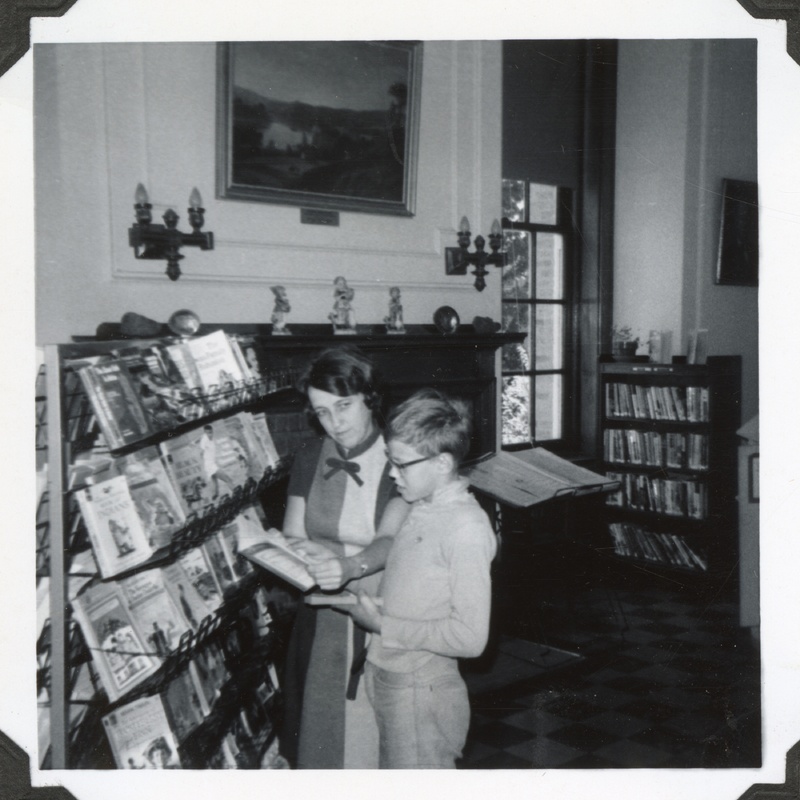
Paperbacks seem to be quite popular with the younger set. Mrs. Jane Pierce, Children's Department assistant, helps a young man select one which will give him many hours of enjoyment.
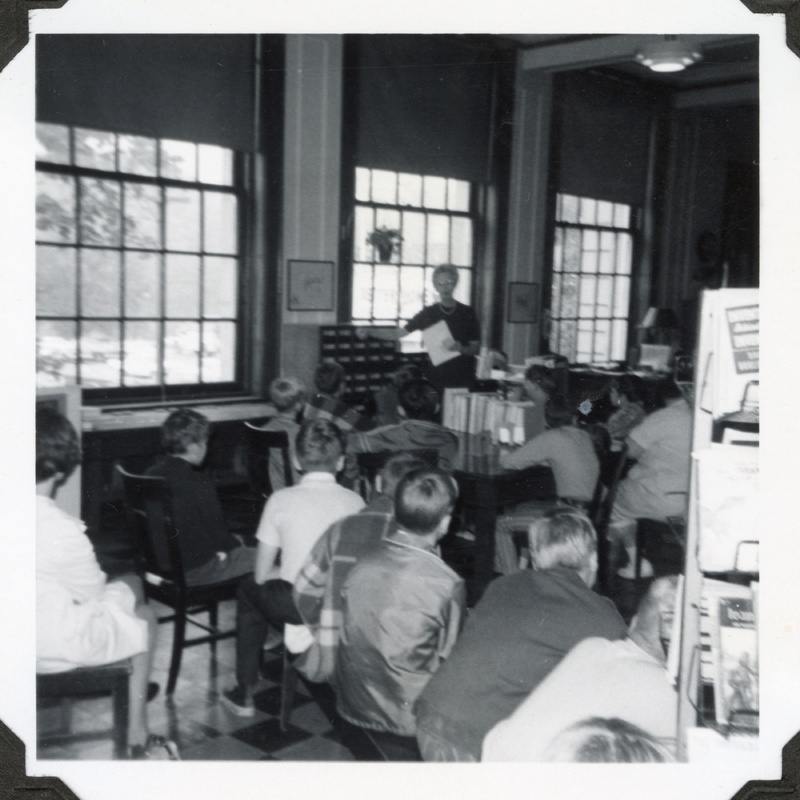
Instruction in the use of the juvenile card catalog and of other library facilities is given to a class of elementary school students by Mrs. Helen Wheeler, Children's Librarian.
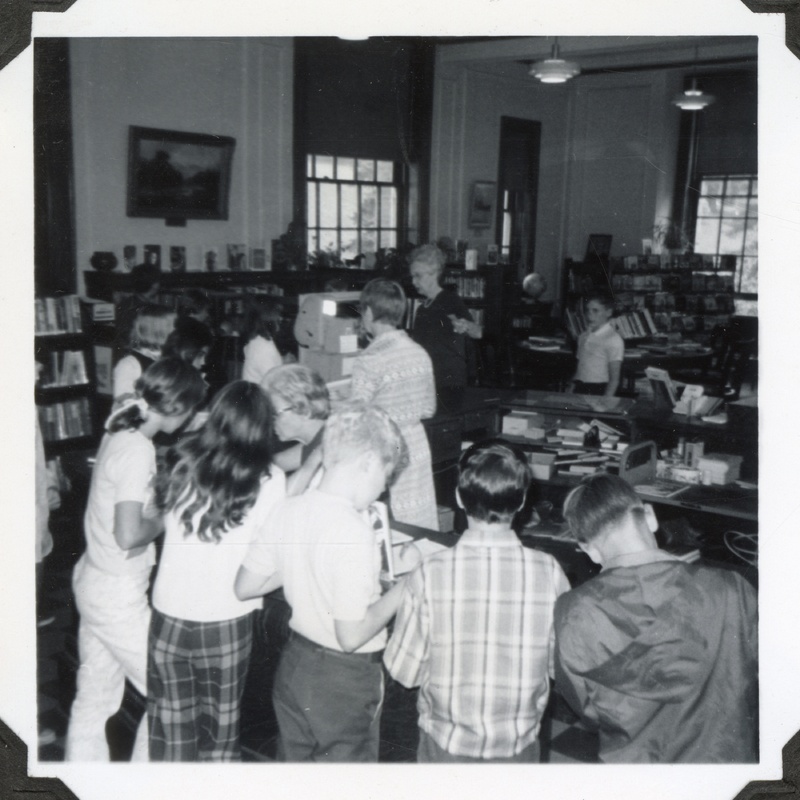
A typical daily scene in the busy Children's Department is young people waiting their turn to have their books checked out. The department has one of the largest collections of children's books in New England with over 41,000 volumes available for circulation.
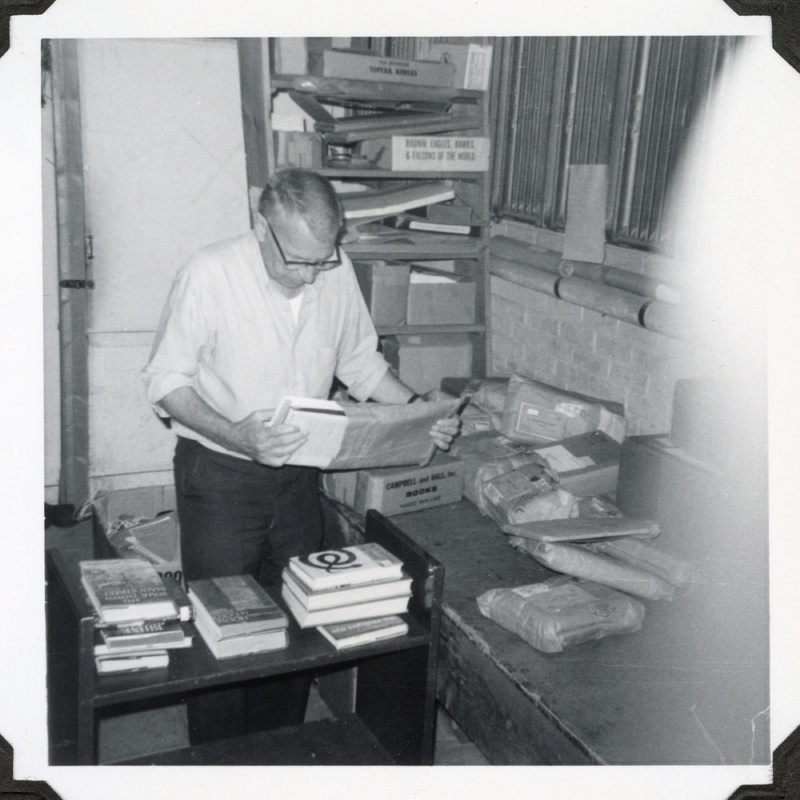
Mr. Robert Pettit, Head of Building Maintenance, also assists the Circulation Department by unpacking a few of the nearly 7,500 books that have been loaned yearly through the mail to other libraries and to individuals in towns around the state with resources less adequate than those of the Bangor Public Library.
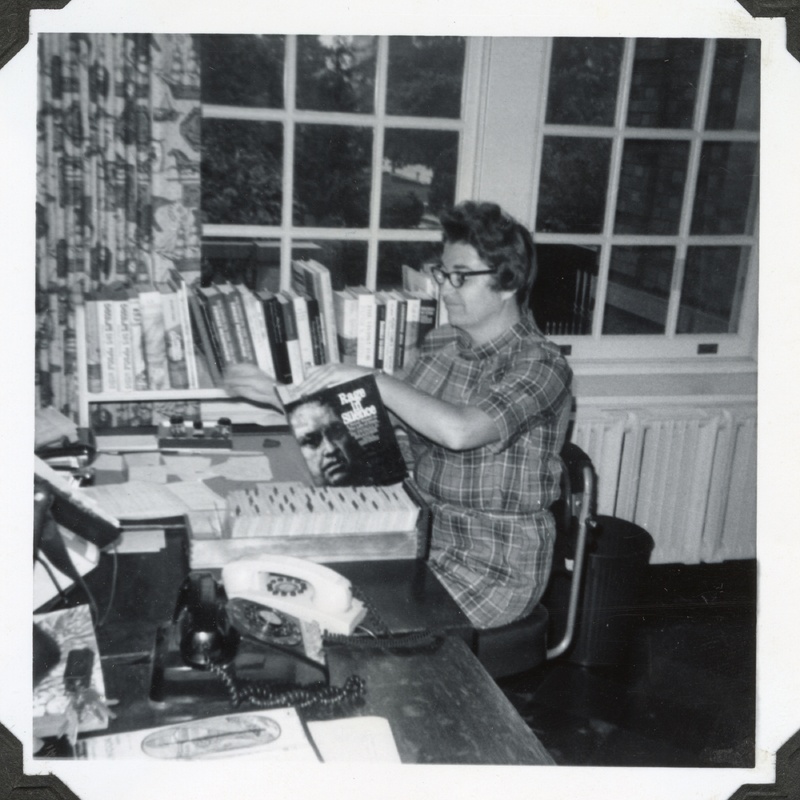
Mrs. Benita Davis, Circulation Librarian, not only co-ordinates and oversees the work of the Circulation Department, but also assists in the selection of books for the library collection. To help her in selection she uses professional library publications which carry brief synopsis of new publications.
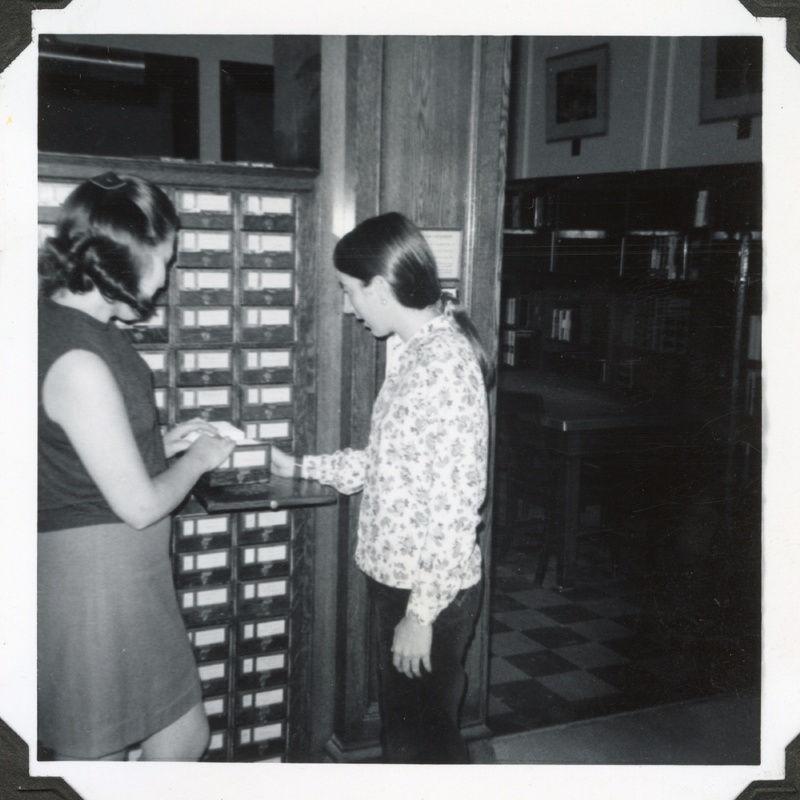
The public card catalog sometimes proves difficult for the average patron to use. Miss Gretchen Miner (left), circulation desk assistant, gives this young lady a helping hand in looking up the book she is seeking.