
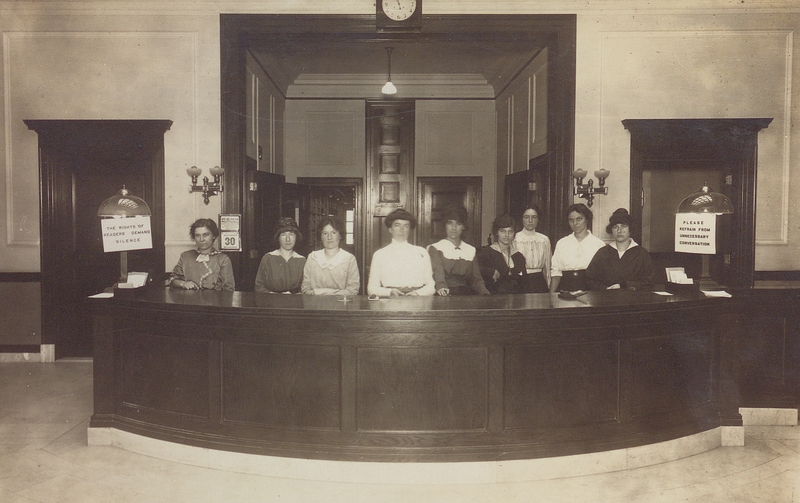
World War II Navy Cruise Books
- Title
- World War II Navy Cruise Books
- Description
- Photograph-rich publications documenting the deployment of a particular ship during World War II, including the ship's history, travels, battles, and personnel.
Items

Fighting Fox: U.S.S. George Elliott
Foreword: A ship is only as great as the men who sail her . . . This the story of a great ship ... U. S. S. George F. Elliott Auxiliary Passenger Number 105, affectionately and aptly known to her men as . . . "The Fighting Fox"
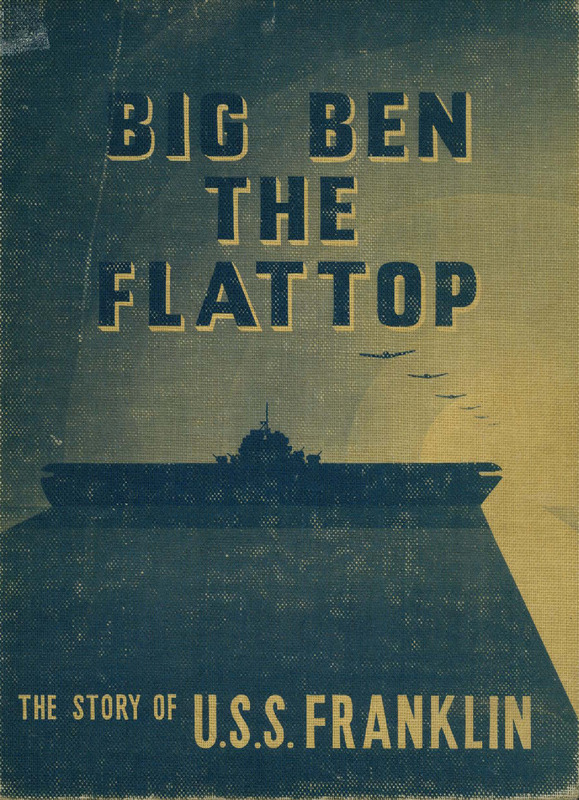
Big Ben, the Flat Top: The Story of the U.S.S. Franklin
This book is as nearly as possible an authentic history of the U.S.S. Franklin. The data was assembled from official action reports, ship's records, the history of Air Group Thirteen, and from conversations with crew members. The story was prepared by Lt. Marvin K. Bowman, U. S. N., with the advice and assistance of Mr. Paul Warrick, of Atlanta, Ga. ... All pictures are official U. S. Navy photographs. Credit for many of them is due Chief Photographer's Mate Luke J. Durante, who was killed in action 19 March, 1945. The art work, including the cover design, was prepared by Thomas Leo, Seaman First Class, U.S.N. R. Attempts to achieve accuracy of detail, especially in connection with individual's names, have been handicapped to a certain extent by meager records, separation of personnel from the service and partial destruction of photographic files and records during the action of 19 March, 1945. It is sincerely hoped that no grave omissions have occurred.
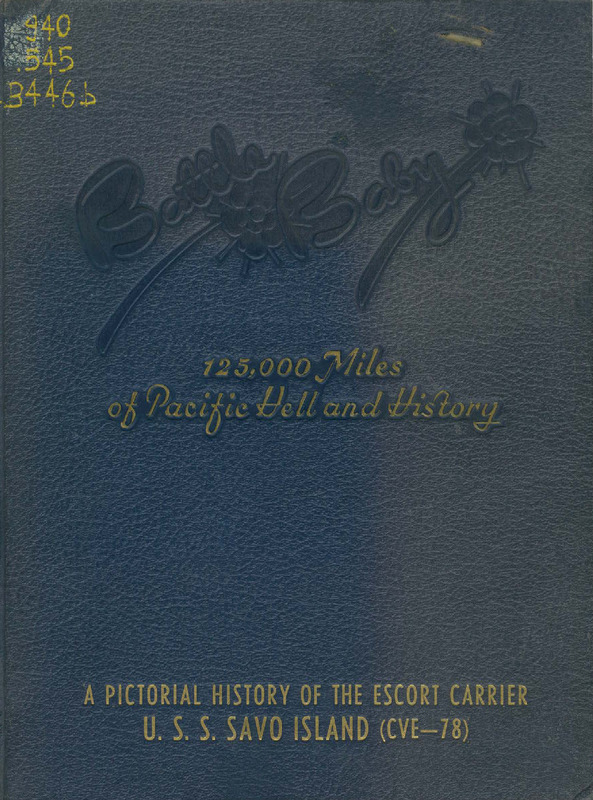
Battle Baby: A Pictorial History of the Escort Carrier U.S.S. Savo Island (CVE-78)
The ship was named after two naval battles which were fought near Savo in August and in October, 1942. In the first of these battles our forces were surprised, mistakes were made. and four cruisers were lost. It was a hard lesson, well learned. A few months later, one of our cruiser divisions intercepted a Jap task force near Savo and sank at least six vessels, cruisers, and destroyers. No great damage was done to our ships. The enemy was surprised, one of his cruisers was sunk before her guns were even trained out, and he was out-fought in every phase of the battle. As a result, this body of water, Purvis Bay. is known as "Iron-Bottom Bay." Savo Island is located in Sky Lark Channel between the Western extremities of Florida and Guadalcanal Islands. It is a product of volcanic upheavals, is only four miles in diameter, and consists of extinct volcanic peaks. Ships now anchor in waters that cover a village which subsided years ago as a result of an earthquake. Even today, there may be an occasional tremor. A few natives live on the island, and you will find very small villages and a mission station there.
Album USS Bairoko CVE-115
Opening paragraphs: Bairoko Harbor is a small inlet on the North coast of New Georgia, one of the Solomon Islands. A Spanish navigator, coming upon these islands in 1567, and hopefully believing he had finally touched on the fabled and wealthy lands of the Indies named the group "Ilas de Solomon." Subsequent English explorers claimed part of the group for Britain, and at the outbreak of the war New Georgia was under the English flag. During the early part of 1942, in their effort to cut the Allied supply line to Australia, the Japanese seized the Solomons and began the construction of a series of air fields throughout the islands--at Vila on Kolombangara, at Munda on New Georgia, and on Guadalcanal. Vila and Munda were mutually supporting fields. Bairoko Harbor lay between these two airfields and was the port of supply for Munda. By the spring of 1943 Guadalcanal was secure and we had sufficient men and material to open the offensive against New Georgia. On June 30, 1943, Rendova Island was seized and Munda then placed under artillery fire. Marines and Infantry landed on New Georgia. In the heat and muck of the tropical jungle they met a bitter Nip foe enraged at the loss of Guadalcanal. Resistance was particularly strong near Bairoko Harbor. After six weeks of desperate jungle fighting the Munda airstrip was overrun, but Bairoko Harbor did not fall until August 25th. Its seizure marked the end of the fifty-seven day campaign for New Georgia. Bairoko signified the end of this early Pacific campaign--so the name of our ship is a symbol for that final victory which came during her shakedown cruise.
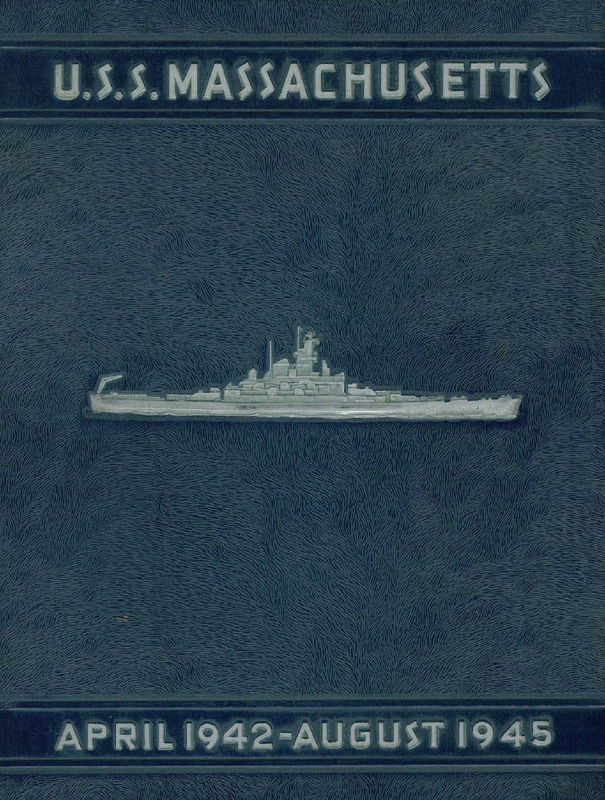
A Pictorial History of the U.S.S. Massachusetts
The Log Tossing the first sixteen-inch shell to open the European offensive and firing the last big naval bullet in the Pacific campaign--these are the outstanding mileposts in the 39-month fighting career of the U. S. S. Massachusetts. The Japs have capitulated; details for carrying out the formal surrender ceremonies have been arranged for the official end of World War II. The stories that make the war history can now be released and "Big Mamie" has one of her own. It may not be spectacular, but it reveals a ship manned by resolute and efficient officers and men who turned in a workmanlike job and who more than once received "well done" from the Admirals. It wasn't always easy going and the grind was monotonous but ... here's our story. When peace came to the Pacific, Mamie could look back on a long and action-packed career. From the time of commissioning on May 12, 1942, until the end of the war in mid-August, 1945, she had logged over 225,000 nautical miles, her journeyings taking her all the way from Casablanca to Tokyo and the China coast. She had taken part in some thirty-five engagements with the enemy. She had sunk or damaged five ships, including the mighty French battleship, Jean Bart. She had taken part in nine bombardments of enemy territory, three of which were directed at the Japanese home islands. She had destroyed or assisted in the destruction of at least eighteen Japanese aircraft. Her scout Kingfisher planes had rescued seven aviators downed by enemy fire, often performing the rescues within sight and range of Jap guns. Thanks to her fire-power and speed, she had lent invaluable support to the fast carrier task forces as they carried out their mission of crippling Japanese air-power and seizing control of Pacific skies. Our ship has been a workhorse of the Fleet. She was always in there pitching when there was fighting to be done. She went about her tasks without ostentation and with a high degree of competence and skill gained from long hours of practice and of combat.
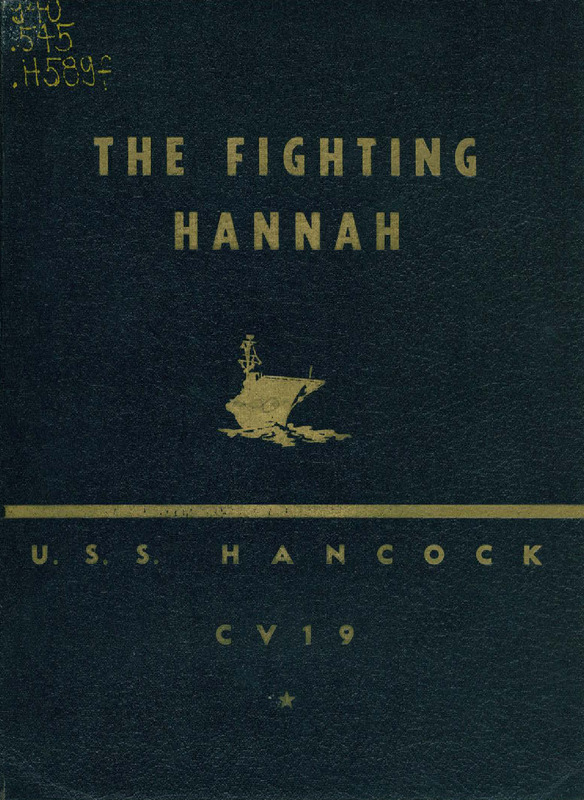
“Fighting Hannah”: A War History of U.S.S. Hancock CV19
"On July 15th, 1946, the U.S.S. Hancock was officially awarded the Navy Unit Commendation for outstanding heroism in action ... Today she is one of many proud ships moored along the thousand-mile shore-line of Puget Sound, a memorial to the men who trod her decks in the hope of providing a just and lasting peace. At dusk as the sun dips behind the snow-capped Olympic Mountains to the westward it sets upon a nation which has yet to know a conqueror's tread. The price of that freedom is so great that if the lowering of colors each evening were a tribute to a single fallen hero of World War II it would take a year to honor the Hannah's own casualties and more than eight centuries would elapse ere homage were paid in full. May we build no earthly monuments to those who lie beneath the far Pacific, or on some foreign shore, save the monument of a lasting peace for posterity--should we falter in our course may those ghostly ships, rising and falling on the eternal tide, serve as a reminder of our obligation to them."
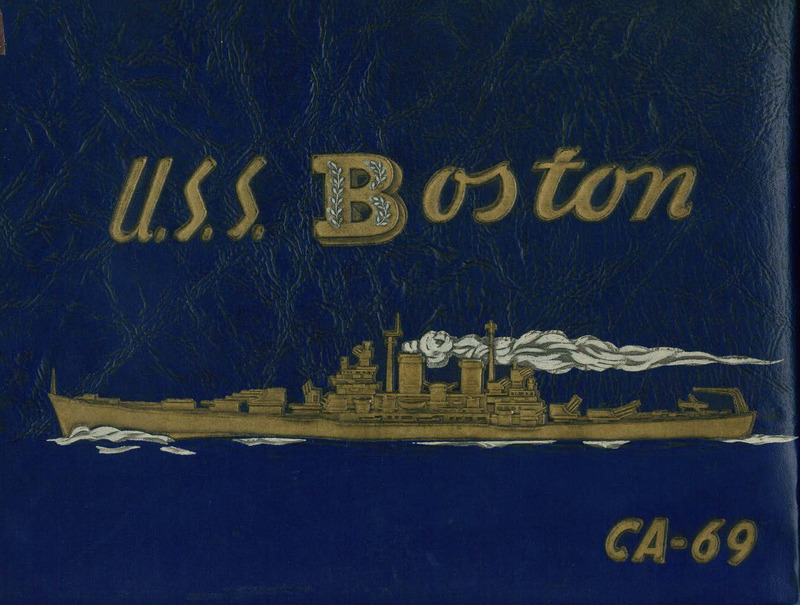
U.S.S. Boston, CA-69
From "The Story of the U.S.S. Boston" by Henry G. Leader, SP (X) 3/C: Built for speed, maneuverability and tremendous fire power, the USS Boston is the second ship of the Baltimore class. Ordered July 1, 1940 prior to the outbreak of the war, her keel was laid June 30, 1941 in the Fore river yard, Quincy, Massachusetts by the Bethlehem Steel Company. On August 26, 1942 Mrs. Maurice J. Tobin, wife of the Honorable Maurice J. Tobin, Governor of the Commonwealth of Massachusetts, sponsored the launching, and on June 30th of the following year, the ship's ensign fluttered in a gentle breeze as she was officially commissioned and accepted by her first commanding officer, Captain John H. Carson, USN. Slipping smoothly through Atlantic waters, the Boston began her maiden voyage on August 13, 1943 en route to the Gulf of Paria, between Trinidad and Venezuela, for the shakedown cruise designed to accustom her crew to the sea and enable officers to detect any possible wrinkles in her makeup. A month later the Boston returned to her home port. a fighting ship with her crew well trained to fight the enemy. On the record of her engineering trial, she was established as one of the fastest heavy ships in the fleet; on the record of her gunnery exercises she was established as a good gunnery ship. After a few more weeks in the port of Boston and some trial runs off Rockland, Maine, the USS Boston set out on November 18 to fulfill the job for which she was designed and built-the defeat of this country's enemy in the Pacific. After passing through the Panama Canal, followed by a two day lay-over in San Francisco, she arrived at Pearl Harbor on the eve of the second anniversary of the Japanese sneak attack. Six weeks were spent in Pearl Harbor waters engaging in more of the exercises that are so essential to the maintenance of the fighting qualities of a First Class Warship.
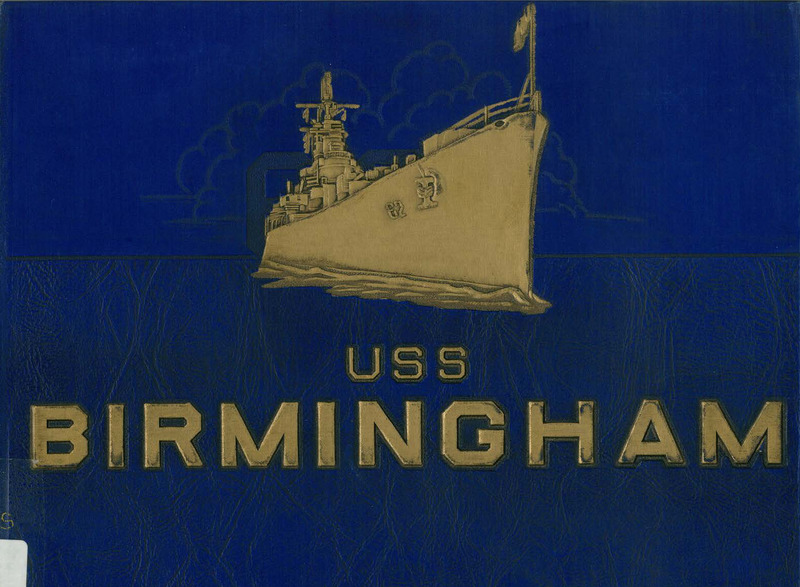
The Saga of the U.S.S. Birmingham: A Compilation of Her Officers & Men
Foreword: It was my good fortune and high honor to be entrusted with the command of the Birmingham from 11 August, 1943 to 22 November, 1944. Those were months filled with action, excitement, and high adventure. The trials and triumphs which we shared together; the knowledge that the success of the ship and the safety of all depended upon the devotion to duty of each; the understanding that the team was more important than the individual; the mutual respect and affection amongst us all; all these things made us "shipmates" in the finest sense of the word. In the face of exhaustion, danger, and grimmest tragedy there was no grumbling, no shirking, and no flinching. Young America need concede nothing in fortitude to other races or other generations. Our steel ships, too, are served by iron men. Never in history had a Captain the good fortune to command a finer crew. --Rear Admiral Thomas B. Inglis

U.S.S. Lunga Point, CVE 94: A Pictorial Log Covering the Ship’s Career in the War Against the Axis, 14 May, 1944-14 May, 1945
Foreword: It has been regretted for some time that, because of Wartime restrictions, personally owned cameras are not allowed on board, and it has been impractical for the Photo Lab to attempt to furnish all hands with pictures of the places we have visited and of the many interesting, thrilling, exciting and even hair-raising experiences that we have had during this, our first year as an integral, fighting part of our Fleet. Considerable thought also has been given to devising some means whereby the memories of our many experiences, and our everyday life aboard, might be preserved in a definite and concrete form, because, regardless of how anxious we are to get back to our families, and regardless of how arduous, trying, and nerve racking our experiences have been, when the time comes for us to leave the Lunga Point, it is confidently believed that our happiness in returning to our families will be mingled with a genuine feeling of regret in having to leave the many friends we have made on board, not to mention the regret we shall feel in leaving the Lunga Point, which has, after all, been our home for many months now. We feel that we can say without fear of contradiction that the Lunga Point and those who have served in her will have a very warm spot in the heart of every Officer and man who has been privileged to fight her, and that place in our hearts will ever increase as the years roll by. .... Every officer and man should, therefore, receive due credit for the part he played, and for that reason, the name, rank or rate, and home address of every member of our Ship's Company will appear in this book, except for some few who have been transferred without leaving their addresses. In the above paragraphs, this book has its genesis. It is not a perfect book by any means. There have been many obstacles, some of which it was impossible to surmount, but it has been our earnest endeavor, as nearly as possible, to completely and faithfully chronicle our first year for you. If this book achieves its purpose of preserving those friendships and memories of the past year, we will have been well rewarded for our efforts, because, as your Editor, we will have that deep sense of personal satisfaction that can come only from the knowledge of a job well done. It's been a grand cruise, Shipmates. Au revoir! And God Bless you all. --S. Linton Smith, Lieut., USNR
The Panther Strikes, a History of the U.S.S. San Juan CL54
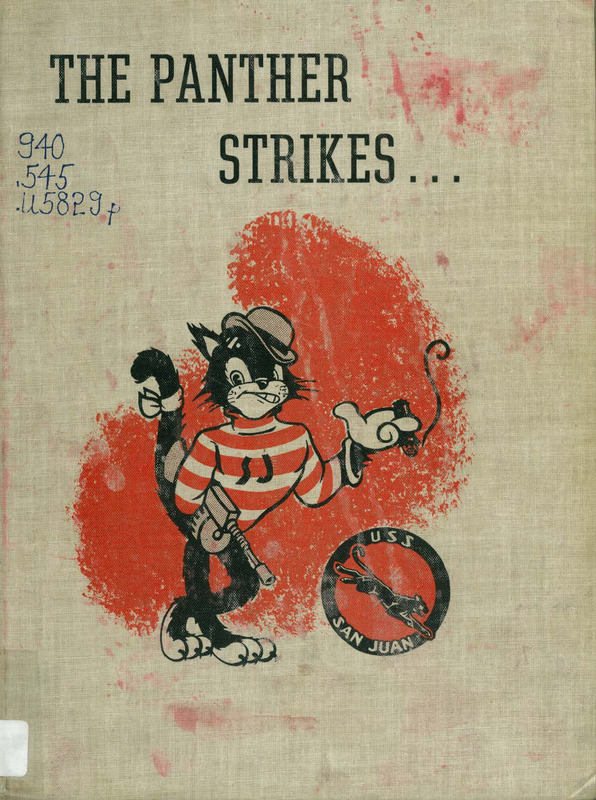
The story of the United States cruiser San Juan is, in reality, the chronicle of a relatively small group of men, and of ships, bound together in allegiance to a common flag--the colors of a free nation whose peacetime borders boast no fortifications, save the guns of a salt water fleet. It is the story of a Navy which arose from staggering defeat to "bring the fleets of two aggressor nations to their knees, receiving their surrender within four months of each other." It is the saga of a sleek anti-aircraft cruiser whose graceful lines and latent power won for it the affectionate nickname "Panther"--a nickname which matured, as the San Juan itself matured, through fifteen major engagements against an enemy victorious in every war since 1596. The sobriquet gained material being by way of a signalman's sewing cunning and under Captain J. E. Maher, U.S.N., the San Juan's first commanding officer, the "Panther Flag" gained recognition as a battle flag and from that time on flew from the foretruck during the "Panther's" strikes against Japan. E.G. Hines, USNR
The Minnie, or, the War Cruise of the U.S.S. Minneapolis
From the Prologue The Minnie is truly a veteran. Only a very few other fighting ships in Uncle Sam's Navy have more battle stars than the Minneapolis. During one twenty-month cruise in the Pacific she covered a distance equivalent to nearly seven times around the world. She was in port only eight days during this period which netted each crewman 48 hours of leave. The Minneapolis has served with the Third, Fifth and Seventh Fleets and in all types of operations. Many times the crew could not help but believe that the old ship was classed as expendable, as whenever there was a job to do, the Minnie seemed to be assigned to help do it. Censorship kept her name out of the hometown papers because she was always in action. It has been said the ships that get the publicity are the ones that get sunk, but the Nips couldn't sink the Minnie although they tried time after time.