Explore history through the digital collections of the Bangor Public Library and our community partners in Bangor, Maine
World War II Navy Cruise Books
Title
World War II Navy Cruise Books
Description
Photograph-rich publications documenting the deployment of a particular ship during World War II, including the ship's history, travels, battles, and personnel.
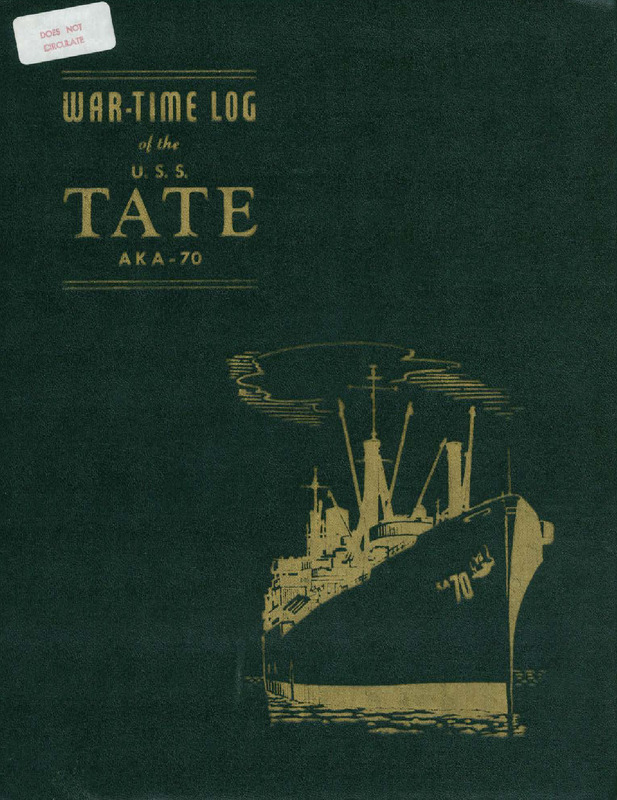
Foreword: Between these covers is preserved a record, in pictures and text, of life aboard the U.S.S. Tate during her war-time voyages, and of her many ports of call. A good ship with a good crew, she carried us through many difficult situations and did her part with honor in a great war. We shall never forget her.
"It was the sixth of July in 1943, she had just been commissioned. Within the course of time she would be called many names, some spoken in anger, some in fear, some in pain; but now she was the U. S. S. Heermann (DD532.) The gods were pleased. The crew was like the country they served. They came from east and west, north and south. They'd been farmers, students, grocers, salesmen. They were of every color, every creed. We were lucky, there were a few old hands aboard to help build a fighting crew for a fighting ship. Then came the shakedown cruise. There is nothing under the sun like a shakedown cruise. It's indescribable but it gets results. After that period in San Diego we began to look as if we had "been born on the crest of a wave and rocked in the cradle of the deep." Shakedown gave us forewarnings of things to come and suddenly it became apparent that fighting a war was hard work and lots of it. On the first of October, after another brief session in the yard, the powers that be decided that the Heermann was ready to go out and win her spurs. So we headed out toward the islands. That last look at the Golden Gate Bridge always seems to be the one that hurts the most. All of us knew it would be many a day before we would be Stateside again, but we were ready-we had the finest ship in the Fleet and the finest group of men alive to fight it."
From The Ship's History: The writer of this history, neither an historian nor a member of the ship's company, has tried to make it an exercise in objectivity. Yet, in reading the logs and action reports, he has come to a certain feeling and conclusion. It is that the performance and accomplishment of DD663 may be directly linked to the performance and accomplishment of all her crew ... rather than to individual heroes. That her men unconsciously felt this may be seen in the name they called her with pride and a little awe. She was "Task Force 663"--a coordinated machine. To all who served in her, let that be high praise ... for DD663 herself let it be an epitaph.--Lt. William J. Colilan, Jr., U.S.N.R.
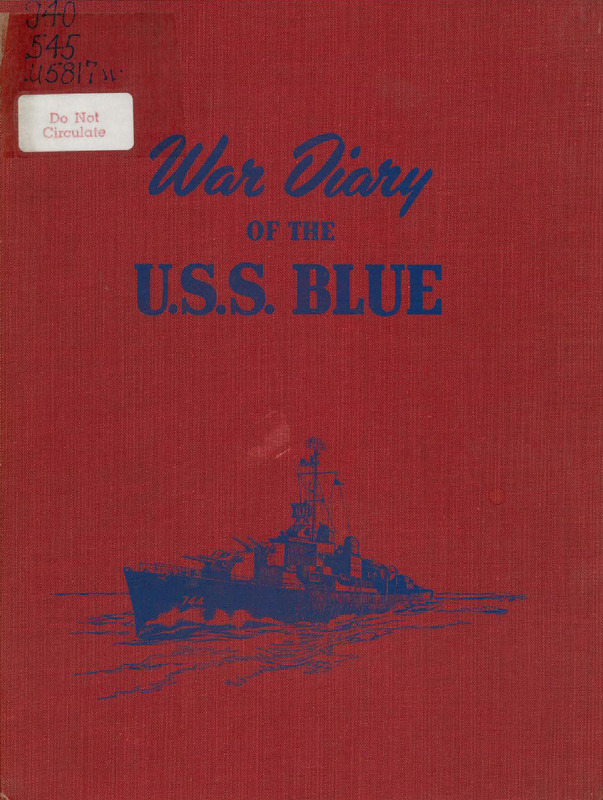
"On November 30, 1943, the destroyer Blue was launched in the Bethlehem Steel Shipyard, Staten Island, New York. She went into commission on March 20, 1944, in the New York Navy Yard, Brooklyn, New York, with nineteen officers and 3 3 5 enlisted men aboard. The Blue was one of the first 2,200 ton super-destroyers to be commissioned in the navy, and was named after the 1,500 ton U.S. S. Blue (DD387), which was sunk in the Solomon Islands Campaign in 1943. The first Blue was named in honor of the late Admiral Victor Blue and his son, Lieutenant-Commander John Stuart Blue, who was killed in action in the South Pacific."
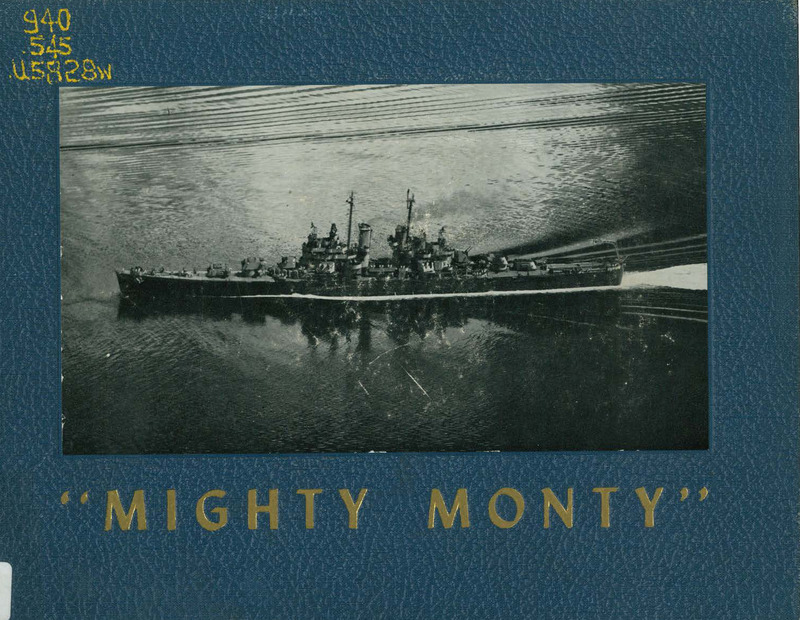
Foreword: This so-called War Diary is an honest attempt to record a brief chapter in the young life of a gallant ship. No effort has been made to glamourize her deeds; no claim has been made that she fought the war single-handed; no single incident or group has been intentionally emphasized or omitted. The Monty was a workhorse from the Solomons, through the Marianas, the Philippines, the Nansei Shoto, and into Japan proper--for thirty-six long months she successfully fulfilled her missions. So for posterity we preserve herewith her experiences, as seen from her decks and from her spotting planes. author unknown
The U.S.S. Westmoreland (APA 104) was commissioned a Navy vessel by Captain H. V. McKittrick, USN, representing the Commandant Third Naval District, at Hoboken, New Jersey, on 18 January 1945. Captain James "M" Hicks, USN, assumed command. The Westmoreland was named for the counties of that name in the States of Pennsylvania and Virginia. The latter county is the birthplace of George Washington and Robert E. Lee. The keel of the Westmoreland was laid on 7 December 1943 at Pascagoula, Mississippi, where she was built by the Ingalls Shipbuilding Corp. for the U. S. Maritime Commission. After construction was completed, she was sent to Todd Shipyards, Hoboken, New Jersey, where she was converted to an APA (Auxiliary Transport-Attack) .
Introductory Note: World War II is now history. Volumes will be written about it, covering every phase of strategy, politics, logistics. Generals, admirals, prime ministers, presidents, and historians will all have their say. But for those of us who served aboard the Ticonderoga, the war was Reveille at 0315--mail call 7000 miles from home--a TBM in the drink--two cans of beer on "beautiful Mog Mog"--basketball on the hangar deck--and 21 January 1945. The simple purpose of this book is to preserve in pictorial form the scenes, the events, and the memories of the part played by our ship and our shipmates.
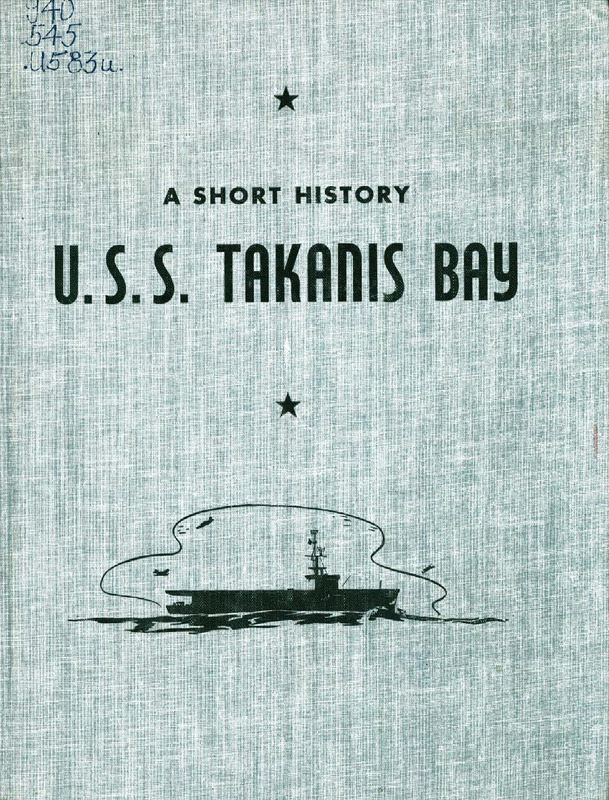
Opening Passage of "History of the Takanis Bay": The tale of the U.S.S. Takanis Bay (CVE 89) begins long before the keel of Hull 89 was laid by the Kaiser Shipbuilding Company. Like so many of the Casablanca Class carriers, the "T.B." was named for a peaceful little bay in Southeastern Alaska. Author: E.G. Hines, USNR
U.S.S. Saidor launched in March 1945 and was decommission in September 1947. The Saidor served as a photographic laboratory for the atomic bomb testing program, Operation Crossroads. This book chiefly shows photographs of the crew in action aboard the ship. Photographs are included of all the men aboard with their divisions.
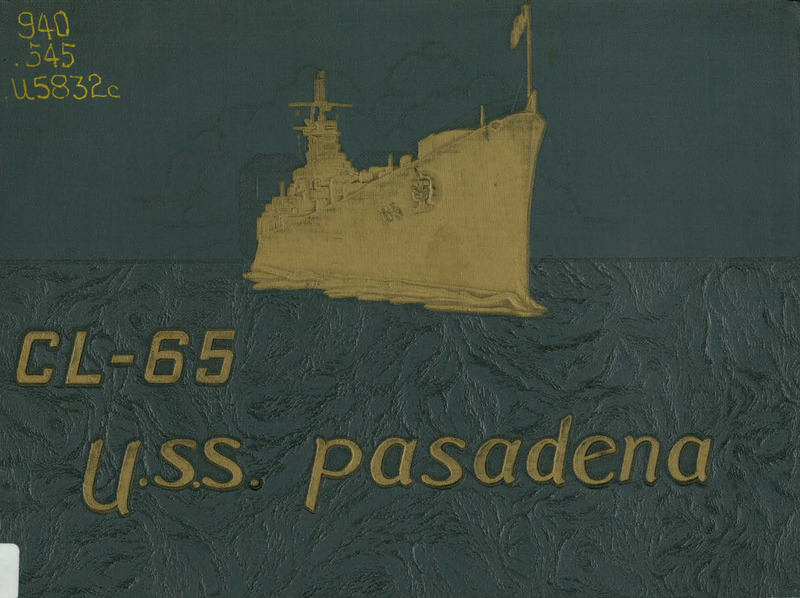
Foreword: Bound in this volume is the history of your ship the U.S.S. Pasedena. This book has been written by the officers and men of the ship upon which you so gallantly served. The pictures cover the whole course of the war in which the Pasadena took part, including its launching and commissioning. The narrative is non professional and each department's History was written by one of its own officers or men. To those of you returning to civilian life this book will serve as an informal record of your service in the Navy.--Editors
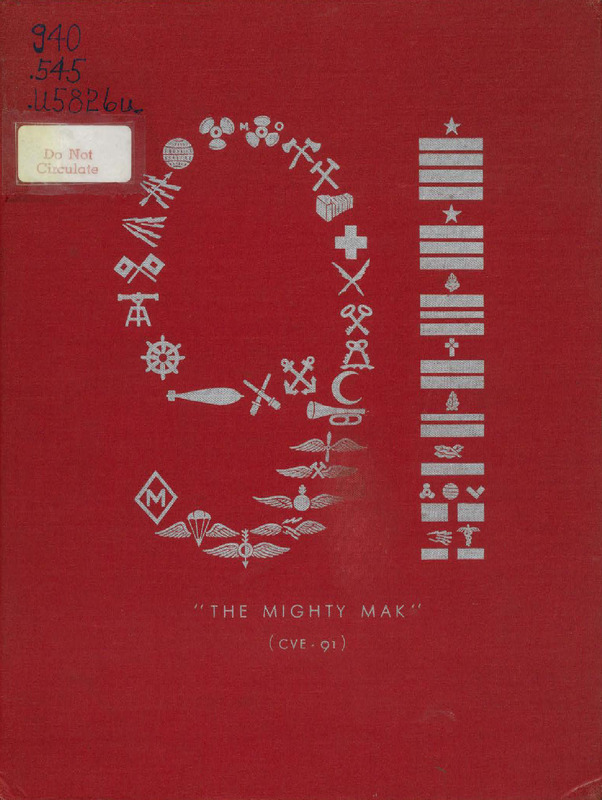
On April 27, 1944, the escort carrier Makassar Strait (CVE 91), joined the United States fleet. The Navy had only recently started on the long road of island-hopping to Tokyo. On January 14, 1946, the same carrier sailed her "last mile" to a Tacoma pier, to be placed "in commission in reserve." The war had ended five months before; most of America's fighting men had been returned to their homeland. The "Mighty Mak" had completed her mission in World War II. The job was done--well done. In the twenty-and-a-half months between those two dates, the baby flattop had been called upon to serve in a great variety of assignments. She had fought in direct support of landings and invasions; given aerial protection to the vital life-lines of supply to a fleet operating far from land bases; ferried many loads of planes to vital outposts; given training to hundreds of pilots enroute to front-line carrier duty; served as an experimental station afloat; and, when the fighting was over, scurried back and forth between Pacific islands and the West Coast bringing veterans home on the "magic carpet." During this period, the Mak churned up a wake through more than 115,000 miles of Pacific ocean --a bout half way to the moon. Over fifteen thousand times Navy pilots had brought their Avengers, Wildcats, and Corsairs down on her sturdy flight deck. This was the record of the 10,000-ton box-shaped floating airfield ... This is the story of the "Mighty Mak."
From U.S.S. Herald of the Morning Log The U.S.S. Herald of the Morning built for the Maritime Commission as a C-2 cargo ship, and converted by the Navy into a medium-sized transport, spent most of her time as a Naval auxiliary in Pacific theatre amphibious operations during the war. This ship engaged in five amphibious operations, several re-enforcement runs into forward areas and was under enemy attack frequently but successfully eluded damage. Since the cessation of hostilities the Herald operated as part of the "Magic Carpet" and the Naval Transportation Service, evacuating Army and Navy personnel from the Pacific areas and carrying replacements to forward stations. Built by the Moore Drydock and Shipbuilding Company of Oakland, Calif., in the summer of 1943, she was named for the American sailing ship "Herald of the Morning" which was famous on both oceans in the second half of the 19th century as a fast and beautiful medium clipper. The new Herald made one trip to the Hawaiian Islands as a merchant cargo vessel before being taken over early in 1944 by the Navy for conversion into an auxiliary transport.
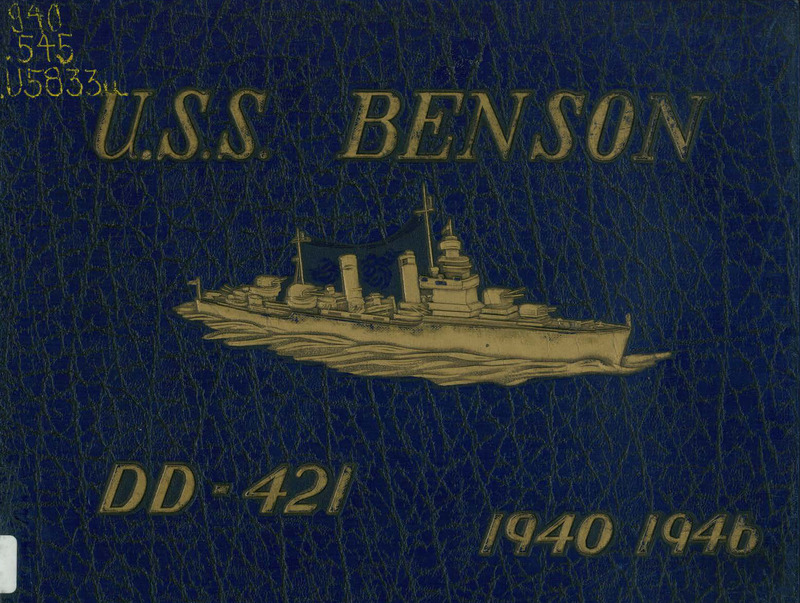
From The Log of the U.S.S. Benson DD-421: The U.S.S. Benson (DD-421), is one a class of thirty-two destroyers, known as "Benson Class of 1937-1940." The Benson is one of thirty destroyers built to Bethlehem-prepared plans. The Benson is named for Admiral William S. Benson, U.S.N., and was built at the Bethlehem Steel Company Plant, Quincy, Massachusetts--authorized March 27, 1934; keel laid May 16, 1938; launched November 15, 1939 and first commissioned July 25, 1940. Some of the characteristics of the Benson class are: square funnel caps and bases; uneven height of stacks. Destroyers of this class are ten tons lighter and eight inches narrower than destroyers of a later class, known as the "Livermore" type; otherwise they are similar. Both classes have four high-pressure boilers, geared turbines and twin screws. Cruising range exceeds 9,000 miles at 15 knots. The "Benson " class, DD-421 to DD-428 were originally armed with five 5-inch-38's, and ten tubes. A few still carry ten tubes. Light armor protects bridges and controls in all newer destroyers. Little has been written of the part that destroyers played in World War II, where they were called on to fulfill such a variety of missions that they were multi-purpose ships, engaging in any form of combat. Because we lacked suitable escort ships, destroyers were used to protect convoys, as well as to guard our combatant Task Forces. Destroyers were used to bombard enemy shore positions, and to carry bombs and aviation gasoline, and stores to Guadalcanal during the lean weeks, early in the campaign in those far-distant seas. By nature as well as by name, the purpose of the destroyer is wholly offensive Bantamweights in comparison with the great battlewagons, they pack a punch out of proportion to their size. They are triple-threat weapons, built to strike at the enemy on or over or under the sea. They are the "fightingest things afloat."
The U.S.S. Fanshaw Bay (CVE 70) was commissioned December 9, 1943, at Astoria, Oregon, less than seven months after the keel was laid by Kaiser Company in Vancouver, Washington. Named for a bay in Southeastern Alaska, she is the first Naval vessel to bear that name. Like other Casablanca class escort carriers, the Fanshaw Bay was built from designs never intended for a combat vessel, yet she carried her crew through the longest operational period sustained by any escort carrier. Dedication Wherever the Fanshaw Bay shall sail again in the reminiscences of her old crew, she will carry with her the memory of those gallant men who have answered their last call to flight quarters. To the twenty-four men killed in action and to the fourteen missing airmen this history of the Fannie Bee is humbly dedicated.
Dedication: The purpose of this book is to tell a story--not just an ordinary story, a fictional creation of one man's mind, but a living, dynamic story. It is living and dynamic because it is the story of a life. In word and picture it depicts the life of her whom we affectionately call "Queen of the CVES"--the U.S.S. Hoggatt Bay, CVE 75. It is the story of the men who transformed her from an inanimate bulk of steel into personality endowed with life and feeling and courage, of the men who guided her through perilous waters, of the men who manned her guns to ward off the enemy, of the pilots who soared from her flight deck to search out and destroy the same enemy. In short, it is the story of the officers and men of the Hoggatt Bay who have lived, and fought--and died--that others might live in peace. To all of them, those still aboard, thos who have left us, and especially those pilots and aircrewmen, heroes all, who took off from her flight deck never to return again, this book is proudly and affectionately dedicated.
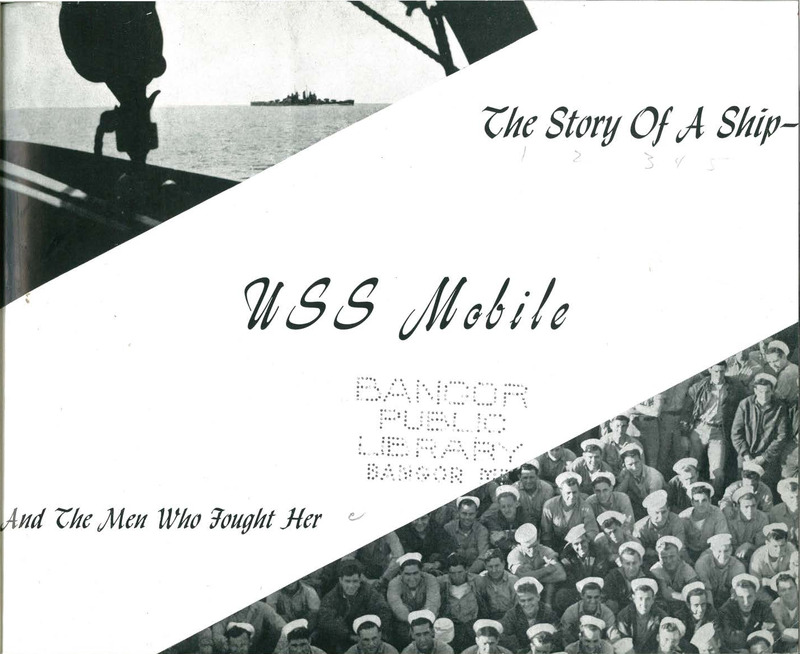
The U.S.S. Mobile, CL-63 Authorized at a time when hostilities in Europe were arousing keen concern over our own naval shortcomings, the story of the Mobile corresponds closely with the development of our naval strength in the Pacific. Only one other ship has borne the name: she was a small warship operating under the Union colors with Admiral Farragut's fleet during the Civil War. The keel of the new Mobile was laid on April 14, 1941 at the Newport News Shipbuilding and Drydock Company and on May 15 of the following year the hull of CL 63 slid down the ways. The sponsor was Mrs. Harry T. Hartwell, wife of the president of Mobile's city commission. On March 24, 1943 the commission pennant was raised with appropriate ceremony and Captain C. Julian Wheeler took command. After a short period of training in the Chesapeake Bay and a brief visit to Casco Bay, Maine, the Mobile turned toward the Pacific, leaving the Canal a stern on the 20th of June. With eleven "Battle Star" operations to her credit the story of the "Mighty Mo" is told by the record of her achievements, by the accomplishments of the fleets in which she worked, and, in part, by the pictures which follow.
At 1500 February 23, 1944, the U.S.S. Richard P. Leary (DD-664) was placed in commission by Captain R. C. Grady, USN (Ret.), in Navy Yard, Boston, Massachusetts. Commander Frederic S. Habecker, USN assumed command. This vessel was named for the late Rear Admiral Richard P. Leary, USN and was built at the Navy Yard, Boston Massachusetts, the keel having been laid on 4 July 1943. The launching took place on 6 October 1943.
The U.S.S. Oglethorpe (AKA-100), was built by the Federal Shipbuilding and Dry Dock Company, Kearny, New Jersey, for the U. S. Maritime Service, and converted to the U. S. Naval Service under current emergency war acts. The keel of the vessel was laid on December 26, 1944, and the ship was launched April 15, 1945. Mrs. Ellsworth Buck, wife of Representative Buck of New York, sponsored the ship at launching. The ship is named for Oglethorpe County, Georgia, which in turn, was named in honor of James Oglethorpe, founder of the State of Georgia. The vessel was completed on June 4, 1945, made its trial runs on 4 and 5 June, 1945, was accepted by the U. S. Navy on June 5, 1945, and commissioned for duty on June 6, 1945, at Pier "J", Berth 15, U.S. Navy Yard, Brooklyn, New York. The ship's company was on board at the time of commissioning.
From The Ship and Her Travels On February 21st, 1945, the General Leroy Eltinge was comissioned at San Francisco. When we fell in on top of Hatch No. 5 for the ceremony, the band was playing and visitors were gathered in the 20mm. gun tubs. The ship was presented to Captain Wakefield and he replied with a short speech of thanks. After the chaplain gave the benediction, the commissioning pennant was run up. We were through with ceremony and ready for work. There was plenty of that--we went across the bay and loaded stores for 48 backbreaking hours in an all hands evolution. During the days that followed there was much to be done to get things "squared away" in readiness for the shakedown cruise. At last, on March 4th, we got underway for San Pedro. On the way down we held speed runs, gunnery exercises, and dozens of other tests to find out everything we could about our new ship. And everything went well. After we reached San Pedro we went out for more gunnery exercises and for simulated strafing attacks and things still went well. We were ready for sea.
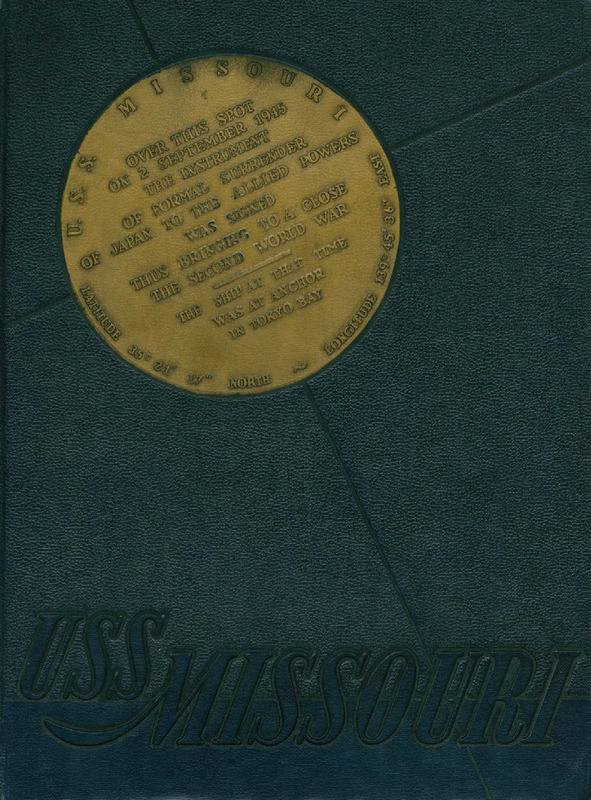
"U.S.S. Missouri. Over this spot on 2 September 1945 the instrument of formal surrender of Japan to the Allied Powers was signed, thus bringing to a close the second World War. The ship at that time was at anchor in Tokyo Bay. Latitude 35° 21' 17" North -- Longitude 139° 45' 36" East"--Cover
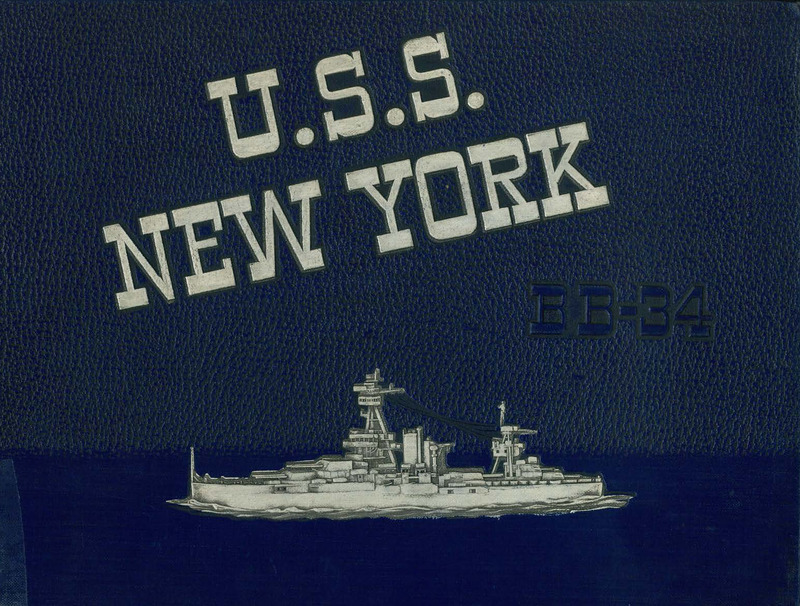
The U.S.S. New York, whose career spans a thirty-one year period embracing a volume of tradition which might well be the envy of any ship of the Fleet and whose name has been borne of six vessels of the United States Navy through 170 years of naval history, has the unique distinction of having played a noteworthy role in two world wars.
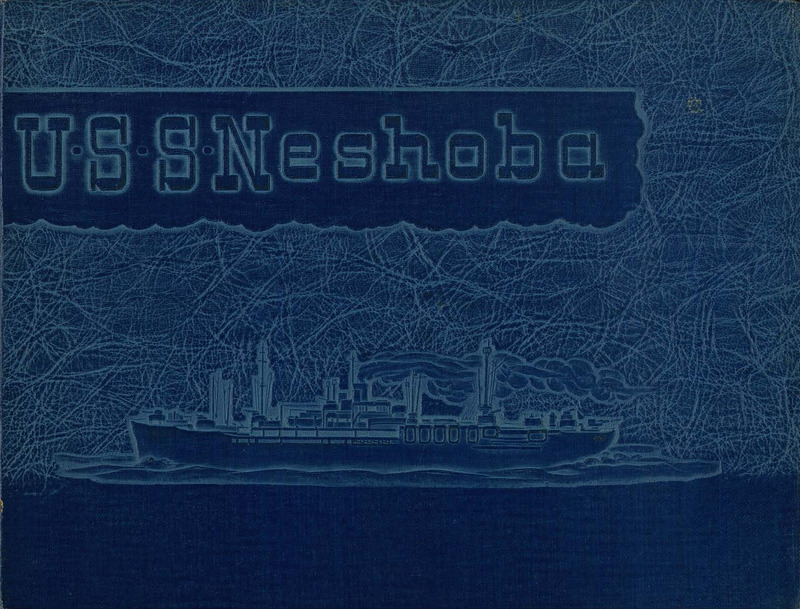
Her name, the U.S.S. Neshoba. Like most of her sister Attack Transports, she was named for a county in the United States. Neshoba county is located in the state of Mississippi, but the ship was built many miles away from there. One of the 130 ships of her class, the Neshoba was built by the Permanente Metals Corporation of Richmond, California, and launched on 7th of October, 1944. She was commissioned as a ship of the United States Navy on November 16th, 1944, being sponsored by Mrs. Wendall E. Adams of Berkeley, California, and placed in command of Commander Martin J. Drury, USN Commander Drury was later promoted to the rank of Captain. The conversion to an attack transport was made at Hunter's Point Ship Yard in San Francisco. The conversion consisted of installing Navy Radio and Radar equipment, armament, adding welin-davits for landing craft, and the landing craft. At the conclusion of this conversion, the Neshoba was a fullfledged, ready to APA. From time immemorial, every Navy ship has had its shakedown cruise. The Neshoba was no exception. Her shakedown brought her from San Francisco to San Diego. It was during this coastal run that she attained her top speed of 19 knots. At San Diego, she was committed to Amphibious Training at which time the new boat crews got a feel of their craft. She acted as flagship, for Transport Squadron Thirteen whose commanding officer at that time was Commodore John G. Moyer, USN. The training was supposed to last a period of two weeks, but sudden changes in the Pacific Fleet organization made the Neshoba's entrance on the scene of action very imperative and the training was cut short. She proceeded to San Pedro, California, where final repairs and checkups took place.
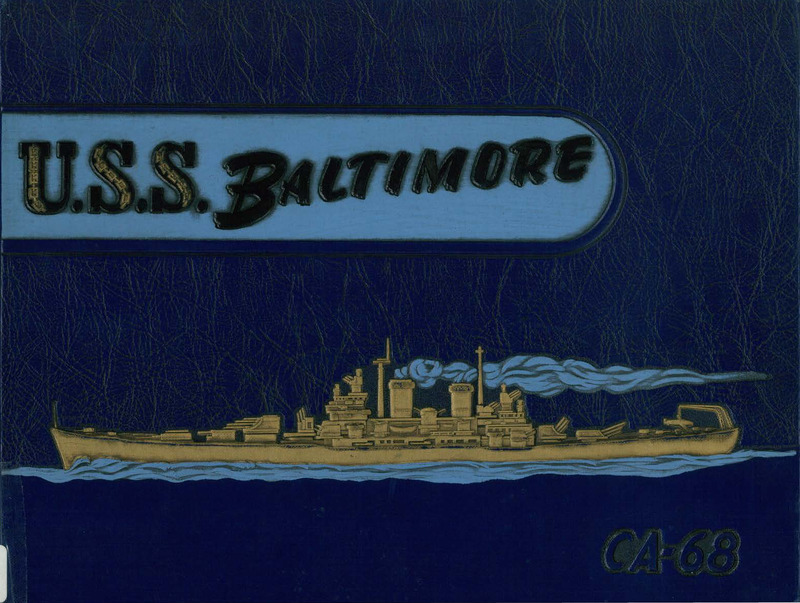
Beginning of The Baltimore Story: Now at Wars' End the Story of the Heavy Cruiser U.S.S. Baltimore Can Be Told! Like other battle seasoned and scarred heavy cruisers, the USS Baltimore has lived a full war life, sampled its first battle with a bombardment of Makin island, stormed through the Gilbert, Marshall, and Marianas campaigns, leveled the synchronized fury of its nine protruding eight-inch rifles on Satawan island in the Caroline group; but unlike many less fortunate cruisers, the Baltimore had run the gamut unscathed. Some of her actions and deeds--like carrying the late President Roosevelt to his historic triumvirate at Pearl Harbor with five-star Admiral Nimitz and General MacArthur-were tagged as "top secret", thus remained untold 'til war's end. But probably the main reason for her silent satirically and smothered blackout was that in doing a thorough workmanlike job for over two years, the Baltimore's skippers (Captains Calhoun and Fink), officers, and crew had clearly defied, coldly thwarted, and precisely out maneuvered every Nip attempt to register a single hit on its six hundred and seventy feet of armored deck and superstructure.Not once did she wear a hurt, martyred look, or limp into the news as a battle casualty--not a man did she lose through enemy action. But the Baltimore was always there, as her crew so loudly and proudly echoes: "They don't wear service stars for nothing!"
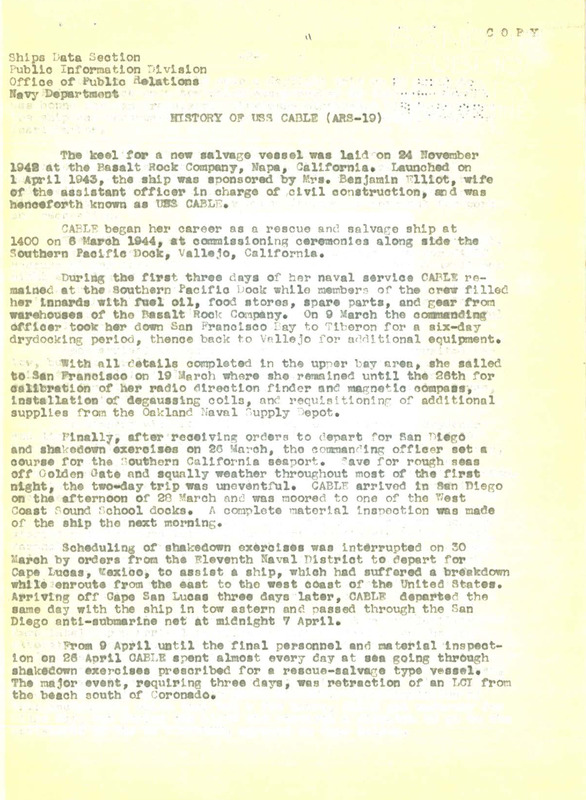
The keel for a new salvage vessel was laid on 24 November 1948 at the Basalt Rock Company, Napa, California. Launched on 1 April 1943, the ship was sponsored by Mrs. Benjamin Elliot, wife of the assistant officer in charge of civil construction, and was henceforth known as USS CABLE. CABLE began her career as a rescue and salvage ship at 1400 on 6 March 1944, at commissioning ceremonies along side the Southern Pacific Dock, Vallejo, California.