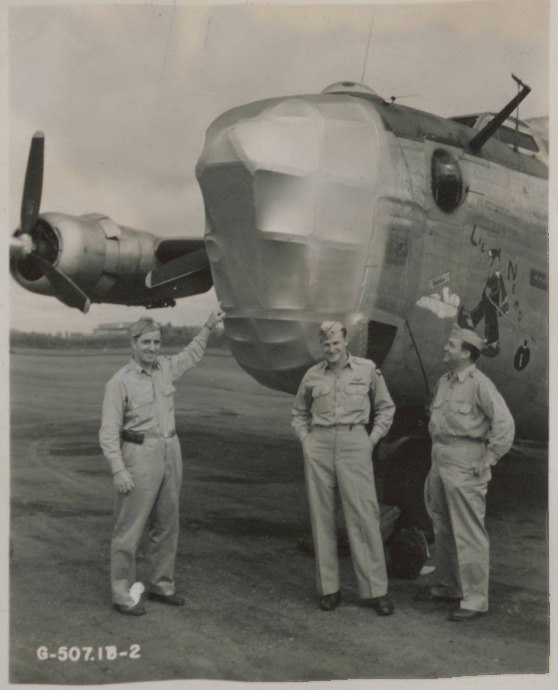
Photographs, drawings, and pamphlets compiled by First Lieutenant Annis G. Thompson for the 43rd Bombardment Group. The photographs document far-ranging movements and locations, especially in the Pacific, and include many close-ups of airplane nose art. The drawings appear to be primarily by W. Clark Gamble, including his rendition of the Battle of the Bismarck Sea.
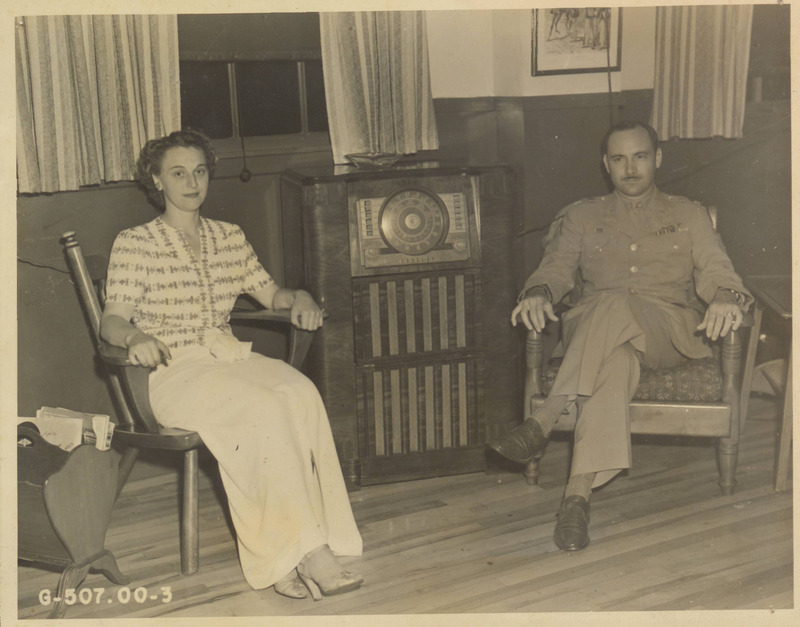
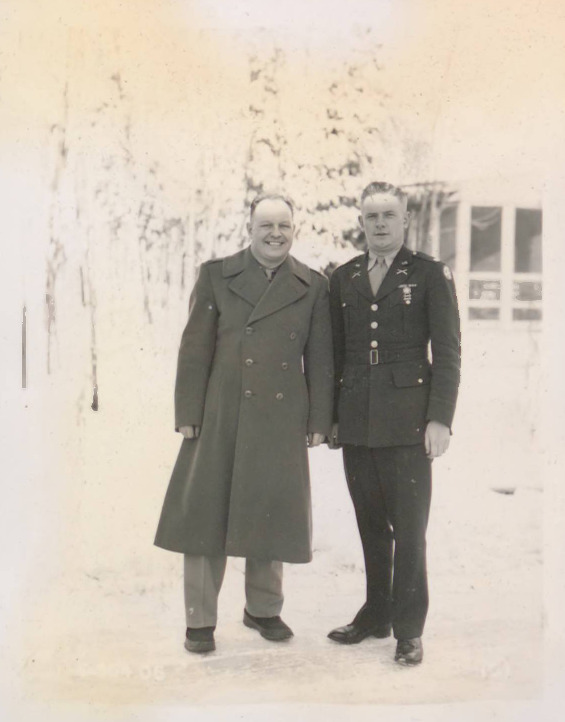
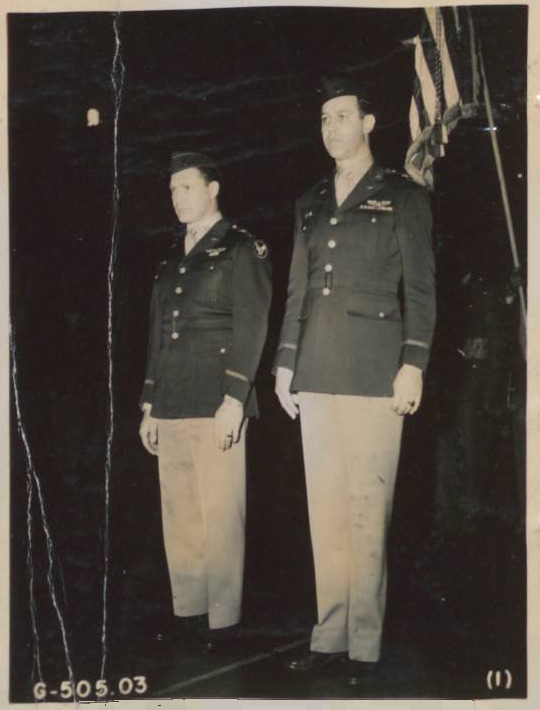
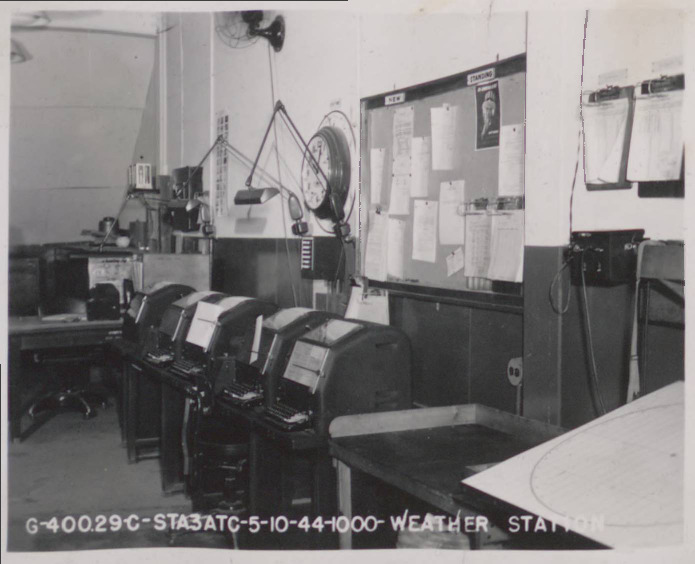
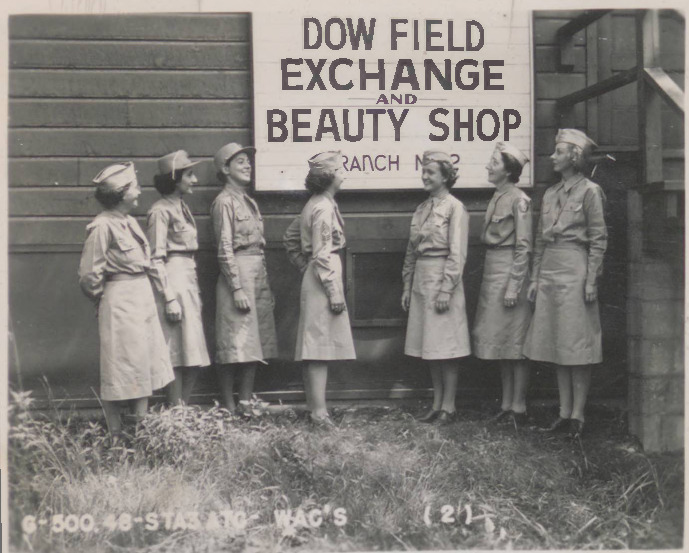
Photographs of soldiers and officers from the 43rd Bombardment Group and the 1379th AAF at Dow Field in Bangor, Maine. The photographs show military exercises on the base, leisure activities on and off the base, and an open house held for the public.
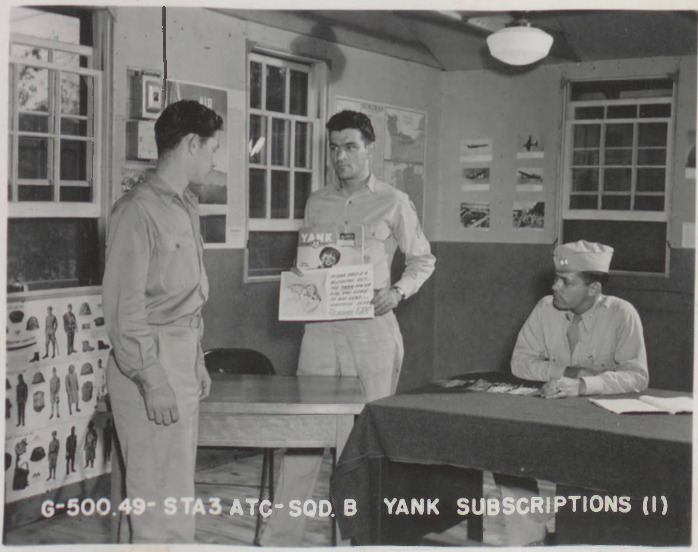
Photographs of soldiers at the train station in Bangor, office activities, parties, religious ceremonies, a few views of soldiers serving as firefighters in Bangor, soldiers and family members on a ski trip, and more.
Photographs of soldiers and families at leisure spots around Maine, a few photographs of the Flying Torah, two dozen photographs of base members visiting the Lac-Beauport area in Quebec, several weddings at the base, sled dogs on a military plane, and more.
Photographs of soldiers from Dow Field serving as firefighters on Exchange Street in downtown Bangor in January 1945, music performed for patients at the base hospital, airplane nose art, the Flying Torah, an open house at Dow Field in which the public was shown a display of paratroopers in action, Maine lake leisure activities, and more.
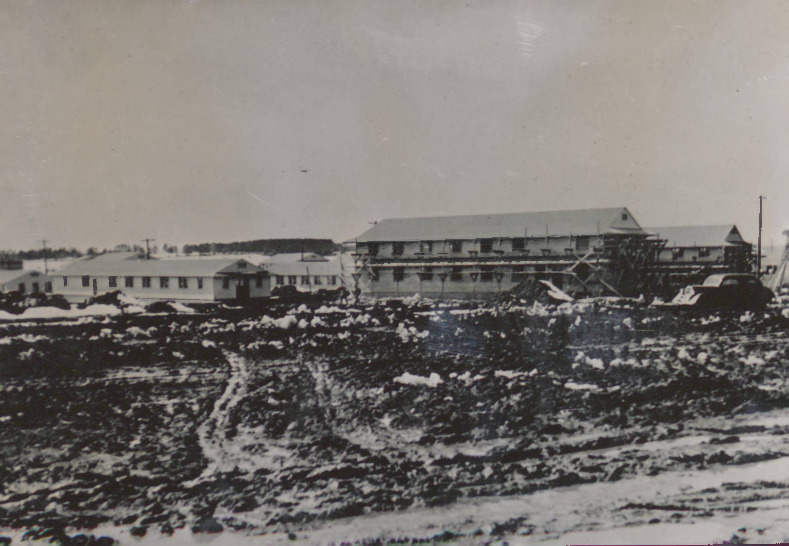
Photographs of various construction projects, airplane nose art, aerial photographs of planes on the ground at Dow Field, several parties and drills (including office work being performed while wearing gas masks), scenes of coastal Maine, and a December 1944 snowstorm.
Predominantly photographs of leisure activities around the base, near Mt. Kineo, Bucksport, and elsewhere across Maine. Near the end, a few dozen photos show training at Dow Field in September and October of 1944. The last few images are group pictures of service members in 1944.
Features a series of photographs of Army patrols in the Southwest Harbor, Bar Harbor, and other Acadia areas. Army Patrol Boat P-359 is among the boats included.
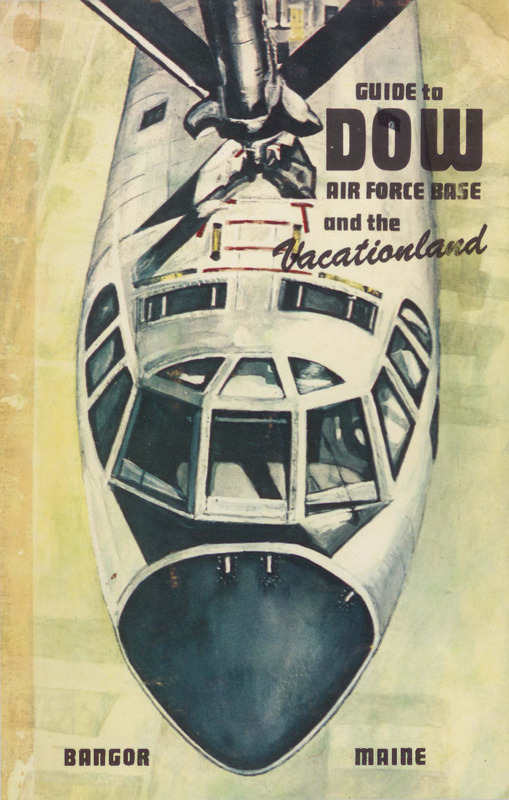
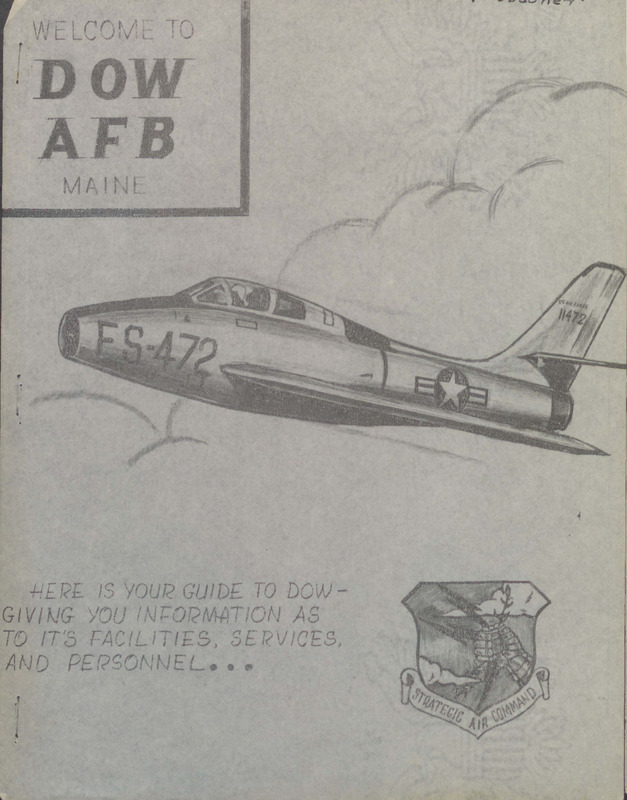
Dear Newcomer: It is a pleasure to welcome you to Dow Air Force Base and the State of Maine. You will find the base a beautiful installation and the community a friendly place in which to live and work. We are a part of the Strategic Air Command whose strength and deterrent posture is known throughout the world. Our success depends upon you; we can remain alert and strong only through your dedicated and energetic efforts. we know you will be proud to be a part of the Dow community and we invite you to join in the cordial relationship between the base and the cities of Bangor and Brewer. This guide will acquaint you with the facilities and services at Dow and in the State of Maine. Again, welcome on behalf of all the personnel presently enjoying their stay at Dow.--George W. R. Zethren, Colonel, USAF Commander
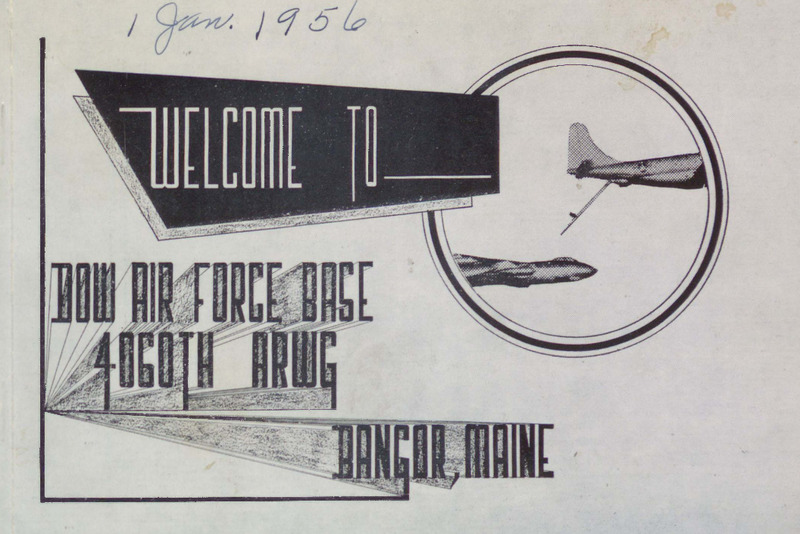
Welcome to Dow Air Force Base. In its role as a Strategic Air Command heavy bomber base, Dow is one of the most vital and historic installations in the United States Air Force. Dow is located in the suburbs of Bangor, Maine and as such, is one of the eastern-most bases in the Continental United States. Because of the fact that a permanent change of station is most often a strange and confusing experience, probably the most important questions you have now are those concerning facilities that are available at Dow, the local community, the people with whom you will work and the machinery at your disposal to help minimize "settling in" problems. We hope the information contained in this guide will answer most of your questions and that you will find Dow and the city of Bangor a friendly community and that you will enjoy your tour here.
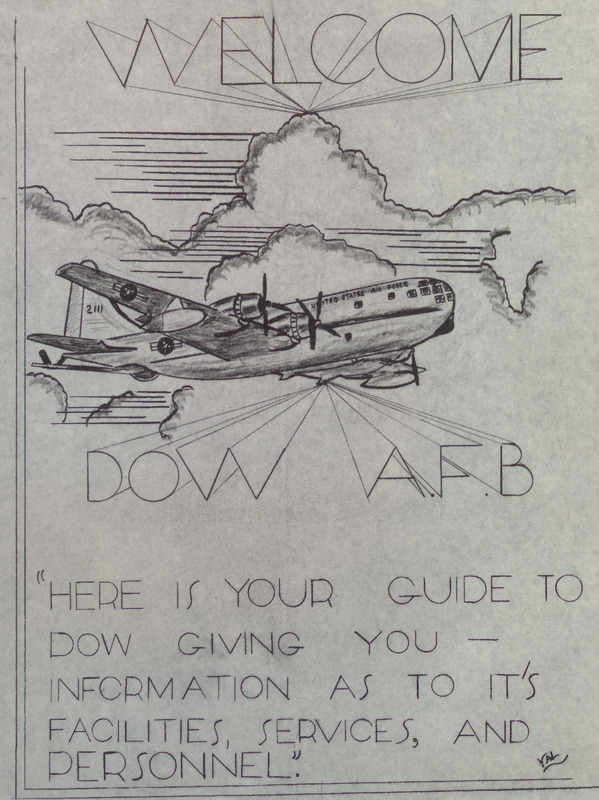
Introduction to Dow: This booklet has been designed to help you become acquainted with your new station. It covers where to go and who to see for information pertaining to your on and off duty hours. The back portion of the booklet, titled Community Resources Section, includes a wealth of information on the educational and recreational facilities available in the the greater part of Maine.
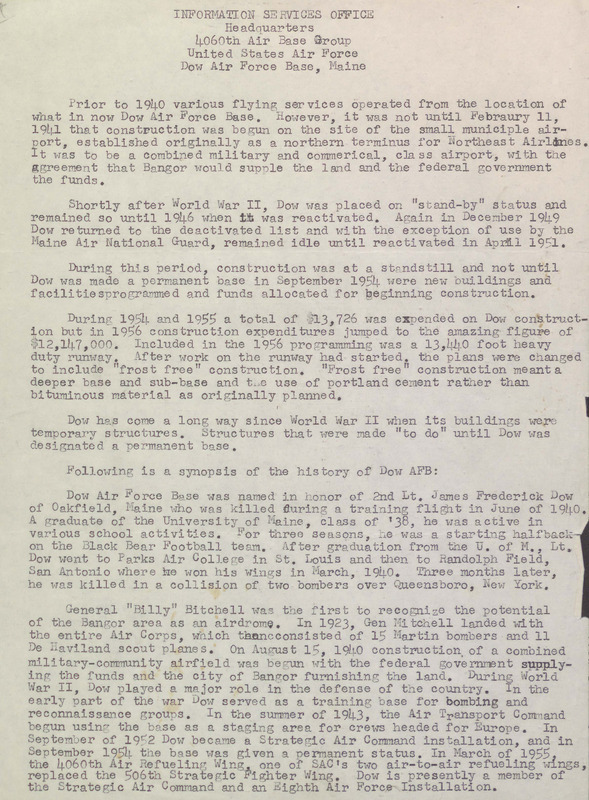
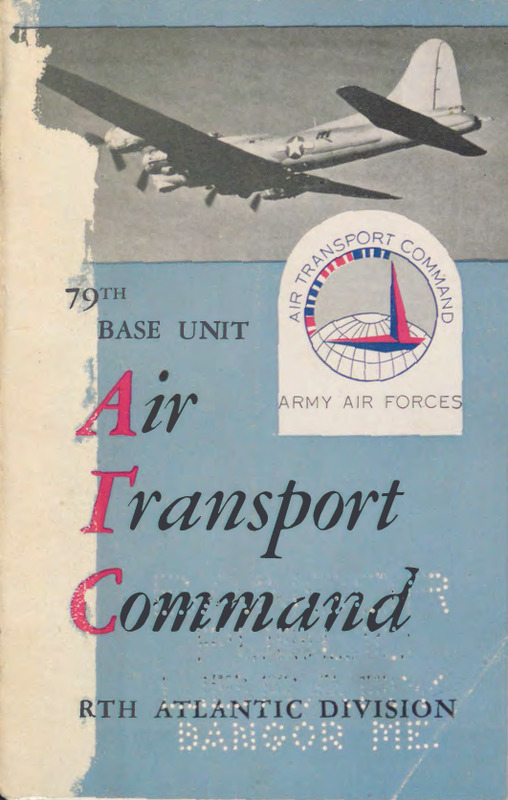
On August 15, 1940 construction of a combined military-community airfield was begun with the federal government supplying the funds and the city of Bangor furnishing the land. During World War II, Dow played a major role in the defense of the country. In the early part of the war Dow served as a training base for bombing and reconnaissance groups. In the summer of 1943, the Air Transport Command begun using the base as a staging area for crews headed for Europe. In September of 1952 Dow became a Strategic Air Command installation, and in September 1954 the base was given a permanent status. In March of 1955, the 4060th Air Refueling Wing, one of SAC's two air-to-air refueling wings, replaced the 506th Strategic Fighter Wing. Dow is presently a member of the Strategic Air Command and an Eighth Air Force Installation.
This brochure is presented as a reference to certain information, services, and facilities which may prove useful during your stay. All personnel are at your disposal for any assistance necessary to accomplish the purpose of your visit.--Orie O. Schurter, Colonel, USAF Commander
Outline and research notes for a speech on the subject "Dow Air Force Base and the Community." Includes: History (1923-1945); History (1946-1955); Stategic Location and Utilization; Mission; Economy--Decentralization Program.
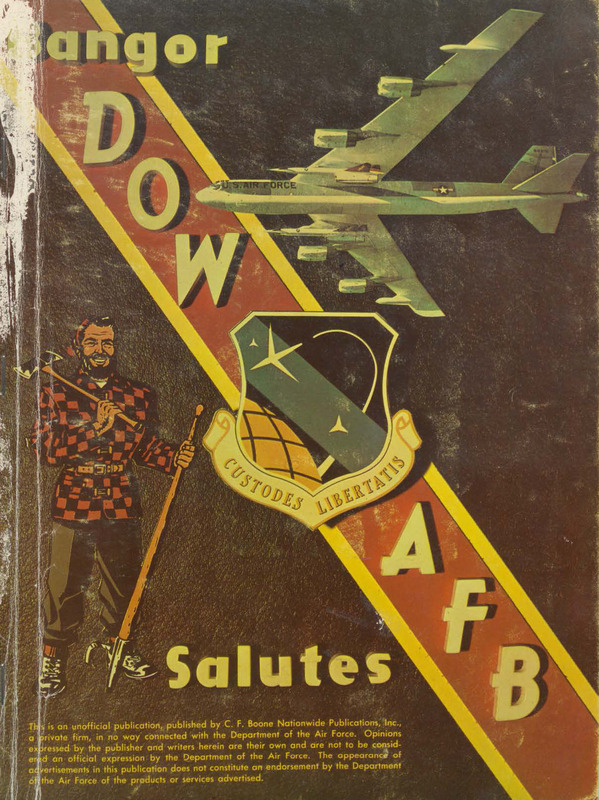
This brochure is presented as a reference to certain information, services, and facilities which may prove useful during your stay. Our mission is to organize and train a force capable of providing adequate protection for Strategic Air Command bombardment and reconnaissance combat elements through escort and air defense, organize and conduct air-to-air refueling operations, provide for low level photographic reconnaissance, organize and train a force capable of destroying the forces, resources, and installations of an enemy, be prepared to implement established operations orders, participate in reserve training, and perform special missions as directed by higher headquarters. All personnel are at your disposal for any assistance necessary to accomplish the purpose of your visit.--Richard O. Hunziker, Colonel, USAF Commander
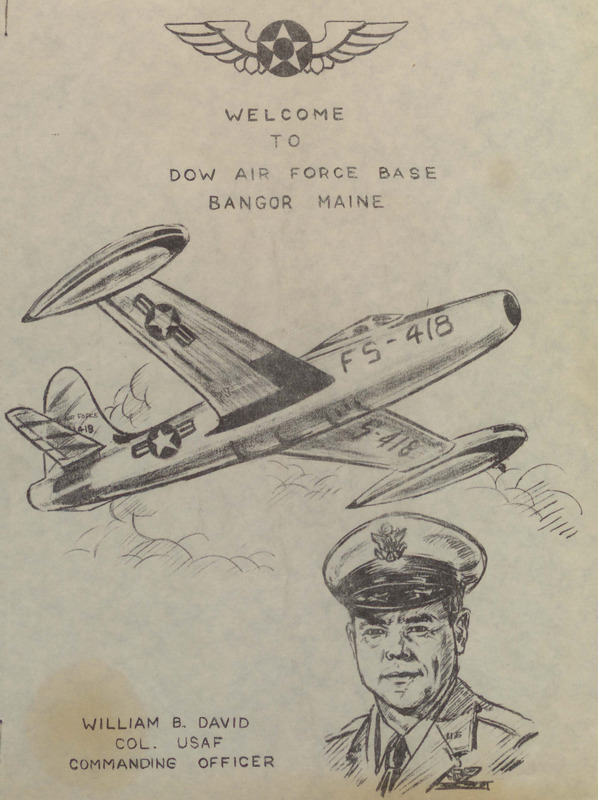
A Message from Your Commanding Officer: I welcome you to Dow Air Force Base and sincerely hope that your tour with us will be a pleasant one. My desire is to make your duty and off duty time as pleasant as possible. I urge each member of the military service regardless of rank to take advantage of the opportunities described in this booklet. The airman who takes advantage of the environmental surroundings of Maine will find himself well rewarded. As your commander I urge you to participate wholeheartedly in the base activities as it is a direct means for raising your efficiency, morale, and the development of better airmen and future citizens.--William B. David, Colonel USAF Commanding
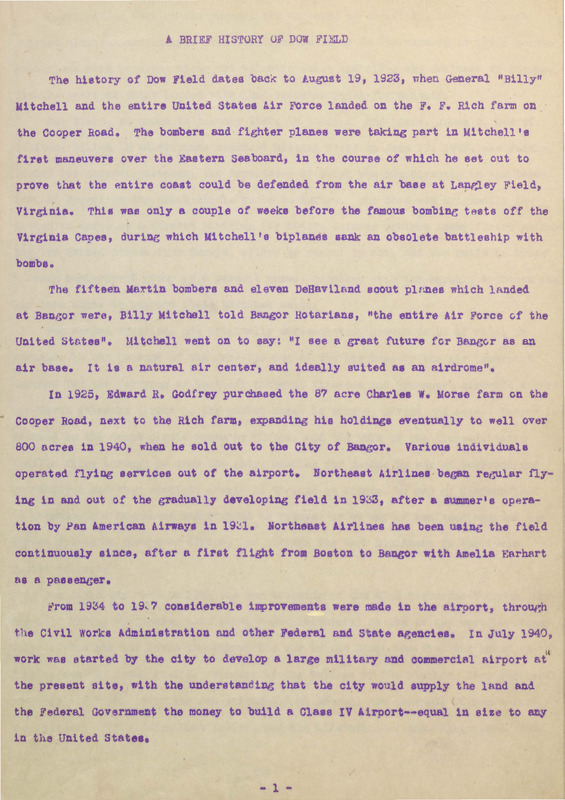
The history of Dow Field dates back to August 19, 1923, when General "Billy" Mitchell and the entire United States Air Force landed on the F. F. Rich farm on the Cooper Road. The bombers and fighter planes were taking part in Mitchell's first maneuvers over the Eastern Seaboard, in the course of which he set out to prove that the entire coast could be defended from the air base at Langley Field, Virginia. This was only a couple of weeks before the famous bombing tests off the Virginia Capes, during which Mitchell's biplanes sank an obsolete battleship with bombs. The fifteen Martin bombers and eleven DeHaviland scout planes which landed at Bangor were, Billy Mitchell told Bangor Rotarians, "the entire Air Force of the United States". Mitchell went on to say: "I see a great future for Bangor as an air base. It is a natural air center, and ideally suited as an airdrome".
Dow Field, formerly called the Bangor Air Base, dates back to February 11, 1941, when construction began on the site of a small municipal airport, established originally as a northern terminus for Northeast Airlines. Most of the construction was completed during the summer and fall of 1941. Numerous buildings for barracks, storage, hangars and hospitals, were erected on what was formerly a low, swampy area. Extensive filling and seeding have produced an attractive area of well-kept lawns and fields, landscaped with thousands of trees typical of the local scene. In 1941 and 1942, Dow Field was used mainly as a training base for bombing and reconnaissance groups, and as a training base for an aviation engineering regiment. One large bombardment group from Dow Field sailed on the maiden voyage of the Queen Mary as a troop ship pilots flew their own planes, of course but the large ground echelon went by boat.