Explore history through the digital collections of the Bangor Public Library and our community partners in Bangor, Maine
20th Century Bangor, Maine
Title
20th Century Bangor, Maine
Description
Guidebooks, reports, promotional publications, and other materials documenting Bangor in the 20th century. Includes information about major events including the Fire of 1911 and Urban Renewal.
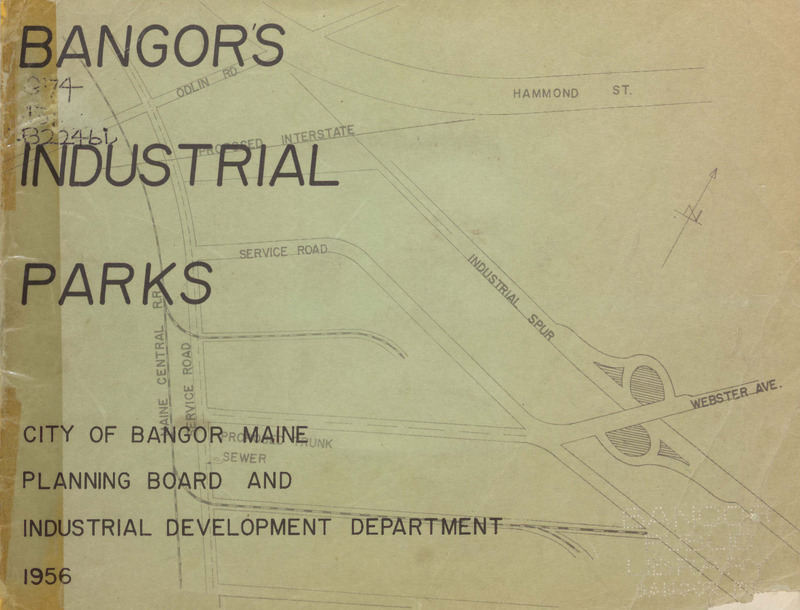
The Bangor Real Estate Development Company: When the war ended in 1945, a wholesale grocer and a hardware jobber who were located in the downtown congested area of Bangor began looking for new sites for their warehouses. After surveying the entire area, they decided that the most desirable location was a tract of land about 2 1/2 miles from downtown Bangor, located on the main line of the railroad and on U. S. Route 2. The area consisted of a 260 acre farm. Since the interests of the two wholesalers coincided, they formed the Bangor Real Estate Development Company to purchase and develop the land. After the land was purchased, the real estate company, with the help of engineer and architects, lald out parcels of land in the part of the district that it would first develop. It drained part of the area, graded it, and installed roads, sewers, electricity, drainage facilities, and water...
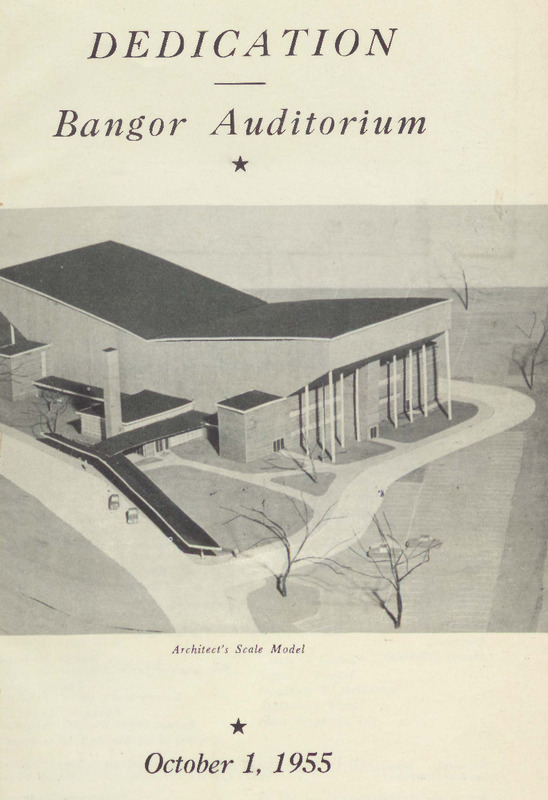
Program includes building statistics, members of the Dedication Committee, and photographs. The Bangor Auditorium was designed by Eaton W. Tarbell Associates and built by Volpe Construction Company.
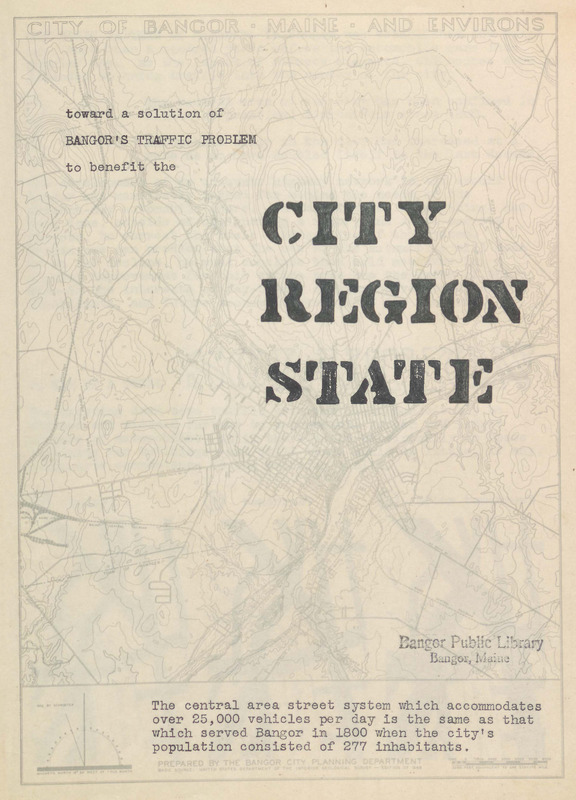
The central area street system which accommodates over 25,000 vehicles per day is the same as that which served Bangor in 1800 when the city's population consisted of 277 inhabitants. The basic pattern of highways in Bangor was established 150 years ago, more than a hundred years before the automobile came into popular use. As the layout of streets suggests, all routes were intended to bring traffic into the center of the city. The central area of the city has been confined in extent by practical limitations since 1800. Automobile usage in the city has increased at a rate as to have doubled itself in the last decade. The development of an adequate highway network in and around Bangor has manifestly lagged far behind the needs of the present-day automobile users.
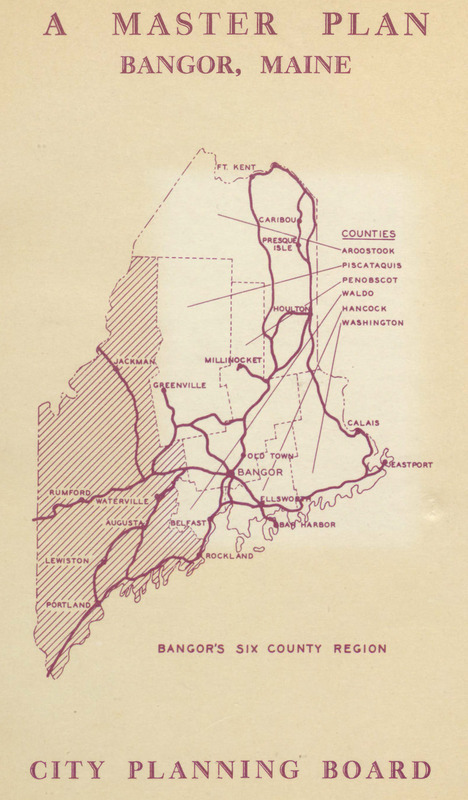
The Bangor Planning Ordinance, which was adopted by the City Council in 1948, provided for a Planning Board, which was to "make and adopt a Master Plan of the city." This report briefly describes the Board's recommendations for a Master Plan. After a public hearing and possible revision, the plan may be officially adopted by the Board. Thereafter it will become a guide to the future recommendations of the Board for the improvement and development of Bangor. This plan is not a fixed or final plan. It must be changed and added to from time to time as changing conditions dictate. In this respect the Board hopes that the people of Bangor will offer suggestions to improve the plan. The continual constructive criticisms and ideas of the citizens of Bangor are needed to make planning effective.
Summary of the Report: The following report is a condensation of a more complete Schools, Parks and Recreation Report which is on file in the Planning Office. It indicates the preliminary ideas of the Planning Board on parts of the Master Plan. Briefly the report discusses the following subjects: 1) The need and the location of future elementary schools. 2) The coordination of school play areas with city recreation areas. 3) The need and the location of future recreation facilities such as playfields, playgrounds, parks of all types, indoor facilities, swimming pools, and other special facilities These are tentative ideas. This report is published so that all the people of Bangor will be able to express their opinions before these ideas are adopted as parts of the Bangor Master Plan.
Summary of the Report: This report on the Street Plan discusses: 1) the need for street planning. 2) the ideal street system and its comparison with Bangor. 3) the Tentative Street Plan for new streets, wider streets, and other street improvements. 4) the methods of supporting the Street Plan with an Official Map and Subdivision Regulations. This report is condensed from a complete report on streets which is on file in the Planning Office. The ideas put forth are those which the Planning Board are studying before adopting them as parts of the Master Plan. The criticisms of the citizens of Bangor are invited.
Scrapbook containing photographs, event flyers, newspaper clippings, programs, and newsletters documenting activities of the Peace and Justice Center of Eastern Maine in the early 1990s. Primarily focuses on peace demonstrations, marches, and other actions related to the Persian Gulf War.
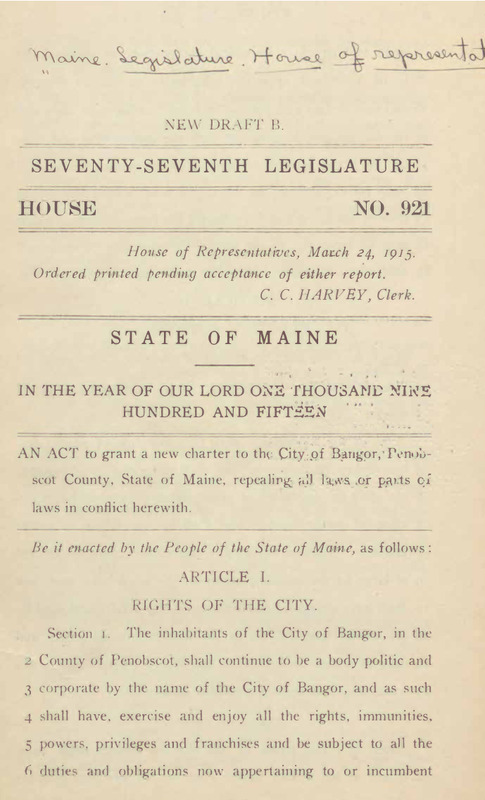
An act to grant a new charter to the City of Bangor, Penobscot County, State of Maine, repealing all laws or parts of laws in conflict herewith. Be it enacted by the People of the State of Maine, as follows: Article 1. Rights of the City. Section 1. The inhabitants of the City of Bangor, in the County of Penobscot. shall continue to be a body politic and corporate by the name of the City of Bangor, and as such shall have, exercise and enjoy all the rights, immunities, powers, privileges and franchises and be subject to all the duties and obligations now appertaining to or incumbent upon said city as a municipal corporation ...
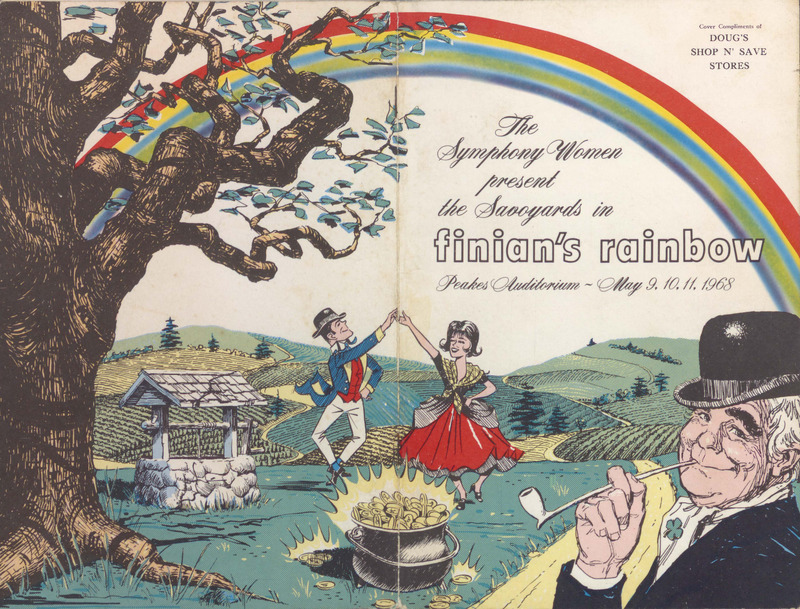
Theater program for a May 1968 production of the musical Finian's Rainbow performed by the Bangor Savoyards. Lists cast for the production. Contains many advertisements for businesses in the area.
Black and white map showing the planned location of the New Upland water supply for the city of Bangor, Maine. Map shows location of water tank, existing pipelines, and pumping stations .
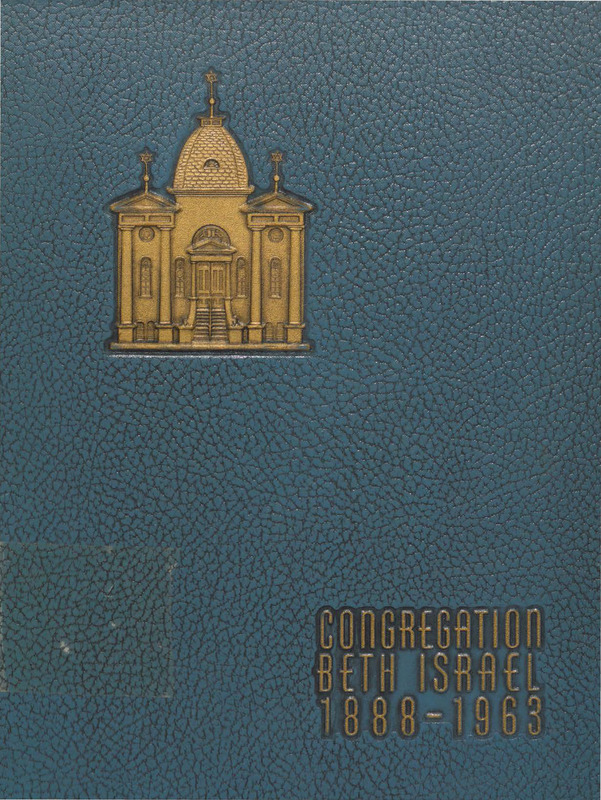
Foreword: Congregation Beth Israel, the oldest synagogue in the State of Maine, this year celebrates its 75th anniversary. This is the story of Beth Israel--of the men and women who shaped its character--of the influences which patterned its destiny--of the spirit which has brought it through crises in the past and which must be trusted to preserve it in the future. In the aggregate, this chronicle is a review of the Congregation's struggles, hopes and accomplishments. It is not meant to be a distinguished historical contribution nor a detailed chronological summary of the seventy-five years it covers. Instead, by selecting the more significant and human episodes in our growth, we hope to present a colorful pageant of the modest epic which is our history.
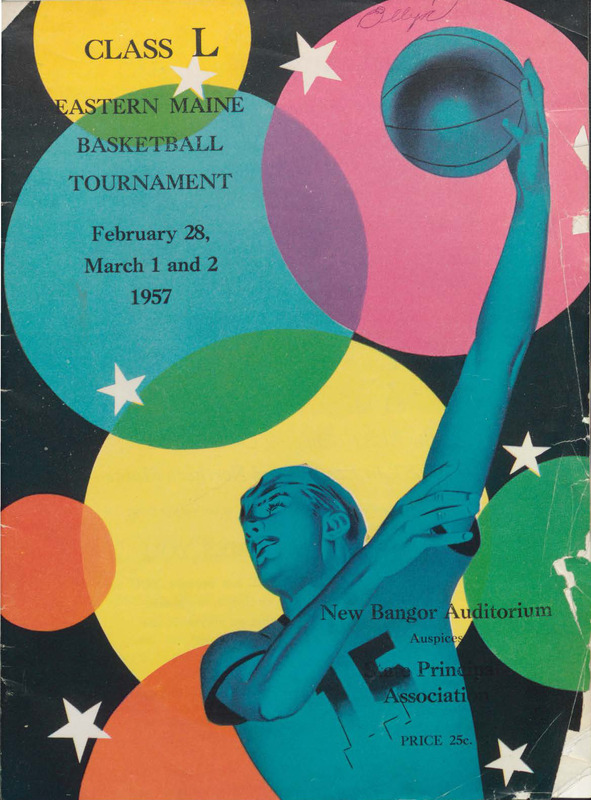
Souvenir program for the 1957 Class L Eastern Maine Basketball Tournament, showing team photos, team rosters, and advertisments for Bangor businesses. Teams in the tournament were Old Town, Fairfield, Bangor, Waterville, Stearns, Houlton, Gardiner, and Caribou.
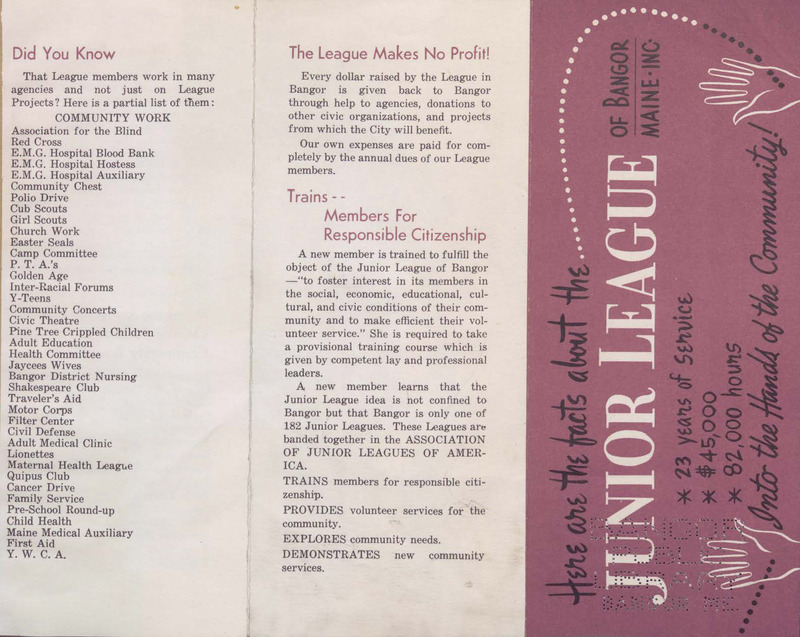
23 years of service--$45,000--82,000 hours--Into the hands of the community! Did You Know? That the League members work in many agencies and not just on League Projects? Here is a partial list of them ... The League Makes No Profit! Every dollar raised by the League in Bangor is given back to Bangor through help to agencies, donations to other civic organizations, and projects from which the City will benefit. Our own expenses are paid for completely by the annual dues of our League members. Trains--Members for Responsible Citizenship. A new member is trained to fulfill the object of the Junior League of Bangor--"to foster interest in its members in the social, economic, educational, cultural, and civic conditions of their community and to make efficient their volunteer service." She is required to take a provisional training course which is given by competent lay and professional leaders. A new member learns that the Junior League idea is not confined to Bangor but that Bangor is only one of 182 Junior Leagues. These Leagues are banded together in the Association of Junior Leagues of America.
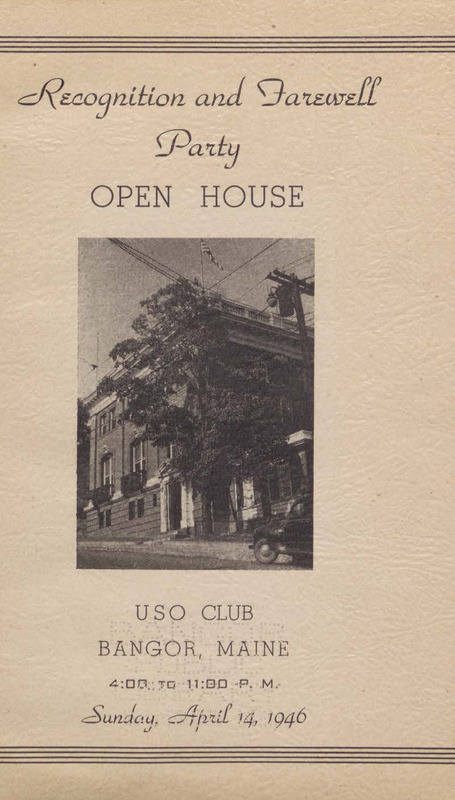
Program for a volunteer recognition event and open house at the Bangor USO Club. Lists individuals and organizations receiving USO Distinguished Service Certificates.
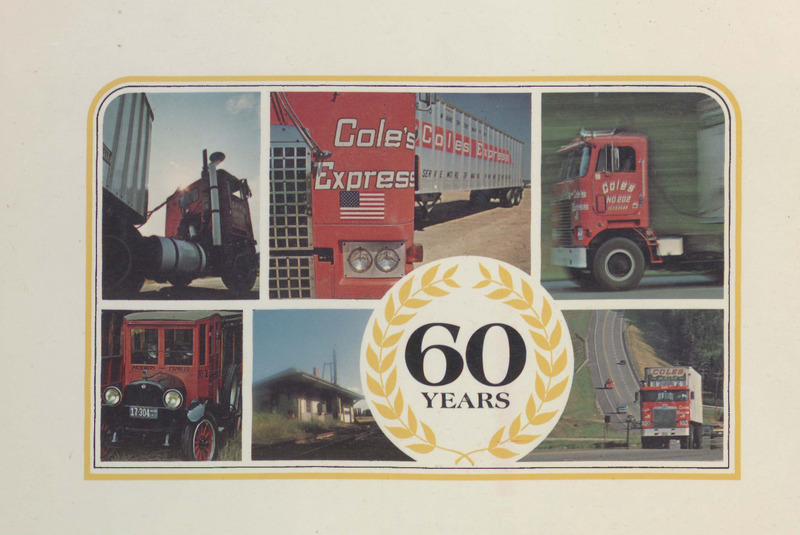
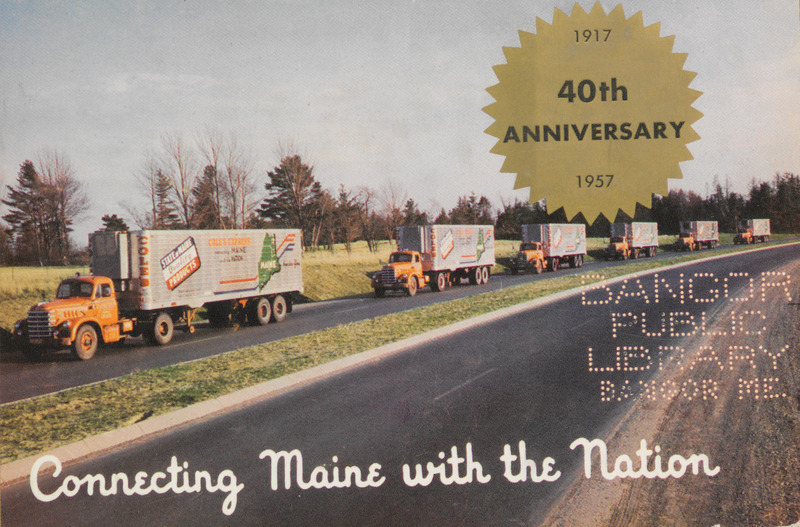
Showcases the history of Cole's Express through photographs, a timeline, maps, and more. Includes photographs of over 200 employees circa 1977. "We would like to share with you a brief history of our company, Coles Express. It all began here... 1917... A.J. 'Allie' Cole started a freight and mail route from Enfield Station to Lowell and Burlington. With hard work and pioneering people a Maine company was born. We started small, and it wasn't always easy going. Horses and wagons soon gave way to trucks, and new ideas filled local needs. In 1925 the company moved its base of operations to Bangor."
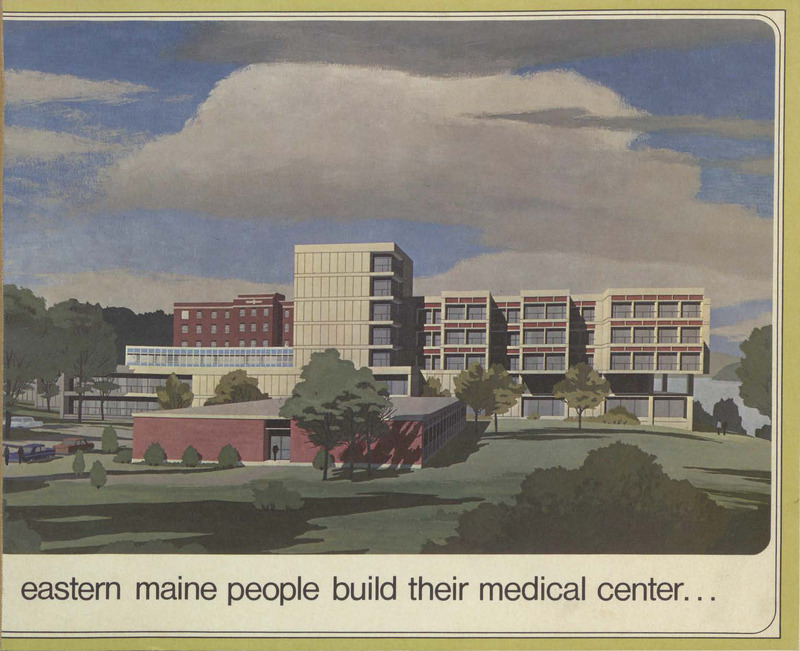
Each year in the State of Maine one person in every five needs a hospital! Will there be a bed at Eastern Maine Medical Center for you--for your loved ones--for your employees and members of their families when it is needed? Use of medical-surgical beds at Eastern Maine Medical Center--the major complement of the Medical Center is up 9.2% in the past year. Serving a six-county area of eastern Maine, the Medical Center has been increasingly subjected to a squeeze between ever-increasing changes and improvements in medical practices and the demands of serving the actual needs of the area's residents. Until now, these needs have been met on an "immediate funds available," expediency basis. Now, it has become imperative that a major project of modernization and replacement of outmoded equipment and facilities be undertaken. No longer will piecemeal efforts meet today's needs and those of the future.
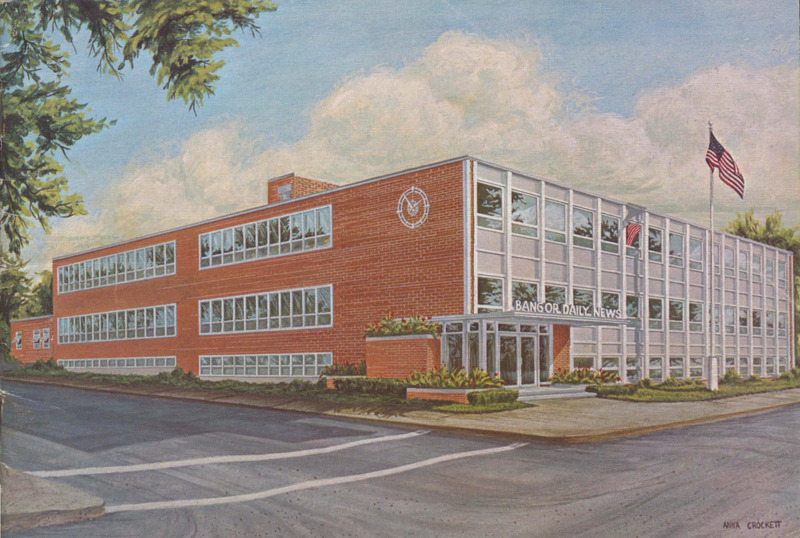
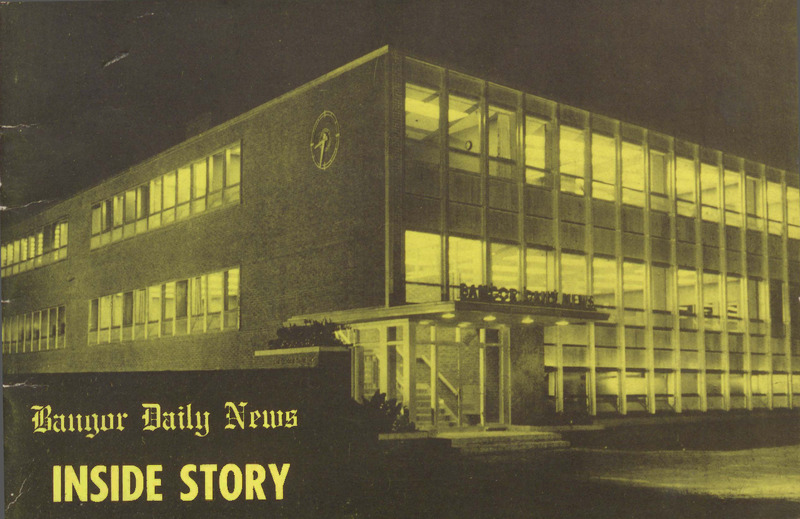
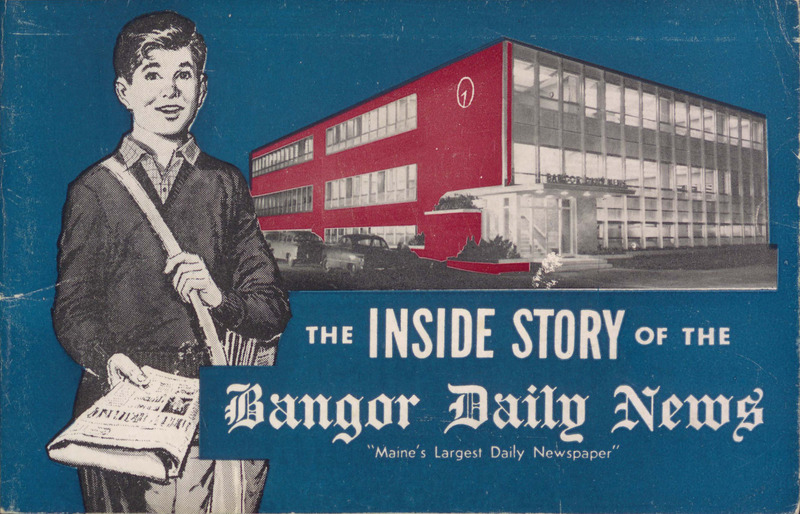
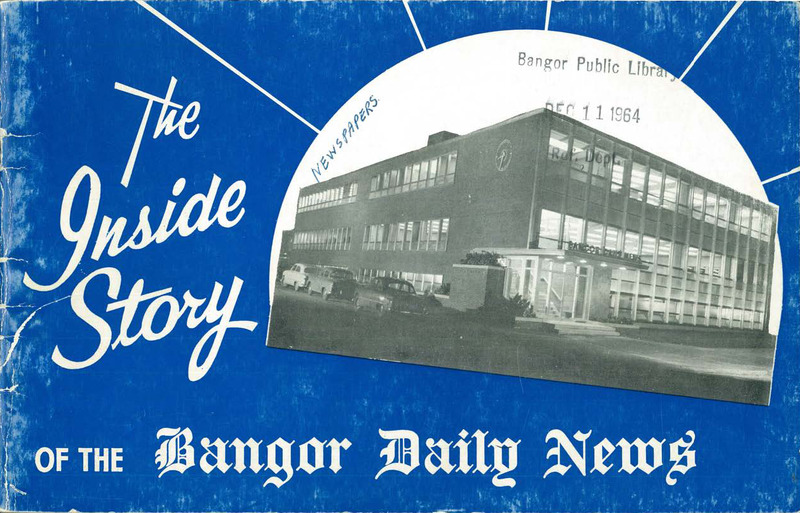
Welcome to the Bangor Daily News ... Before we look at activities taking place at the NEWS today, let's first take a glimpse back at events, places and people responsible for bringing Maine's largest daily newspaper to its present position.
Bangor's first newspaper, the Bangor Weekly Register, was established in 1815 and from this emerged the Bangor Daily Whig, in 1834. There was nothing in the docile and precise beginning of that publication, on July 1 of that year, to indicate that some day it would become the largest daily newspaper in Maine. The Whig claimed a daily circulation of 2,000 in 1834, while Bangor's population was estimated at about 4,500. Today, the Bangor Daily News average daily circulation is 78,428 and the City of Bangor population is estimated at over 40,000. The story of how a newspaper outdistanced its local population is a fascinating one. Publication date not listed on booklet. Last date referenced inside is 1966. We estimate publication to be between 1967 to 1970.
Declaration of Principles: At this time it seems fitting to reassert and reaffirm the policies and principles that over the years have made the NEWS Maine's favorite daily newspaper. Sixty-six years ago the Bangor Daily News, a brash newcomer to the Maine journalistic scene, announced: "We intend to pay especial attention to all events in Bangor and Eastern Maine; trusting that by the aid of journalistic enterprise... to greatly forward all interests in this magnificent section just now awakening from its dormant condition and realizing that resources of a great country are here in the confines of half a state."
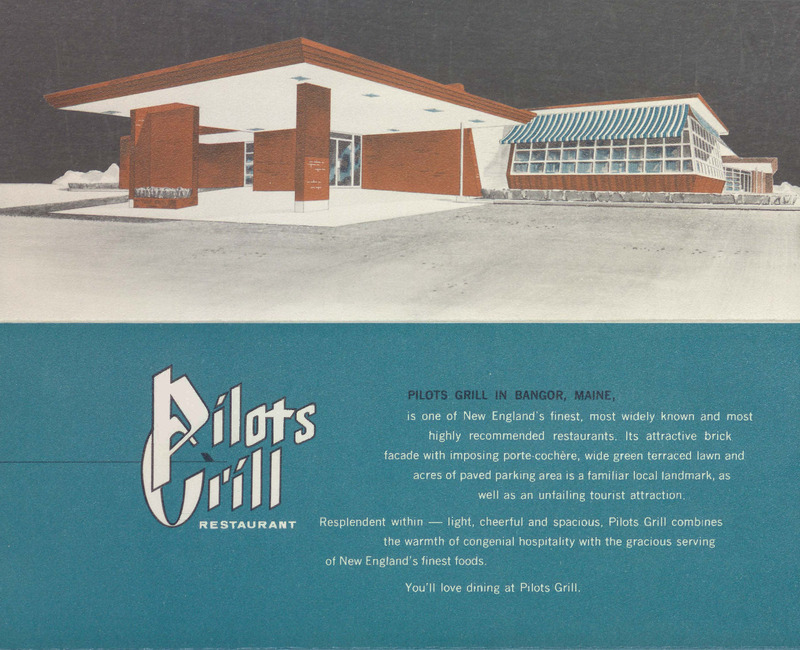
Pilots Grill in Bangor, Maine, is one of New England's finest, most widely known and most highly recommended restaurants. Its attractive brick facade with imposing porte-cochère, wide green terraced lawn and acres of paved parking area is a familiar local landmark, as well as an unfailing tourist attraction. Resplendent within--light, cheerful and spacious, Pilots Grill combines the warmth of congenial hospitality with the gracious serving of New England's finest foods. You'll love dining at Pilots Grill.
The purpose of this booklet is to acquaint you with the scope of modern banking services available to you at Merchants National Bank. With this presentation we extend to you a cordial invitation to call on Merchants for your banking needs.
Forty years of service: On August 1, 1917, Cole's Express started its high-way service to the public, a horse-drawn pickup and delivery freight and passenger service between the Enfield railroad station and the towns of Lowell and Burlington, some 15 miles distant. A year later the first truck was purchased and service expanded from Enfield to Bangor, picking up goods and passengers in both directions. Soon afterward, other trucks were added to carry the run through to Lincoln and eventually Houlton. For many years, it was necessary to abandon the north run to Houlton during the Winter, because snow on the roads was packed by horse-drawn rollers for the con-venience of sleighs, making truck traffic impossible.
Take a background of Whig conservatism and combine it with the impetuous "be first at any cost" philosophy of a brash young newcomer to the field, and you have a picture of Maine's largest daily newspaper, The Bangor Daily News. There was nothing in the docile and precise beginning of the Bangor Daily Whig on July 1, 1834 that gave any hint it was destined some day to become the greatest newspaper in its state and attract national journalistic attention.
You may be interested in knowing the story of the telephone in Bangor--how the first switchboard grew into the busy exchange of today. We hope that this booklet will answer some of your questions and provide you with background information about the Bangor Exchange and our plans for its future. Early Exchange: On June 1, 1880, telephone exchange service was introduced in Bangor. The National Bell Telephone Company of the State of Maine with Charles S. Pearl as Manager established its offices in the old library building on State Street on the site where the Bangor Savings Bank is now located. Although 46 subscribers had been furnished with telephone service prior to this, such service only provided a single connection with one of the other subscribers. Telephone poles were not considered necessary to this type service--instead, connections were made to customer's premises by means of wires strung from house to house with the consent of the respective owners.