Explore history through the digital collections of the Bangor Public Library and our community partners in Bangor, Maine
World War II Regimental Histories
Title
World War II Regimental Histories
Description
Photograph-rich publications documenting the history of individual military units during World War II, including the unit's organization, personnel, military campaigns, and casualties. This collection was compiled by World War II-era librarian L. Felix Ranlett, a veteran of World War I.
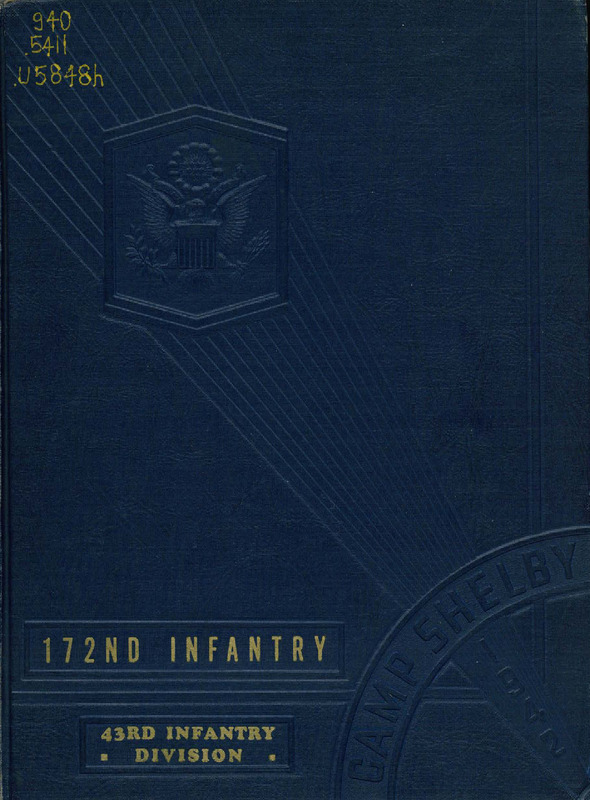
The combined histories of the units of the 43rd reads like a roll of honor of history of America, and the battle streamers amassed by these units reveal the farflung engagements in which men of the New England States have been called upon to defend their country's interests. The 43rd was allocated to the States of Maine, Vermont, Rhode Island, and Connecticut, and in each of the four states units were organized and federally recognized.
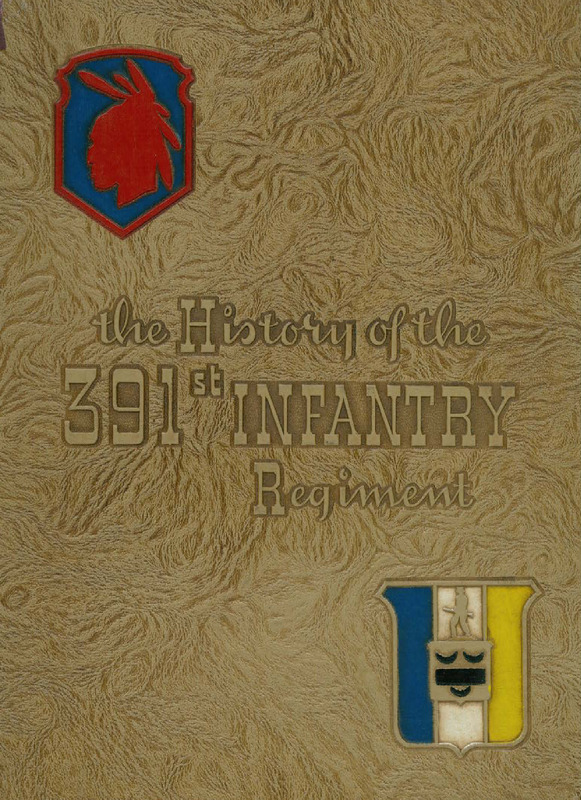
" ... A regiment, which, while it may have no proud record of battles won and honors gained, yet has a spirit and a soul, which, if occasion should ever arise, would show itself true to those high ideals of service for which our executive has always stood." Thus was the 391st Infantry of the organized reserves described by Colonel Thomas H. Remington of Rochester, New York, at a farewell dinner in honor of Major Lester Baker, then War Department executive for the regiment, on 31 July 1926. And the "occasion" appears to be not far off, for the 391st Infantry was activated for combat duty at Camp Breckenridge, Kentucky, 15 September 1942, as a part of the 98th Infantry Division, commanded by Major General Paul L. Ransom. And, as General Ransom presented the regiment's colors to the 391st Infantry's Commanding Officer, Colonel Head, on that brisk September morning, indications were that the "best reserve infantry regiment in the United States Army" would now become one of the best regular units.
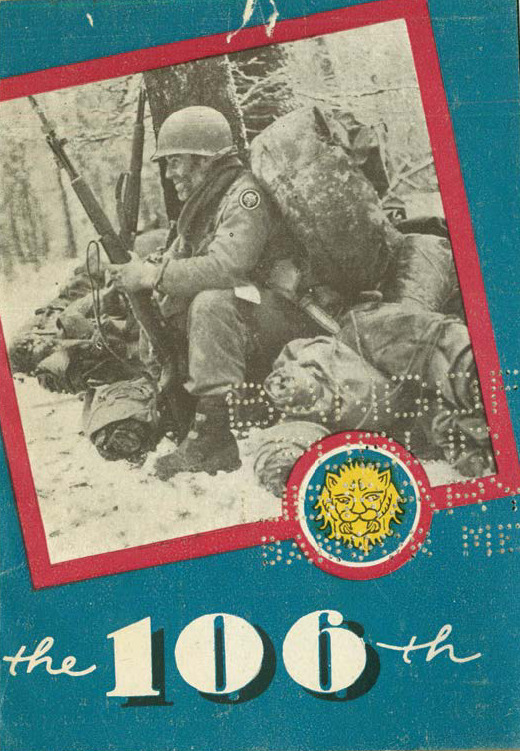
When the history of the Ardennes fighting has been written, it will be recorded as one of the great strategic Allied successes of the war in Europe. Tactically, for the 106th and the other American divisions involved, it was a bitter and costly fight. But it becomes increasingly clear that the Germans expended in that last futile effort those last reserves of men and material which they needed so badly a few months later. The losses and sacrifices of the 106th Infantry Division paid great dividends in eventual victory. These pages are dedicated to those gallant men who refused to quit in the darkest hour of the Allied invasion, and whose fortitude and heroism turned the tide toward overwhelming victory. --Donald Armpriester Stroh, Major General, Commanding
Introduction: "To the men of the 91st Cml Mortar Bn this book is more than a unit history; it is an autobiography--a rather personal sort of affair. It was written more in deeds than in words by the men who make up this separate battalion, which is, at best, an infinitesimally small part of the present day strength of the United States Armies. Since a unit is a collection of individuals, like an individual, it gradually assumes a character and a personality which distinguishes it in particular from other units. The object in compiling thls book is to preserve the character of the Battalion, our Battalion, by recording for future nostalgia some of the memories that the men like most to recall when they engage in a typical "bull session." The body of the text is essentially a condensation of the units's official history together with humorous incidents, anecdotes, and human interest stories, all unexpurgated within bounds and representative of many thousands of war stories that might have been told about Army life in garrison and in combat overseas. The personal episodes are related as nearly as possible in chronological order parallel to the historical data that best provides a comprehensive background for the stories themselves. No attempt has been made to describe in detail the geography of that section of Europe over which the Battalion traveled and fought, nor to pass judgement on the character and integrity of the people who live there. The reasons for having placed this limitation on the scope of this work will be obvious to those who have ever come in contact with people who have had their countries and homes turned into battle fields. The political and social reverberations which will undoubtedly be brought about as a result of this latest of World Wars have been left to future historians to record."
The 54th Transport Squadron predecessor of the present 54th Troop Carrier Squadron was activated at Hamilton Field, California on 1 June 1942. Original unit commander was Captain William G. Harley, 0165088. Staff Sergeant Paul M. Pugh, 6894048, was acting First Sergeant. Private Arthur W. Yess, 33091246, was the third member of the original organization.
From the Introduction, written by Colonel Harold B. McClune: "The design of this book's compilers is to present a panoramic view of the 376th Infantry from its birth in September 1921 to the capitulation of the Japanese Empire in August 1945; a panorama of battle experiences that have demonstrated our superiority over the enemy that confronted us, and proved the mettle of our civilian Army. While this is the story of an infantry regiment, we do not fail to appreciate the contributions modern technical science, designer of our weapons, our armor and aircraft support, and our means of protecting against weapons, has made for the success of our infantry. The weapons and equipment which have proved so deadly in the hands of this war's foot-soldiers are the best that any army ever had. In view of these new developments, the infantryman who, until recently did most of his fighting with a rifle, has become a specialist, and his training must be more thorough than that of any other branch of the army. It must begin with knowledge, gleaned first from the books and regulations; but it must stop short of depending on ready-made ideas: Much had to be learned from other battles, and from brothers-in-arms who learned the hard way. These principles are sound. The leaders and the men alike have proved them in the way they adapted themselves and applied the technique learned in the shock of battle when flesh and blood were the price exacted. An attempt has here been made to tell the story of how the Regiment fought--the story of its battles, and the story of its individual acts of courage in the face of the enemy. Much is said of the weather and the land we fought in, but words are inadequate here. Frozen feet, hunger, loss of sleep, constant exposure to enemy fire, and the shock of seeing a buddy killed or wounded cannot be described. They must be lived. It is the purpose of this volume to tell that story--as much of it as can be told in words--simply, without exaggeration. This history needs no embellishments. It is hoped this work may be of use to future military historians searching for details not to be found in official War Department records. But primarily it is intended for the officers and men who have served, and are serving with the 376th Infantry Regiment. For all of us who wish to keep alive our rich experience with this noble organization, this book will serve to renew our memories and discipline our imaginations."
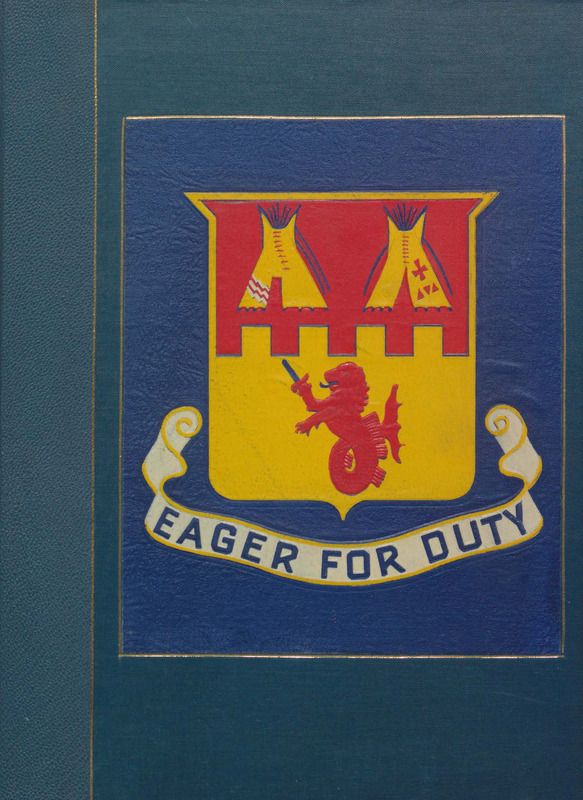
Introduction This an informal story of the travels and battles of an infantry regiment in World War II. Like most stories of war, it is difficult to tell, for it is about groups-- squads, platoons, companies, battalions--while the real story of war, to every soldier who fought, is the story of the part HE played in it. But to tell the full story of any one soldier in this war, to tell of the grimness and the humor, the nausea and the dignity, the terror and the heroism which marked his fighting days would fill this whole book and many more. Even in this simple story of a single regiment we can only outline the major facts of endless battle. For greater detail we refer you to the men for whom this book was written, the men of the 157th Infantry. To the best of our knowledge, the facts in this book are accurate. Yet remember, the actions spoken of are not the calm, deliberate movements of history in its normal stride, but the frenzied, semi-chaos of men killing each other. No reporters stood by while these killings took place and the men present were too busy with the killing to note, at all times, which squad went where. So while we may place you at the bottom of a hill at a time when you know full well your squad was at the top of the hill, hear with us, for in the main you'll find us accurate. Cover reads: Eager For Duty--motto of the regiment
Dedication This book is dedicated to those members of our command who gave their full measure that the cause of humanity might be preserved. May we heap high upon the altar of faith the flaming desire that will envelope ·and destroy all forces tending to incarcerate the freedoms of mankind. Let us, who live, devote our lives to substantiate this faith for which they made the supreme sacrifice. It is with reverence that their names are here listed.
The Special Troops of the 102d Infantry Division were activated at Camp Maxey, Texas, 16 August 1943, in compliance with a revised table of organization, (7-3) which consolidated the service companies of the Division; Headquarters and Headquarters Company with the Military Police Platoon and the Division Band Attached, the 802d Ordnance (LM) Company, the 102d Signal Company and the 102d Quartermaster Company; under one tactical command of 52 Officers, 7 Warrant Officers and 904 Enlisted Men.
The Harbor Defense Headquarters Battery, recently authorized, was formed in May, 1941 and was composed of General Garrett, Harbor Defense Commander; Lieut. Colonel Hoge, Executive; Major Davis, Plans and Training Officer, and 2nd Lieut. Potter, Assistant Adjutant. In August Lieut. Col. Lins replaced Lieut. Col. Hoge as Harbor Defense Executive, and Colonel Hoge became Post Commander at Fort McKinley.
When he arrived in Camp White, Oregon, on that spring day in 1943 few men of the 299th Engineer Combat Battalion realized the vigor and perseverance concealed beneath the pleasant face and sto.cky body of Lt. Col. Milton A . Jewett. His easy going movements and slow speech gave no hint of his abilities which later were recognized by the highest quarters and ultimately led to the award of the Distinguished Service Cross. Colonel Jewett, we never had the time nor the place to express to you our sentiments. Therefore, we are devoting this page to you and with it our best wishes for a future as fine as your army career. -The Officers and Men of the Famous 299th
Forward "This book is not intended as a History of IX T.A.C., neither is it an evaluation of the Command's contribution to Victory in Europe. Such a story will be written elsewhere. Instead it is being composed because we--the Officers of IX T.A.C.--want to keep alive in our minds eye the fond associations and the satisfying memories of life in our Headquarters; to call to mind the genuine companionship and decent fellowship for that day when such values become good to remember. This is Duffy-s Tavern, with a 10 cent top for the best in the house, and genial Bob Straight in charge. This book is an unpretentious attempt, sketchy and incomplete though it necessarily be, to capture here and there in this series of photographs something of the associations of this period. Many of the men who did most to create this spirit of good fellowship have passed by us on the road to war. These men we salute. One word more; if at casual glance there appears a frivolous note, remember that these were not frivolous days. For there were days here too without mail, days full of the anxiety of separation, monotony and loneliness, and these were the associations which eased the Pressure when a Chaplains punch wouldn't do the trick. And to us it has a kind of symbolism. It taught us that no matter where Americans are placed they will make the best of the situation. Deeper than that, it taught us that while fighting a vicious enemy, those powers of darkness who would destroy our way of life, we could at the same time, forge a closer bond of unity between men of good will--Americans of all ranks, all shades of opinion and all religious faiths. It was, if you will, Democracy in action. Here are the scenes touching on a spirit we will never forget. Reminder of the days when, far from home and those we loved, we brought cheer to one another and carried on in the name of Justice and Peace."
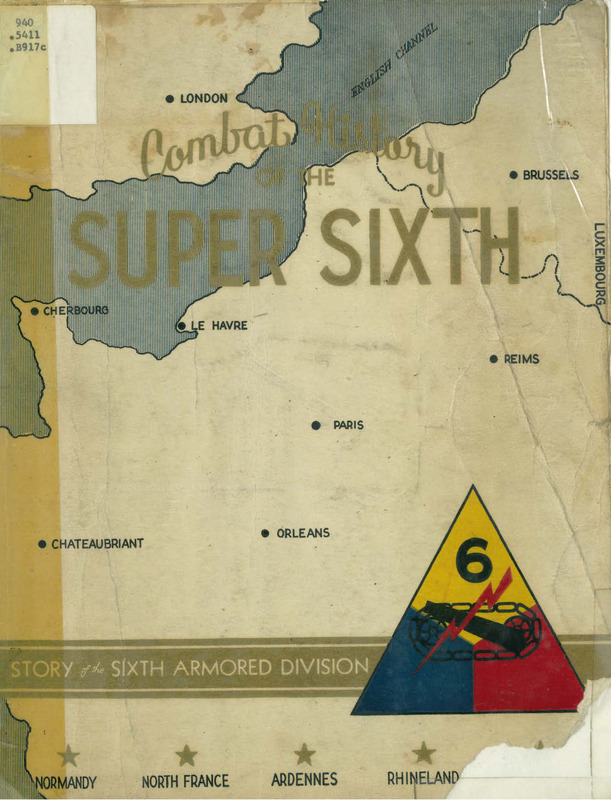
Introduction ''Combat History, The Super Sixth" is a compilation of data from many sources, but by far the greater part of the material was obtained from after-action reports prepared by the G-3 Section, 6th Armored Division, under the direction of Major Clyde J. Burk, Assistant G-3, with Lts. Hunter Haines, Chester Kneller, Bernard Yaeger, and Paul Cundiff assisting, and appears here under Section II with slight variations. Credit is given to Lt. Col. Ernest W. Mitchell Jr., G-2 of the 6th Armored Division, for his preparation of the material used as a base for Section I, the story of the 6th Armored Division, which gives the overall picture of the Division's role in combat operations in Europe, and for his permission to use same. The charts and other data presented in another section of this book were chosen from material compiled by the Office of the Chief of Staff under the direction of Captan Cyrus R. Shockey, Aide-de-Camp, and art work was done, for the most part, by Sgt. Frank X. Scalise, G-2 Section. Photographs were made by official U.S. Army Signal Corps photographers and the Publisher. To the above named individuals, and also to the staff of the Division I & E Section and Public Relations Office, the Publisher wishes to express his appreciation for the use of the material and for the cooperation which made the compilation of this history possible. Although this book is not an official publication, much of the material contained herein was taken from official records, and the remainder has been carefullv checked to avoid any misrepresentation of facts or figures. It is regrettable that this type of history does not provide for the mention of the many gallant individual achievements which so characterized the men of the 6th Armored Division, whose "esprit de Corps" was second to none in the U. S. Army. However, the reader may well see reflected in this impersonal record the loyalty, devotion, and sacrifices that made this smooth functioning, fighting team such an important member of the Armies on the Western Front, and enabled it to finish all of its missions with the satisfactory label--"Success"-- inscribed thereon. William E. Rutledge, Jr. PUBLISHER
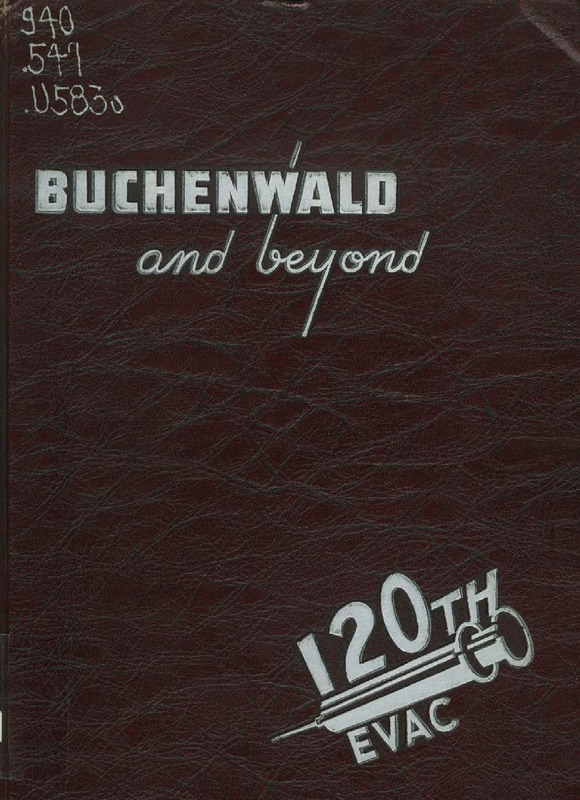
Foreword Bound in this volume are memories of the 120th Evacuation Hospital (SM)--an evacuation hospital which served during World War II in an unusual capacity, i.e. rendering medical and, surgical aid to Political Prisoners and Displaced Personnel at Buchenwald near Weimar, Germany, and Cham, Bavaria. In that most of the members of the organization will return to civilian life, this book will serve as an informal record of their service in the army. William E. Williams, Colonel, MC Commanding
This book is for and about the men of Battery "A", 391st Armored Field Artillery Battalion. It tries to relate, in detail, what happens while a war is being fought. It tries to tell what men do and think while under the strain of battle and what they do when one battle is over and preparations are being made for the next one. It started to be a history, but histories are cold and lifeless and in a story about a group of one hundred men it is possible to include intimate details of a lot of the things that happened.
The 963rd Field Artillery Battalion originated as a component of the Connecticut Militia, which consisted of companies formed in 1639 to protect the original colonies. These companies were in turn organized in the year 1739, into the 3rd and 4th Infantry Regiments of the Connecticut Militia, which remained in colonial service until 1776. In that year they became part of the State Militia of Connecticut and served during the Revolutionary War in such historic campaigns as those around New York, The Danbury Raid, and the Battle of Saratoga.
From A Spearhead Regiment (the book's introduction): "When the blood, sweat, and dirt of war become memories, who will remember the " little things" that GI Joe did, to make war just "a memory"? We will, of course. The 90th Division through its battles and conquests will go down in the annals of history as one of the finest and bravest Division of World War II. After our return to civilian life it will give us great satisfaction to look back at ourselves as were in combat, arid to see ourselves as the heroes of the 359th, one of the great regimental combat teams of the war. We have collected many pictures; all but a few taken by GI Joe himself on the battlefield. Insofar as photography is concerned, some photos could be better, but that doesn't really matter. They show us things as they were, and as they actually happened with no dressing and special poses. They show us as we were at the time we helped make history. We have no pictures of D-Day. Men are not in the mood to take pictures while all Hell is breaking loose around them. Storming the "Heinies" well fortified positions was work enough for that day. Landing on Utah Beach amidst the heavy fire of the enemy was a remarkable achievement. There were a few pictures taken by those few men who can do their job plus under any conditions; but the pictures were unable to be located. However, those men who were on the landing need no pictures to remind them of it. Nor will those men of the 2nd Battalion who were on the transport, "Susan B. Anthony", when it struck a mine and sank on June 7th ever forget. The transport stayed afloat just long enough to enable rescue of all the men. These men were loaded swiftly into small boats amidst gun and shell fire. By the night of D plus I, the bulk of the regiment was assembled on the beach. The supporting units were ashore D plus 4. Those of you who remember this incident have a picture that is printed indelibly in your memory."
Little mention is made anywhere of the actual work of the men who operated the heavy equipment for long hours, sometimes within artillery or mortar range of the enemy, or of those who moved that equipment over long miles' of bad roads in good and bad weather, with C Rations often their only food for days. On occasion, true, these men found a "home" along the way, finding pleasure and entertainment as well as rest and comfort, but not always. No idea is given of the hours spent by clerks, handling routine matters and emergency reports, in cold (or hot) tents, or in buildings, as chance would have it. Nor of the draftsmen who made charts, preliminary drawings, drawings of changes, final drawings. Nor yet of the drivers who, with or without patience, carted officers from airfield to airfield, or from site to unsafe site in search of information, or back to Paris over ice and snow to chase supplies or attend a school. Of the cooks who fed their company three meals a day for 27 months, on the move or in permanent stations. Of the thousands of hours spent encoding, decoding, transmitting and receiving signal mes sages, or of the thousands of calls placed to Paris, "Roadbed", "Rowdy" or "Research." And yet, it takes all of that to add up to the total mission accomplished.
This booklet is dedicated to the forty-one officers and men of the Eighty-First Chemical Mortar Battalion who made the supreme sacrifice. To give a thorough account of the accomplishments of the Eighty-First Chemical Mortar Battalion would take thousands of pages. To detail the heroic deeds and meritorious service of the gallant officers and men of the Eighty-First would take more thousands of pages. A booklet the size of this could be written about each enlisted man and .each officer. It is be{ieved the history is concise, yet shows the battalion to have lived up to its motto, "Equal To The Task." • Jack W. Lipphardt, Lt. Col., C. W.S., Commanding
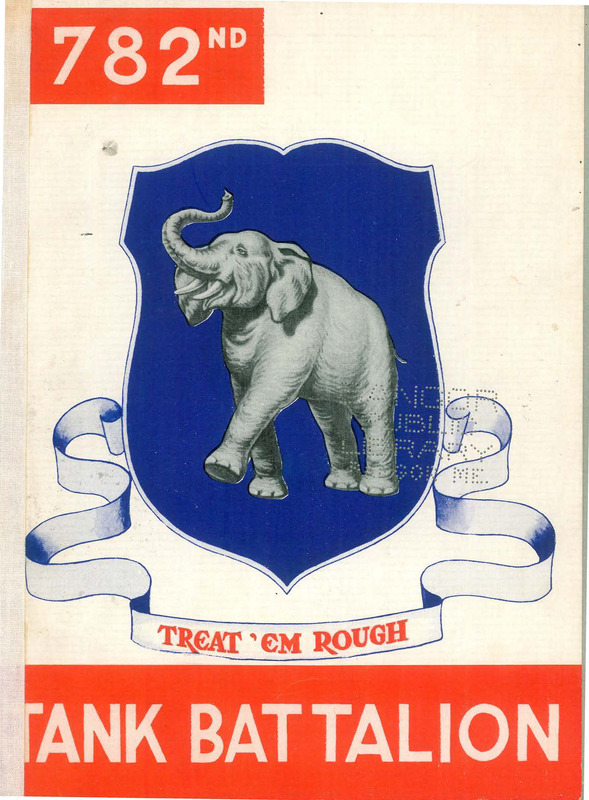
This little history from 1 February 1943 up to the time of arrival in the ETO has been prepared so that present and former members of the battalion may have a few notes to recall some of the humorous, routine and sometimes serious moments of their days in the 782nd Tank Battalion. All facts and figures are obtained from the official Battalion History which is filed in the Historical Section of the War Department, Washington, D. C. What is to follow has been reworded slightly to make easier reading and if possible to add a laugh, give credit or to add a few bits of information that would ordinarily be lacking from an official communique.
Basic training had its usual ups and downs. A lot of the boys were introduced to tanks for the first time--and took to them as smoothly as a shell fits into the breech. By the time the outfit was well into its basic education it furnished enough trained personnel to form the cadre for the 7 42nd tank Battalion. The new baby was commanded by Major Hausman, formerly S-3 of the 752nd. Command of the 752nd parent organization at this time was taken over by Major George F. Bender who had been the Battalion Executive Officer under Col. Anderson. Most of the kinks of basic training had been ironed out when 752nd left Fort Lewis on April 13, 1942, headed for the Desert Training Center at Camp Young, near Indio, California. Here we started the rough work which was to result in one of the best trained tank outfits in the open market. The outfit was part of the first Tank Group which also included the 755th Tank Battalion. Notes: (1) Includes roster and (2) written while the battalion was stationed in Italy
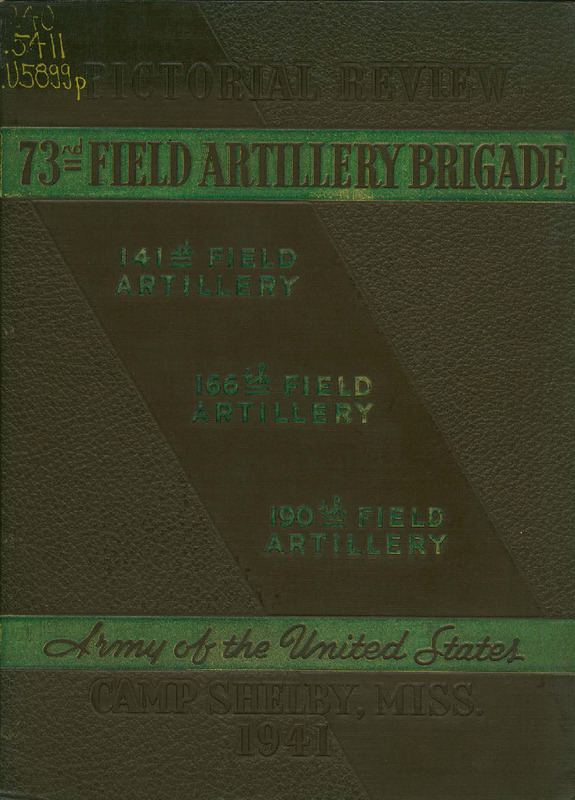
This Brigade was organized September 23, 1940. The Commanding General is Brigadier General William A. March. It is composed of the Headquarters Battery, 73rd Field Artillery Brigade (Corps) from Philadelphia, Pennsylvania, the 141st Field Artillery (the Washington Artillery) from New Orleans, and the 166th Field Artillery drawn mainly from in and around Philadelphia, Pennsylvania, and from what is known as up-state Pennsylvania. The 155mm gun, tractor drawn regiment, the 190th Field Artillery, was formerly the 103rd Cavalry and is composed of units from the central and western part of the state of Pennsylvania. The Brigade Headquarters, when formed, was converted from the Headquarters 22nd Cavalry Division, Headquarters 52nd Cavalry Brigade and Headquarters 122nd Medical Squadron which had a history dating back to 1921, having been so organized when the National Guard of the United States was reorganized under the National Defense Act.




![752nd Tank [Batallion]](https://bangorhistory.org/files/large/c8a6ab79ecff667f54b27c434f60def7af30b402.jpg)