World War II Regimental Histories

Items

Album [74th Troop Carrier Squadron]
Foreword: Any similarity between this book and an official Army Historical Report is coincidental and unintentional. The written portion is merely intended as an outline for your reminiscing. Plenty of space has been left between the lines for your individual reading. The photographs form a more complete story. If anyone's picture does not appear, I apologize for that omission. It has been our intention to picture everyone and at least indications of most of the Seventy-Fourth Squadron's activities. The contribution of pictures and material by Major Edward Kaminski and Mr. Tom Towers made this album possible. I'm sure this Album will help you remember an outfit it would be hard to forget. --Carl W. Boswell
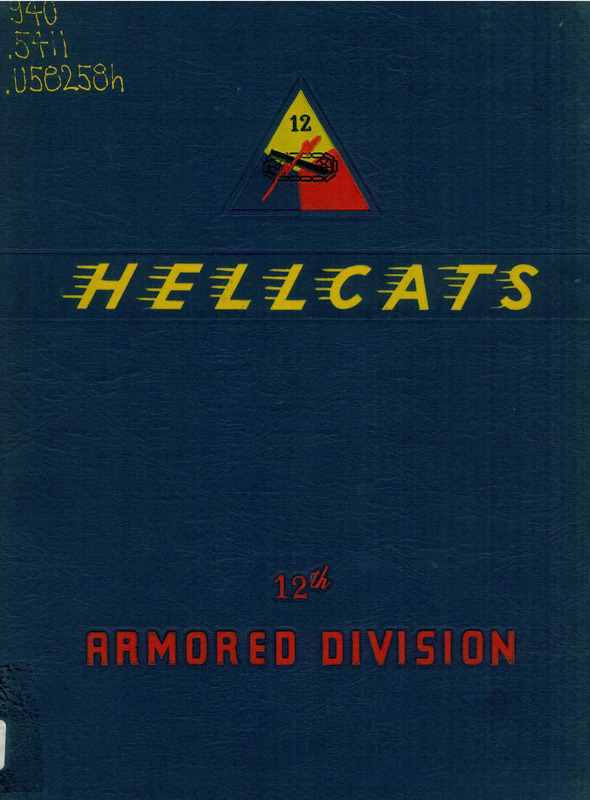
A History of the United States Army Twelfth Armored Division, 15 September, 1942-17 December, 1945
Speed and devastating striking power, coupled with the gallant deeds and heroism of its personnel, wrote a glorious history for the 12th Armored "Hellcat" Division during its five months of constant combat against the enemy in Europe in World War II. "Speed" was its password to Fortress Europe. Its activation on September 15, 1942, maneuvers, camp training, the boat trip over, the cold days of England, and the first hectic days of France-during those days the Hellcats gradually acquired the fighting spirit and esprit de corps that were to make the 12th one of the fastest striking, most feared divisions on the Western Front.
60th Engineer Combat Battalion: 1943-1945
"This book is dedicated to those of the 60th Engineers who did not return to enjoy the world they fought for."
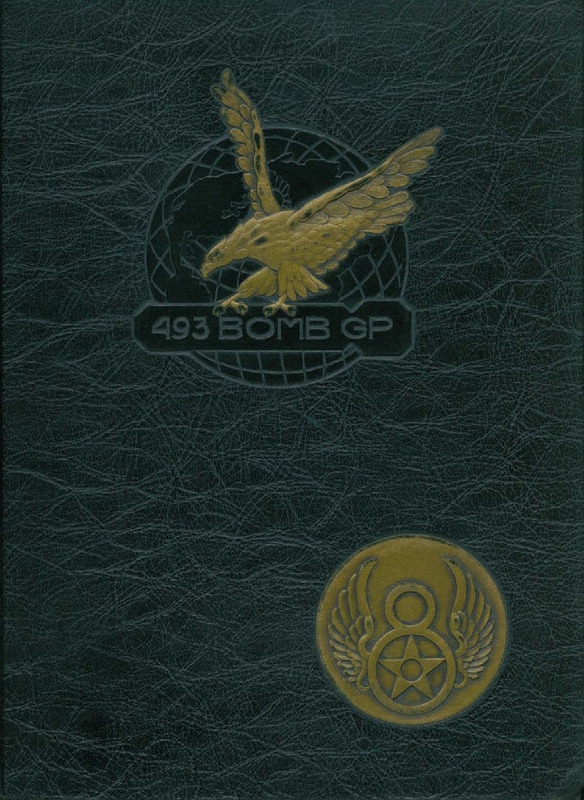
493rd Bombardment Group: A Pictorial Review of Operations in the ETO
From A Short History of the 493rd Bombardment Group (H): The 493rd Bomb Group assembled for its phase training to serve as a combat unit overseas at the McCook Army Air Field in McCook, Nebraska. The Air Echelon of the Group composed of the 860th, 861st, 862nd, and the 863rd Squadrons collected its air and some ground personnel during the month of February, 1944, and began training in earnest through the month of March. The usual problems encountered by an outfit in the process of initial organization were dealt with in good stride. The setting up of a briefing and an interrogation technique was ironed out by discussion with the crews as to their likes and dislikes of the procedure while we were on camera bombing missions. Operations began to organize teamwork by stressing on the crews the importance of correct take-off interval, climb, and landing procedure as well as the flying of a correct formation while in the air. Weather found plenty of practice in predicting the frequent snows and changes in weather in that woe-be-gone outpost somewhere in the United States. The bombing section too, played its part by selecting targets for the crews and the crews in turn bombing by camera every conceivable target within operational radius of the base. All departments had their job to do in welding the Group into one smooth operating machine.
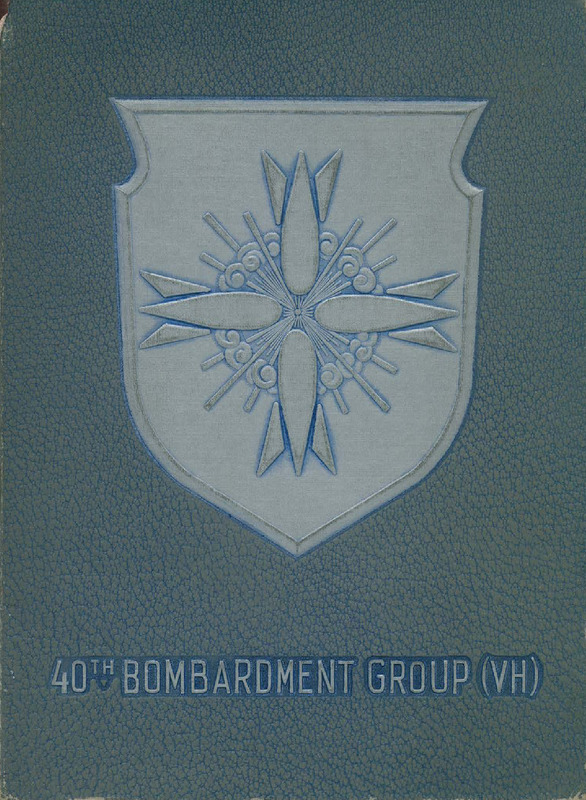
40th Bombardment Group: A Pictorial Record of Events, Places, and People...
Foreword: The idea for a 40th Group Photograph Album was born several months before the end of the war, but the actual execution of the book had to await the termination of hostilities. Consequently you will find that certain events or activities may not be represented here, either because no photographs were taken at the time or because the photographs that were taken were not available to the editor when the book was finally put together. You will notice that we have tried to emphasize representative activities and scenes rather than individuals. Obviously it was impossible to include a picture of every man in the 40th Group. Therefore practically all formal group pictures have been left out. The few that are included were chosen for reasons other than that they portray certain individuals. This also applied to different photographs in which the same persons appear more than once. The editor would like to express at this time his appreciation to the members of the 11th Photographic Laboratory, for they are responsible for practically every photograph in the album. Appreciation also is extended to Forrest C. Wood, former Historian of the 40th Group, who has aided invaluably the efforts of the editor in the preparation of the written portions of the album. --Lawrence B. Eustis, Captain, Air Corps, Group Photographic Officer
389th Bombardment Group: A Pictorial Review of Operations in the ETO
Dedication: This book is dedicated to those men who so gallantly and unselfishly gave all they had to give--their lives--so that all men might breathe the pure air of freedom.
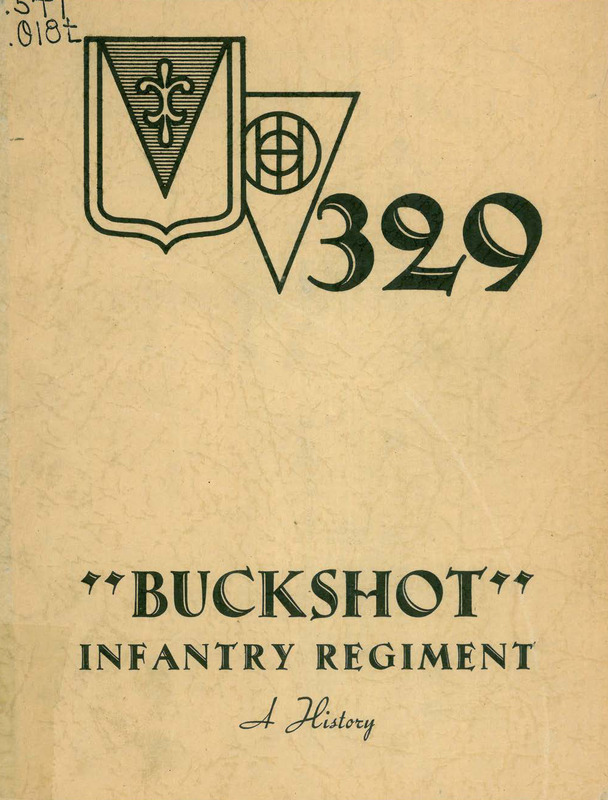
329 “Buckshot” Infantry Regiment: A History
"This history is taken from the official records of the 329th Infantry. It covers the battle actions of the regiment from the dogged yard by yard bloody and uninspiring slugging match of the hedgerows of Normandy, to our spectacular dash from the Rhine to the Elbe. The record of accomplishments of the 329th is one of which any member may justifiably be proud. This record of battles won and of ground gained and held is the composite picture of many smaller fights where the decisive action was the marching fire of the rifleman, the steadfastness of the machine gunner under attack or the bravery of the bazooka man stalking p, tank. The spirit and determination of the individual made possible the winning of important battles. These successes have not been won cheaply. Beneath the soil of Europe lie the bodies of over 850 of our comrades. To the hospitals have gone nearly 4000 others wounded in action. Most of these were killed or wounded because when the time came for them to decide between safety and duty they chose the latter. Our debt to them cannot be paid." --Colonel Edwin B. Crabill
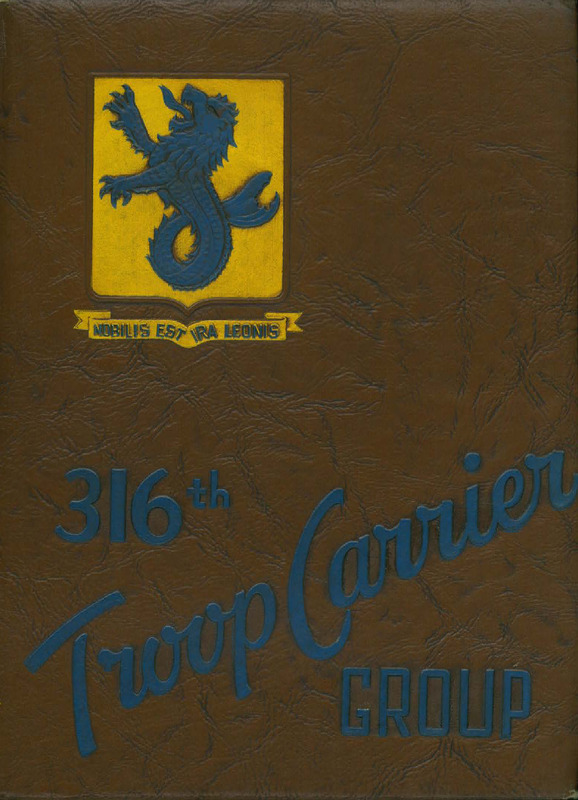
316th Troop Carrier Group
From page 72 of document: "The 316th had the hazardous and vital job of flying supplies and equipment into the battle zone for Montgomery's forces. Killing Germans was the one aim of all the coordinated operations. As the fighting progressed, battle casualties began to show up at the 316th's field at Agedabia, So for the return trip to their base at Tobruk, as many litters as could be laid on the floor of the planes were taken aboard and flown back for hospitalization in the rear areas. Major Francis Z. Reinus, of New York City, group surgeon, had charge of this operation. Colonel Washburn said only two men died en route, and they had been wounded critically in a land mine explosion as they were coming to the base on a truck. Later, after results of this spur-of-the-moment evacuation had been studied, it became a planned and large-scale operation, resulting in the saving of many lives and in higher morale. It was for maintaining supply and evacuation lines in that area that the group was awarded its first Presidential Citation."
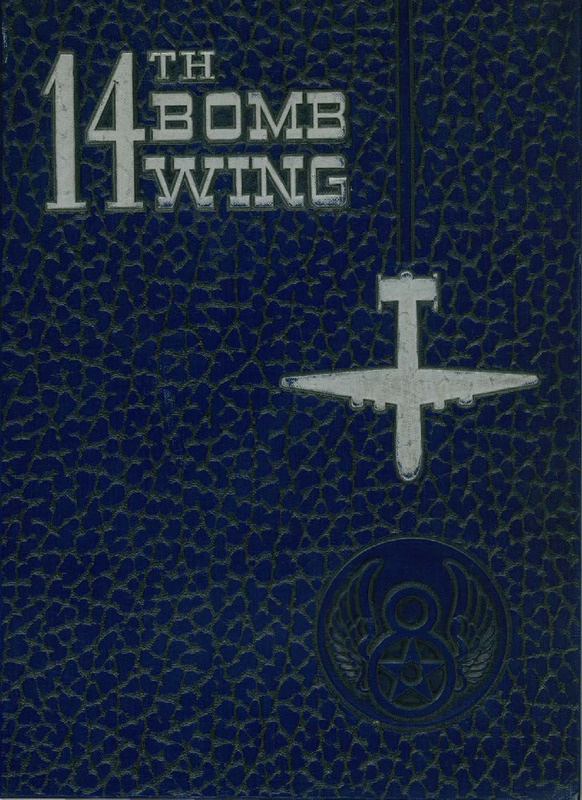
14th Combat Bombardment Wing (H)
The 14th Combat Bombardment Wing was activated on 13 September 1943, at AAF Station 115, better known as Shipdham, Norfolk, with Colonel Leon W. Johnson, the former commanding officer of the 44th Bombardment Group, in command. The Wing had been in operation as the 202nd Provisional Combat Bomb Wing since 3 September 1943. The Wing was formed from personnel of the 44th Bombardment Group, on whose station the Wing was located, and the 392nd Bombardment Group, which was located at Wendling, Norfolk.
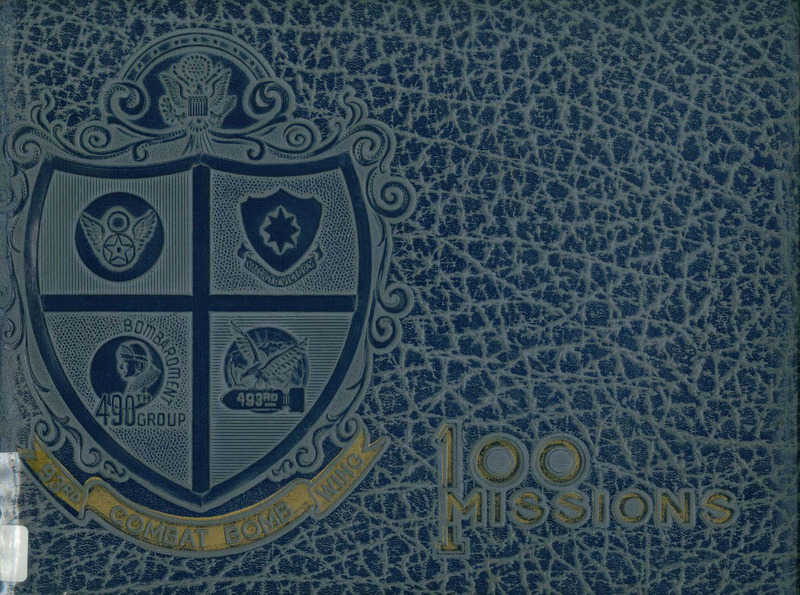
100 Missions
100 Missions
"Words of mine cannot pay adequate tribute to the skill and courage of the air crews; the unending task of the ground crews, and the loyalty and devotion of all concerned with these missions. I view this record with a pride that is shared by all who know of you now, and one that will be subsequently lauded by the entire nation. The first hundred have moulded each group into a trim and efficient fighting unit fully capable of the great task remaining before final victory is achieved. It is my sincerest hope that we are still all together, fighting together when that memorable day arrives." --John K. Gerhart, Brigadier General, U.S.A., Commanding
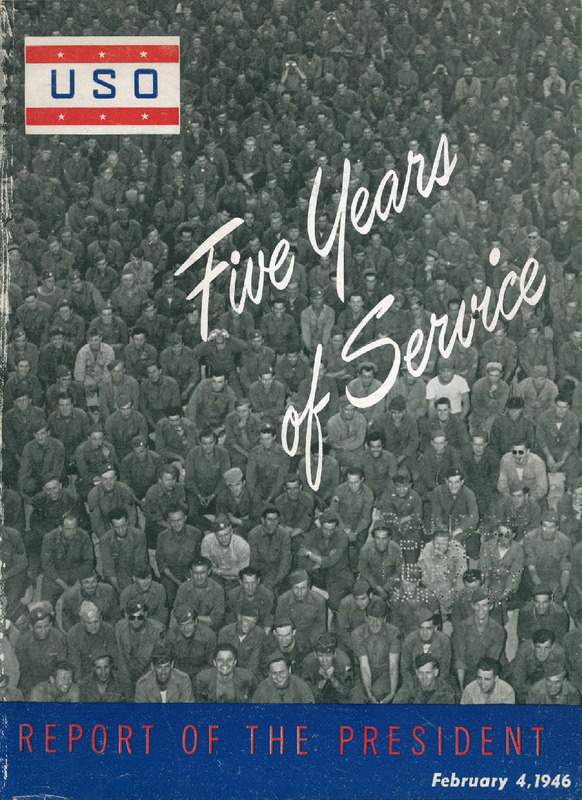
USO, Five Years of Service: Report of the President
"To the 14,000,000 men and women who have served or are serving in the armed forces of the United States, USO means a billion "touches of home"--an infinite variety of personal services ranging from the routine provision of writing paper to the convalescent care provided by USO hostesses specially trained to help wounded veterans readjust to civilian life. Taking stock of these services on its fifth anniversary, USO finds that at its peak of activity, it was serving 1,000,000 people a day in one capacity or another, running up to more than 1,100,000,000 the total served since the organization started, February 4, 1941." author unknown
The 7th: 1943-1945
The 7th: 1943-1945
Foreword: This is the story of the 7th Convalescent Hospital, United States Army, Medical Department. It is the story of a group of men who were assembled to rehabilitate soldier casualties both physically and mentally: the story of doctors, dentists, farmers, business men, clerks, salesmen, cooks, truck drivers, soda dispensers, students, and laborers who became the professional staff, technicians, clerks, carpenters, cooks, drivers, and electricians. The combined efforts of all these individuals made possible the accomplishment of our mission. It was all in the "T/O and T/E", but no one had ever seen such a unit in operation – there was doubt as to whether this unit could ever become a practical, working part of the forces in the field. But the 7th not only accomplished its mission, it can take credit for being an outstanding leader in its field; a unit that was not only a success in the eyes of the army but also – and what is more important--in the eyes of its patients. Success, in large measure, is the result of the efforts that are put into the job. This is where the men of the 7th excelled. When the chips were down, they could pitch in as a team and accomplish miracles. This was amply proven in England, France, and Germany. A common statement among soldiers is, "When I get out of the Army, I am going to forget everything about it." In its true light, this remark is merely a reaction to the man's present plight. He is tired of Army life. He wants to get home. Take a peek into the future and you will probably find this same man telling his Army experiences to his co-workers, relatives, and friends. To the story teller, this book can be a restraining influence against exaggeration. But to most of us this book will be a record of all the little things we might forget--and want to remember-as the years go by; such facts as the names of the men, interesting experiences, and amusing incidents. We have traveled through many lands; we have observed destruction and suffering; we have experienced discomfort, fatigue, disillusionment, and uncertainty; we have known friendliness and hatred. Exposed to these constant emotional strains, we have changed during our Army career. How much? Well, we shall discover that when we have returned to civilian life. At that time we may wonder what altered our way of thinking. The probability is that we shall find the answer within the covers of this book. This book was conceived and written by a group of your own buddies as a souvenir containing many of the memories of the 7th Convalescent Hospital. An Ernie Pyle could have done a better job of recording these incidents, with a finer touch of human interest; however, the book, you will find, has that quality of warmth which comes naturally from the pen of one who has experienced the happenings he describes. It was written during odd moments, often under hectic and unfavorable conditions, of the stay of the 7th in the European Theater of Operations. It is hoped that many hours of pleasant reading and many years of happy reminiscing will result from our efforts. For now and for always--the good luck of the "Lucky Seventh" is extended to you.

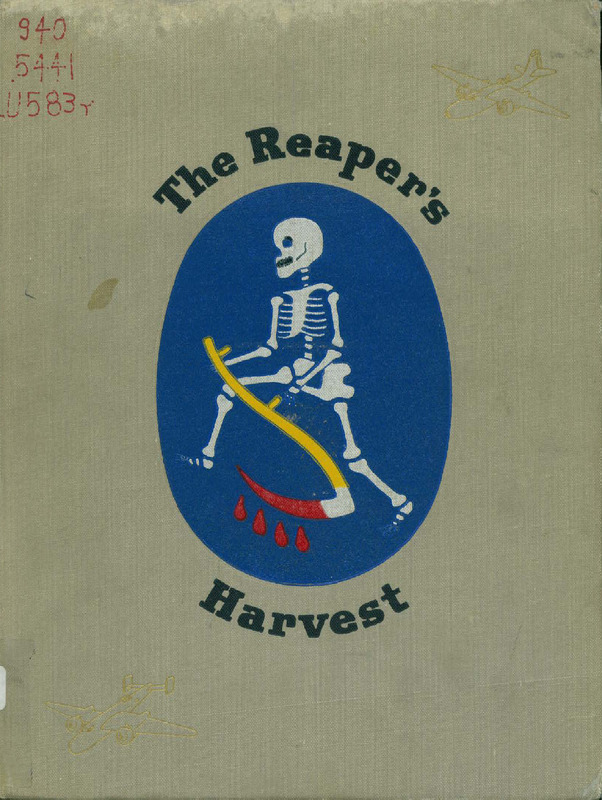
The Reaper's Harvest: The Story of the Third Attack Group
Opening paragraphs: "In the spring of 1942 the Japanese were successfully over-running the Pacific, and their tentacles were reaching down to touch the Australian mainland with the threat of invasion. Their eyes were on the strategic base of Port Moresby, and the pitiful Allied forces charged with stemming this tide were in the unenviable position of defending Moresby against attacks by land, sea, and air So in April 1942 the Grim Reapers received their baptism of fire and jungle, something that all of them had hoped for and feared since their designation to overseas duty. Powerful Japanese bases were springing up on the east New Guinea coast. Enemy ships plied the once peaceful seas among the southern archipelagos, transporting men and equipment with impunity to the swelling Japanese camps on the beaches of New Guinea. All knew that the time was at hand when the enemy must be stopped or supreme sacrifices made. Credit: Produced in New Guinea by Lt. Col. Charles P. Martin, Capt. Frederick L. Newmeyer, Jr., Capt. Edward Mandell and T/Sgt. Harold A. Larsen. Grateful appreciation to Col. Richard· H. Ellis for his sponsorship, to Capt. Robert Spieth and Group Photography for outstanding camera work, to the late Lt. Kenneth W. Lindsay, to Sgt. Peter Catizone, Cpl. Frank G. Farina and Cpl. George H. Dernoeden for their excellent art work and cartooning and to Maj. Ivan P. Head for his combat information.
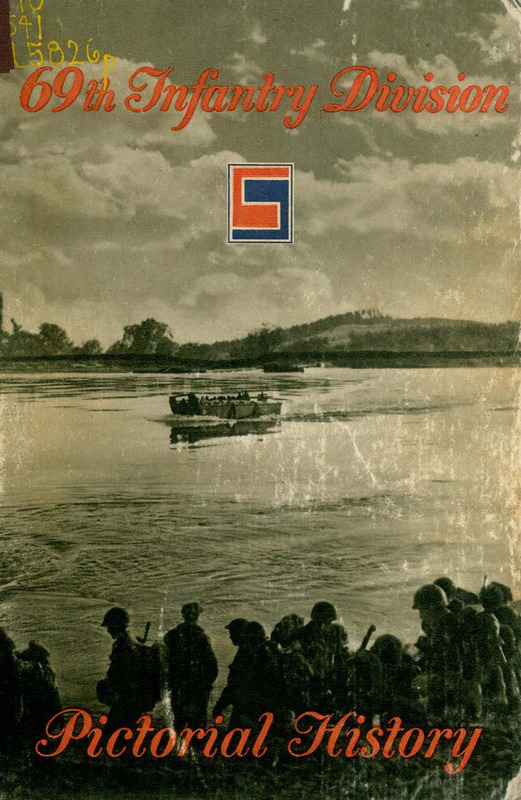
Pictorial History Of The 69th Infantry Division, 15 May 1943 To 15 May 1945
Germany, 20 July 1945: To the Officers and Men of the fighting 69th Infantry Division: Recorded on these pages is a review of the accomplishments of this Division, of its preparation to fight and its fight against Germany. It is not a complete picture--many small pictures are missing. They are not forgotten, and as you leaf through these pages they will be recalled to your memory. You have smoothly and efficiently carried out every assigned mission from the day this Division entered the line until V-E Day. Your high esprit and your fighting spirit lived up to every expectation. I extend to you, the Officers and enlisted men of the Fighting 69th Infantry Division my most sincere congratulations and praise for the job well done. Sincerely, E.F. Reinhardt, Major General U.S. Army, Commanding
Pictorial History, Forty-sixth Field Artillery Brigade, Army of the United States, 1942
On February 10, 1941, the 46th Field Artillery Brigade (G.H.Q.) came into being as a military unit under the command of Colonel George H. Paine. This apparently simple statement covers much, as this was the first time in the Military History of the United States that a unit as large as a Brigade was formed completely of Colored Troops.
Pictorial History of the 447th Bombardment Group (H)
Published as an unofficial history of the Group's activities from activation to completion of 258 Combat Missions in the European Theatre of Operations, through the courtesy of the Officers' Club, whose Board of Governors made available funds to apply against publication costs on copies for distribution to members of the 447th Group who were on its rosters as of the dates of departure from the E. T. 0. for the Z. of I. This pictorial, and unofficial, history of the 447th Bombardment Group is not as complete as its editors would have liked it to be, due to the fact that the work of preparing and assembling it had to be done by the very limited staff on hand at Drew Field, Florida, whose primary task was the job of deactivating the Group. So it was prepared amid considerable confusion by the short handed staff and using as much of the material as could be found among the Group and Squadron records. The editors have used every possible photo whether of personnel, combat crews, ground crews, social activities, etc. that could be found. Without doubt, many other photos exist, but these were not on hand at the time the history was prepared. -The Editors [Captains Surridge and Dooley]
Pictorial History Three Hundred Sixty Seventh Infantry: Army of the United States, 1942
The 367th Infantry Regiment was first formed at Camp Upton, New York, in 1917 as a 92nd Division unit under the command of the late Colonel James A. Moss, a distinguished son of Lafayette, Louisiana, and one of the United States' outstanding army officers.
Pictorial Handbook of Military Transportation
Foreword: Based on the premise that one picture is worth a thousand words, the photographs of this Iittle volume will tell a long, long story. That story will prove a fertile field for research and for study in military transportation. These are pictures of operations--they depict the highlights of the greatest transportation mission of all time. Back of these photographs is the monotony, sweat, toil and death of War. A study of these photographs will aid TC units in other theaters. They will reveal the ingenuity, the skill, the ability to create and improvise which characterized the TC soldier in the ETO as he met and conquered his problems one after another. They will offer and suggest new ideas, assist future training and shape programs of instruction ... and, too, they will record permanently the achievements of the TC in the ETO.
Our Battalion: 899th Tank Destroyer Battalion History
Our Battalion, the 899th Tank Destroyer Battalion, was activated on July 1, 1940. In those days, it was known as the 99th Infantry Battalion (Anti Tank). We were stationed at Fort Lewis, Washington; not too far from Tacoma and Olympia, Washington, right on Highway 99. Under the command of Lt. Col. Ransom, plus a cadre of old army men from the 15th Infantry Regiment to help train us, we began our not too happy struggle changing ourselves from care free civilians into soldiers.
Operation USO: Report of the President, February 4, 1941-January 9, 1948
To the People of the United States Just seven years ago, (on February 4, 1941), the USO was incorporated "to aid in the war and defense program of the United States and its allies by serving the religious, spiritual welfare and educational needs of the men and women in the armed forces and defense industries, and in general to contribute to the maintenance of morale in American communities.' Growing out of the human concern and patriotic desire of its member agencies to render a united though separately distinctive service in a great national emergency, the USO became both a symbol of a nation's care for its sons and daughters in uniform and a principal channel for an unprecedented civilian participation in a total war effort. In seven years the USO has exercised a fiduciary trusteeship involving $236,000,000 voluntarily and gladly contributed by countless individuals in every county, town and hamlet in the United States and thousands of men in uniform stationed throughout the world. This money has been translated into a billion and a half recorded services--and millions more never tallied. While the end of the war has not brought with it the end of an emergency for any nation; and while the times are still rife with human peril and human need, still the USO has discharged its mission, fulfilled its original purpose and ended its task. An official and complete history of USO has already been written and, together with pertinent documents and significant records, it will be filed permanently in the Library of Congress. The drama of the enterprise has been recorded in the book by Julia Carson, "Home Away From Home.' It is now appropriate to render a simple but complete factual accounting to our contributing and participating public. That is the purpose of this report. January 9, 1948 L.F. Kimball, President, United Service Organizations, Inc.
On The Way: A Historical Narrative Of The Two-thirtieth Field Artillery Battalion, Thirtieth Infantry Division, 16 February 1942 To 8 May 1945
Preface This is the history of our record as Artillerymen in the 230th Field Artillery Battalion. In its pages we will march together again as comrades-in-arms, with quiet pride in the job we have done, and with the hope that Saint Barbara, the patron of all artillerymen, will look upon our record and find it worthy of the Field Artillery tradition. It would be ideal if each of us were mentioned by name in this history. But this is the story of our Battalion, and we were and are the Battalion. There was a story to tell; and it had to march along without too much regard for the individual and what he had done. You will find yourself in these pages, because you were there, or you had a friend who was there. You know what the situation was--this may keep your memories fresh. We were "CROW"--and our black wings covered a continent. When peace comes, the rustle of wings of a crow will remind us again of what we did.
“On Target”: An Informal Account Of The Moonlight-Cavalry
You're probably wondering what we did in the war to rate all of campaign stars, and other decorations we've received. Well read what we did and decide for yourself. To begin with, the old 227th, got its name on 20th January 1943 down at hot and cold Fort Bliss, Texas.
"My Battalion", World War II, 795th AAA AW BN
"Men who go to war live strongly during every day of their anxiety and peril. What they experience both in joy and in sorrow strikes deep roots into their hearts and minds. War makes memories. Following the collapse of Germany and the ultimate surrender of Japan, members of our Battalion began to think back over the war and the part they played therein. The mental and physical release brought on by peace helped them to recall the many and varied incidents that typified their military days. They found themselves trying to remember in the proper sequence where they had been and the outstanding events connected with each location. Some saved snapshots while others compiled itineraries. In each effort the theme was the same: to make a milestone in their memory of the events they would want to remember and relate when they returned home. The natural outgrowth of all these individual endeavors was the compilation of this Battalion History. Once conceived the idea of a beautiful and permanent record required hard work and skillful leadership. Special acknowledgement should be given the following members of our Battalion who made major contributions toward the successful publication of this volume: Edward Harris, James De Vita, Anthony Cocco, Daniel Botkiss, William Ross, Joseph Schimmler, Donald Leach, Bob Becker, Donald Walden and Leslie Williamson. To these and the many others who also helped I offer the official thanks of the Battalion. May this book be a cherished possession of every member of the 795th AAA A W BN, that it foster and preserve many happy memories of our collective achievement in a great and victorious conflict." John D. Betley, Lt. Colonel, U.S. Army
Armor in the ETO
Armor in the ETO
The 20th Armored Division cannot point to a long record of heroic slugging or dashing achievement on many of the battle fields of World War II, it made its weight felt by serving for two years as a replacement training division, properly climaxed by active participation as a unit in the final drive in the defeat of Germany. The 20th did not write a great deal of combat history, yet it joined valiantly in the knockout punch against a desperate Nazism, throwing its infamous legions back to and breaking them at its citadel, the National Redoubt in the Alps. No, the 20th did not have a long history of battles and campaigns like so many other units; it wrote only a few paragraphs in the total book but it does know how history was written, and it was there to see the dramatic moments, causes and effects that will write the history of the future.