Explore history through the digital collections of the Bangor Public Library and our community partners in Bangor, Maine
World War II Regimental Histories
Title
World War II Regimental Histories
Description
Photograph-rich publications documenting the history of individual military units during World War II, including the unit's organization, personnel, military campaigns, and casualties. This collection was compiled by World War II-era librarian L. Felix Ranlett, a veteran of World War I.
From page 54: "Of the grievances associated with our life at Kweilin, many were trivial and some were imaginary. But one which was real and loomed terribly large was the food. At this time we had no Quartermaster provisions at all--no milk powdered or canned, no jam or butter, no fruit or juices, no Army rations, no yeast, no cornstarch or baking powder, and no beer! And, while various substitutes were employed, we had no American meat, vegetables, flour, sugar, coffee, salt, pepper or condiments of any description. Nearly everything served in our mess hall was produced within sight of our hostel, and we were living in a notoriously poor section of a very poor country. From India, by virtue of occasional ferry-trips, we obtained coffee that was good, but in quantities so limited that it could be served at breakfast only. All of the other substitutes mentioned above were obtained locally, and, except for the salt and pepper, were as poor as the country from which they came. The major source of meat was the water buffalo. However, this beast was too valuable to be slaughtered until old age or disease had ended his days as a draft-animal, with the result that the flesh was literally too tough to cut with a knife. A poor grade of pork was obtainable, but was so expensive that it could be served only occasionally. (We were not sympathetic with the boys in other theaters who complained of a monotonous diet of Spam. Any of us would gladly have given a week's pay for a single can of that Stateside delicacy). It would be no exaggeration to say that more than 90 percent of the meat served in our mess hall was not eaten. Were it not for fresh chicken, served about twice a month, it could be said that none of the meat was fit for human consumption. It was brought to us in carts or trucks from the city of Kweilin. Uncovered during the trip, exposed to flies, street filth and the elements, it was a revolting sight even before it was cooked. And mention should be made of the fact that neither in Kweilin nor in our· hostel was there any form of refrigeration."
From an official commendation [abbreviated]: The 1st Aircraft Repair Unit (Floating), commanded by Colonel Kingsley, serviced this Wing [313th Bombardment Wing] during the period from 2 February 1945 to 21 July 1945. This Unit aided in third echelon of aircraft maintenance as well as fourth echelon of maintenance. The services of this Unit were especially valuable during the initial stages of operation at which time the Wing Service Centers did not have all shop facilities on hand or installed. --J.H. Davies, Brigadier General, USA, Commanding
From Chapter 1: The birth and the early creeping of the 42nd Bombardment Group, Medium, may well seem lost in the mists of antiquity that hung over the United States before World War II. Indeed to many of our members, veterans of 60 or 70 missions in the Solomons or in the Indies and Philippines, veterans of the long road home via New Caledonia, Guadalcanal, the Russells, Stirling, New Guinea--whether in the air or on the ground--the early history of the Group is an unknown quantity save for shreds and scraps of information gathered from the casual remarks of "old" oldtimers. But if this history is to be a complete narrative of your Group it is necessary to go back almost beyond the memory of the oldest member. To go back, in fact, to January 15, 1941, when according to the official record, "The 42nd Bombardment Group (M) was activated from the 7th Bombardment Group (H), G.H.Q. Air Force, at Fort Douglas, Utah, under the jurisdiction of G.H.Q. Air Force, with cadre furnished by the 7th Bombardment Group (H)."
"The story of the 79th Division is fact, not fiction. The accomplishments set forth here are sufficient evidence that the individuals of the Division realized and accepted their several responsibilities. To our dear comrades who gave their all to bring about these great deeds let us do homage by renewing with ever greater vigor our determination to close with the enemy and exterminate him." Ira T. Wyche / Major General, U. S. Army Commanding General, 79th Infantry Division
"Fighting across 18 major rivers and scores of smaller streams you have accomplished some of the longest sustained marches in the history of warfare. You have liberated or conquered more than 31,000 square miles of territory, including 600 cities and towns and 4,000 inhabited places. You have captured 540,000 enemy soldiers and killed or wounded at least 89,000 others. ANGERS, CHARTRES, FONTAINEBLEAU, MELUN, MONTEREAU, CHATEAU-TIERRY, EPERNAY, HEIMS, VERDUN. METZ, TRIER. SAARLAUTERN, KAISERLAUTERN, WIESBADEN, KASSEL, WEIMAR, JENA, REGENSBURG. BRAUNAU, LINZ and STEYR were but milestones in your zone of advance. The pathway to our goal has been costly and the blood of dead and wounded comrades marks our way to the liberation of Europe. Let us remember their sacrifices as we exalt in the victory of our arms. Let us prove to them by our conduct now that they did not die in vain; that we have the fortitude to put aside selfish interests and carry on with firm justice and resolute determination to irrevocably crush the Nazi menace and establish freedom and right in war-torn Europe. We have won the war. Let us now win the peace. We shall not for an instant lower our guard. Through our conduct, dress, bearing and example, we shall always maintain the high standards of a well trained and a well disciplined Corps."--Walton H. Walker, Lieutenant General, United States Army
The 366th Infantry was organized at Camp Dodge, Iowa, in November, 1917. The regiment served overseas during the World War as part of the 92nd Division, National Army, and earned credit for battle participation as follows: St. Die Sector (Lorraine), August 23-September 20, 1918; Meuse-Argonne Sector, September 26-0ctober 5, 1918; Marbach Sector (Lorraine), October 8-November, 1918. It is entitled to Lorraine and Meuse-Argonne battle streamers for the Colors. The regiment returned to the United States and was demobilized at Fort Oglethorpe, Georgia, March 25, 1919. On July 26, 1941, it was reconstituted and consolidated with the 366th Infantry which was organized December 16, 1940, and made active February 10, 1941.
Dedication: War brings glory and war brings death. Let no man think the former compensates the latter. This book is not dedicated to the glories of a great combat record. It is a memorial to those who gave their lives to make that record. They are the only heroes. No rank, medals, or words of praise can do justice to their sacrifices.
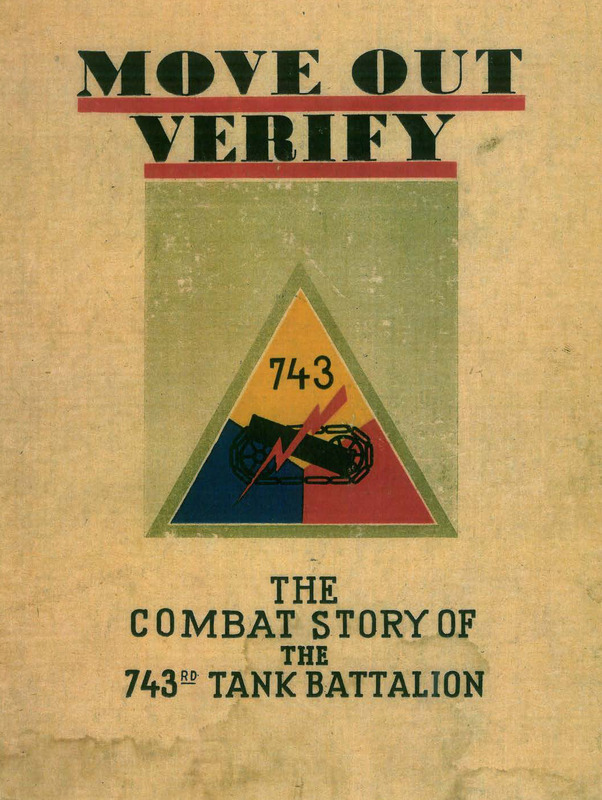
A Battalion truck was driven hundreds of miles through Germany to locate and haul a linotype machine so that type could be set for this book. This is just one of the sometimes fantastic difficulties overcome during the manufacture of these pages in the bomb-devastated city of Frankfurt-on-Main in July 1945. That the book did get printed at all is astonishing to its author. 1st Lt. John D. Hess, aided by German-speaking Tech Sergeant Frank Gartner, looked after the considerable details of publication. The 21 chapter illustrations are by Pfc. Norman E. Hamilton. The writing is by Pfc. Wayne Robinson, who here wishes to acknowledge the great help given by so many, from tank commanders to cooks to personnel clerks, in getting the facts for this combat story.
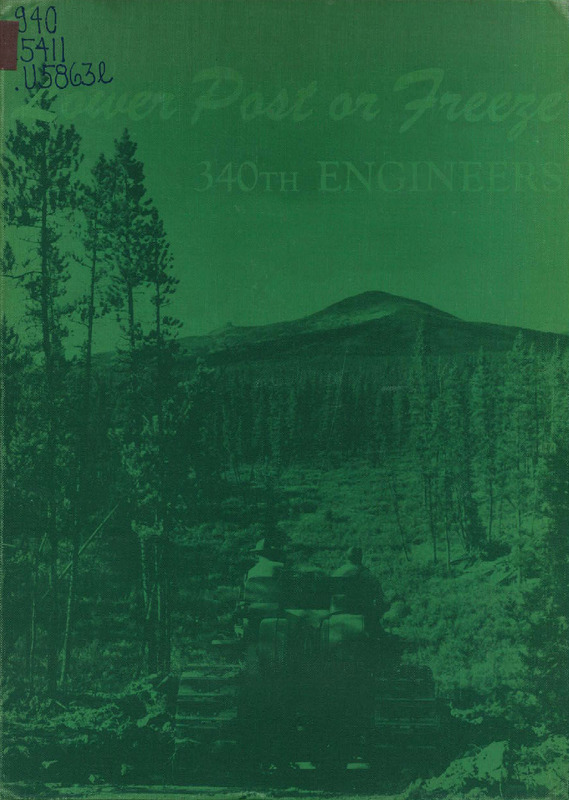
The 340th Engineer General Service Regiment was activated at Vancouver Barracks, Vancouver, Wash., March 5, 1942. The nucleus was a cadre of seven officers and seventy-two enlisted men from the 18th Engineer Combat Regiment, who arrived on March 9. A cadre of 62 enlisted men from Fort Francis E. Warren also arrived on March 9. The remainder of the officers and men came from Fort Leonard Wood, Missouri, during the latter part of March and the first part of April. The commanding officer, Lieutenant-Colonel F. Russel Lyons, arrived on March 27, 1942. Prior to that time the regiment was commanded by Captain John B. W. Corey, and later by Major Reinder F. Schilsky. The short period at Vancouver Barracks was spent in obtaining supplies and preparing for an overseas movement. On the night of April 18, 1942, 35 officers and 883 enlisted men entrained for Seattle, Wash., and thence aboard the USS St. Mihiel to Skagway, Alaska, that famous boom town of '98, arriving there April 22. On April 23, the remainder of the regiment-10 officers and 343 enlisted men-entrained for Prince Rupert, British Columbia, Canada, and thence aboard the SS Prince George to Skagway, arriving on April 25.
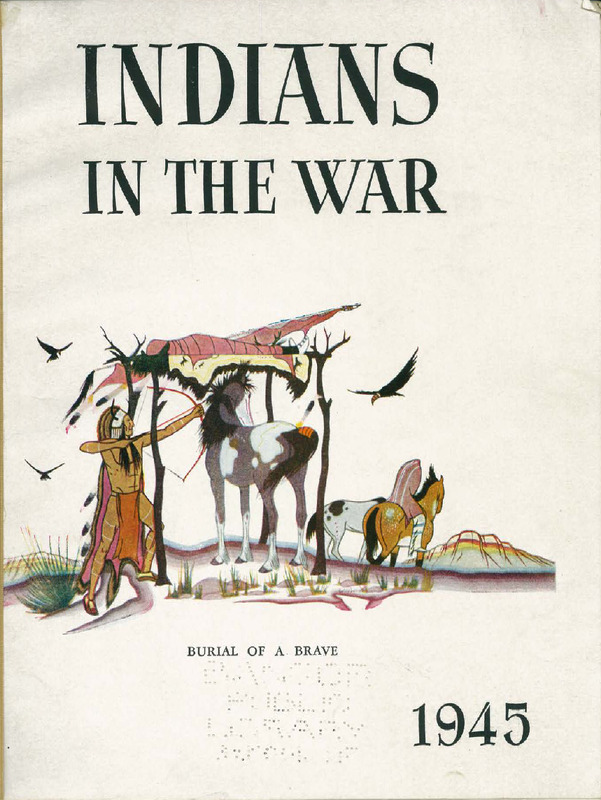
The material in this pamphlet was collected for the 1945 Memorial Number of Indians at Work, before the magazine was discontinued because of the paper shortage. Many devoted workers spent much time and effort to get these stories, and the photographs which accompany the lists were loaned by the families of the boys whose names will be found here. We wish to express our gratitude to all of those who made this record possible. The casualty lists and the lists of awards and decorations continue those begun in Indians at Work for May-June 1943 and carried on in the November-December 1943, May-June 1944, and September-October 1944 issues. They are not complete, and it is hoped that when the peace has come, the whole story of the Indian contribution to the victory may be gathered up into one volume. Awards of the Purple Heart have not been indicated here because every soldier wounded in action against the enemy is entitled to the decoration, and the award should be taken for granted.
With the activation of the XVI Corps on 7 December 1943, the War Department added another fighting Corps to its rapidly expanding Army of the United States, a Corps that was destined within little more than a year to make an historic assault across Europe's Rhine River and to play an important part in the United States Ninth and First Armies' encirclement of the vital Ruhr industrial area and the total defeat of Nazi Germany. Under the command of Maj. Gen. John B. Anderson, Corps commander since shortly after its organization, the XVI Corps proved in training and in combat operations its right to a place among the leading Corps of the United States armies. It conducted an efficient training program in preparation for combat prior to its departure from the United States. Arriving in France, it assumed the responsibility of processing troops as they arrived on the European Continent and protected the Normandy beaches from possible counter-attacks by hostile forces on the nearby Channel Islands. The XVI Corps protected the Ninth United States Army's northern flank in the Roer River assault, driving the German foe from the Roer to the Rhine River so relentlessly that enemy units in the north were unable to aid the hard-pressed German forces being hammered on other sectors of the Ninth Army front. It smashed across the Rhine in a great inland amphibious operation and drove inexorably onward to assist in trapping crack German Armies in the Ruhr valley. The Corps swept the Germans from the big industrial cities north of the Ruhr River, including Essen, Dortmund, Duisburg, and Gelsenkirchen, swinging south as the Ninth and First Armies combined to crush all enemy resistance in the Ruhr. Then, turning from tactical operations to other duties, it directed the military occupation and government of the greater section of the German provinces of Westphalia, Lippe, and Schaumburg Lippe.
Foreword: V-E Day found combat elements of the 71st Infantry Division poised along the Enns River in the vicinity of Steyr, Austria. The Red Circlers were ready, if necessary, to start out again on the long and arduous drive which had originated 800 miles back in France 59 days earlier. Although the officers and men were happy the bloody European conflict had ended, there were no riotous V-E celebrations. War still was raging in the Pacific and the men of the 71st figured they had a good fighting outfit which would be needed in the bitter final struggle. The reaction to V-J Day was a little more joyous, but still restrained. Final victory found the 71st with an important security mission in Bavaria, and immediately concentrated many minds on the big question: When will I go home? It was in this confused post-war period of rapid redeployment and turnovers in personnel that this volume was prepared and published, in Augsburg, Germany, where the Division CP was located. Prepared by members of the Division's public relations staff, with assistance from lower units and other staff sections, this book covers the history of the 71st from activation to final occupation days in Europe. The aim was to make it an interesting book, not only to Red Circlers and their families, but to almost anyone who might happen to pick it up and read it. We hope you like this account of one American infantry division's role in World War II.
Dedication: The casualties sustained by the men of the 487th Bombardment Group are not, perhaps, greatly significant in a world at war ... It is the gallant and indomitable spirit of these several dead, missing, and wounded that is significant in its illboding for all oppressors, in its promise for a better world without war ... We dedicate this day to those who contributed without reservation to our common effort ... who cannot be among us to share the commendation they so richly merit.
Foreword This is the first page in the unofficial history of the 410th Bombardment Group (L). Written in France at a time when Hitler's throne is crumbling and the axis dream of world domination is about to burst like a bubble in the breeze, it is intended to recall a few incidents of the past without any attempt to foresee the future. Lacking a crystal ball or the courage of a weatherman, we frown upon all attempts to predict how, when or where the 410th Bomb Group will cease to exist. To the contrary, we confine these pages to history, and history, as you know, is a recitation of facts. You will therefore find among the pages to follow both humor and tragedy--the fun of a party, the loss of a friend. You will find here many things that can never be forgotten and consequently need never be written, and yet if among the pages you find one little incident worthwhile remembering that might otherwise have been forgotten, this book does indeed serve its purpose. Author unknown
Dedication The casualties sustained by the men of the 398th Bombardment Group are not, perhaps, greatly significant in a world at war ... It is the gallant and indomitable spirit of these several dead, missing, and wounded that is significant in its ill-boding for all oppressors, in its promise for a better world without war ... We dedicate this day to those who contributed without reservation to our common effort ... who cannot be among us to share the commendation they so richly merit.
Members of the Three Forty-First: Joining with you in the pleasure and satisfaction of looking over the record of the 341st Engineer Regiment. I feel anew that warmth of joy and pride which came over me every time I visited your jobs. It made no difference whether the dust was at Briquebec or Coutances, the mud at Roanne Coo or Ettelbruck, the snow at Bastogne or St. Vith, or you were getting in the steel at Koblenz or at Bamberg, you were there and I saw you, day and night, overcoming impossible difficulties. You built 110 bridges, more than two miles of them, and the 341st target painted on them was a symbol of a job done well and in time. The Armies depended on you to do more than your part, and they knew that you would not, and did not, fail them. Our losses were few, and that also is a credit to the superb leadership of the officers and non-commissioned officers, and to the perfect teamwork of every part of the organization. Let us join as we have joined before in thanks to Almighty God for His care and for His continued guidance. Sincerely yours, Colonel Edward H. Coe
Foreword: This history of the 313th Infantry is the result, actually, of a definite policy established early in the career of the Regiment. Col Sterling A. Wood took command in the spring of 1943, and one of the first questions he asked (and he has asked many since) was what was being done about a history of the Regiment. Answers were to the effect that the prospect had not advanced beyond the talking stage. The net result of the discussion was the termination of that stage and the initiation of the next one, i.e., getting something done about it. Maj (then Capt) Raymond P. Godwin, the Regimental S-2, was given the task of organizing the work. He appointed Pfc Robert G. Deihl as recorder, and Pfc Stig Stabe as photographer. Thereafter a very fine camera was purchased in order that a photographic record of events might be kept, and Pfc Deihl began immediately to write up notes on the history of the Regiment as it had unfolded itself up until that date. Deihl continued this work until the Regiment went overseas, when it was necessary to leave his accumulated manuscript behind, for security reasons. And, due to the pressure of business (!) in Normandy and elsewhere, there was little time or opportunity to establish the proper cultural surroundings appropriate to literary composition. The mere fact that Deihl was able to transcribe the entries on the Regimental log into a cohesive narrative at all, is a tribute to his industry and ingenuity. With the end of the war came increased opportunity for work on the history. The breaking up of the Division interfered, of course, but plans were made whereby this obstacle could largely be transcended. Capt Thomas L. Lyons, the last S-2, volunteered to give his free time, after his return to the States, to the furtherance of the work. He and Deihl planned to go into conference with the Infantry Journal Press in Washington, D. C., whose policy on unit histories made the publication of this book possible. It is the spirit of loyalty and self-sacrifice of these two that deserves the gratitude of us all. The book has been written by various people, which largely accounts for its non-uniformity of style. It is not intended to be a literary masterpiece, however, and I am quite sure that none of its authors have the "best seller" lists in mind. The purpose of this history is merely to entertain the ex-members of the Regiment, and to aid in their reminiscences, both spoken and unspoken. --Colonel Edwin M. Van Bibber
This is our story--not all of it--but that part which printing can tell. No words, no photographs, no souvenirs, no recollections can fully recall nor retell the story of our life together as an organization. Here we have recorded some of the events in which we participated, the many places which, for short periods of time, we called home; our jobs and our accomplishments as constructors in an age of destruction. But no page can record our emotions nor our thoughts as we wallowed through the never ending tasks which were our assignments in this conflict. No means of communication can transmit that spirit of hope which aided us to face that seemingly endless series of jobs which always confronted us. No medium can properly portray the worth of the friendships which we knew here, nor express the pleasure of those brief moments when we had a chance to enjoy ourselves. Here then is the story, our story of the thousand days of our lives which we gave to our country. --John M. Keane, Lt. Col. C.E. Commanding, 840th Engineer Aviation Battalion
On March 22, 1943, at Camp Claiborne, Louisiana, the paper work of organizing a new Engineer general service regiment was being completed in accordance with AG 320.2 (3-5-43) B-1-SPOPU dated March 8, 1943, subject: "Activation of 398th Engineer General Service Regiment," and General Order No. 34, Headquarters, 8th Service Command, Dallas, Texas, dated March 15, 1943.
On November 5, 1943, the 89th Chemical Battalion, Motorized, was activated at Camp Roberts, California per General Orders, Headquarters, 4th Army, by Command of Lt. General William A. Simpson. Major James R. Hudson, CWS, a reserve officer with experience in World War I in the Field Artillery, assumed command.
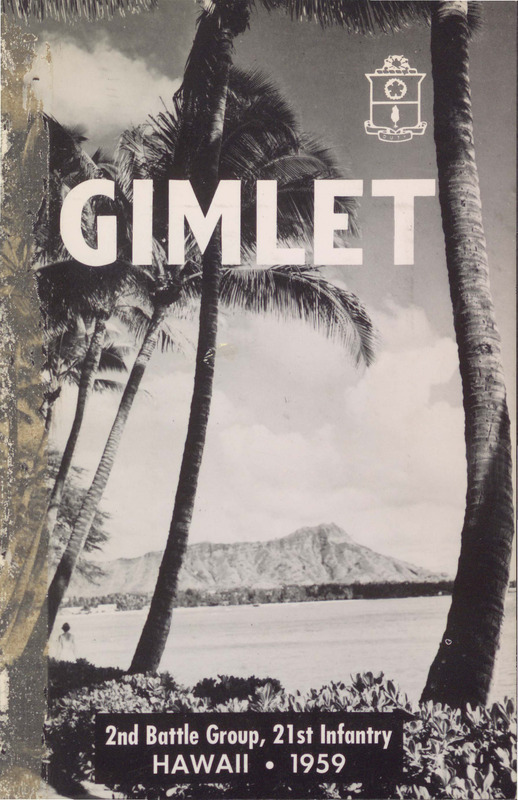
The 21st Infantry Regiment has a long and noble history that goes back nearly 100 years. The Gimlets were organized in 1861 and have been in continuous existence since that time, participating in every major conflict to include World War II and Korea. Throughout the history of this fighting organization the Gimlets have established a reputation as one of the finest units in the United States Army. In February 1957 the Gimlets returned to Hawaii after a 15-year absence. The cry "Bore, Brother, Rare" is once again heard on the playing fields of Schofield Barracks. This motto, conceived back in 1921, symbolizes the will to gain victory in spite of all obstacles. This very same spirit, well demonstrated by the 21st Infantry on the battlefields of World War II and Korea, is the credo of the unit in accomplishing its training mission as part of the Strategic Reserve of the Pacific. The 2nd Battle Group of the 21st Infantry is a battle-ready unit standing guard in the Pacific area, ready to answer its country's call. You Gimlets of today arc upholding well the traditions and standards of your predecessors set at Gettysburg, Santiago, Mindanao, New Guinea, and Osan. Wherever you go, no matter what unit colors you may serve under, you can be proud to have been a Gimlet, remembering that once a Gimlet always a Gimlet. --Colonel Roland M. Gleszer
Foreword: Since its activation on July 1, 1943, the 440th Troop Carrier Group has developed from a small organization into a powerful and well-trained force with a record that speaks for itself. During our eighteen months in the European Theater of Operations we have participated in the paradrops and glider tows that marked the invasions of Normandy and Southern France, the airborne invasion of Holland and the drop across the Rhine. We dropped supplies to the surrounded defenders of Bastogne and flew gasoline to the tanks in their dashes across France and Germany. We brought millions of pounds of food, ammunition, medical supplies and fuel to the front lines and evacuated thousands of wounded troops and liberated prisoners of war. Our air crews have successfully accomplished every mission assigned to them in spite of enemy action and adverse weather conditions while the ground crews have supported them superbly. We have had our good times and we have watched old friends fall victims of enemy action. When deemed necessary the Group has separated into air and ground echelons and moved over four continents to various bases in the United Kingdom, Italy and France in order to fulfill its part toward final victory in Europe. It is with sincere pride that I salute the courage and magnificent devotion to duty of the officers and enlisted men of the 440th Troop Carrier Group, whose deeds contributed their full share towards the defeat of Nazi Germany. In this book we have told our story. To the men of the Air Force who have watched us in action; the men of the Airborne units we have carried into battle and the men of the Ground Forces whom we have resupplied by air it will bring memories of work done together during some of the most stirring days in history. To the wives, mothers, sweethearts and friends of the men of the 440th it will bring a picture of the activities of their men who, far from home and loved ones, faithfully and brilliantly performed their duties. --Frank G. Krebs, Colonel, Air Corps, Commanding
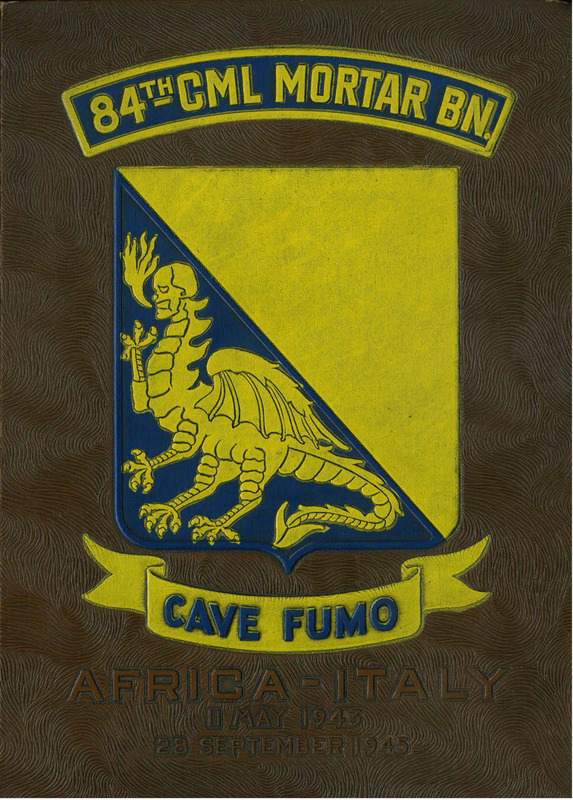
This is not an official history of the 84th Chemical Mortar Battalion-the Official History is kept in the Archives of the War Department at Washington. D. C. It is simply a narrative, written by officers and men of the battalion. telling the story of the unit's activities since its activation. The language used in this book may not be the best; but it is the language of Gls who made the battalion famous and who, through their deeds, brought fame and distinction for the Chemical Warfare Service. This book has not been censored by any authorities; so it is essentially as the various writers submitted it to the editor. No professional writers were used; it is entirely the work of members of the 84th Chemical Mortar Battalion.
This is the autobiography of a group of Americans banded by fate to do a job. Here is the story of a Troop Carrier Group, the largest in the world--Lieutenant Colonel Guile's 433rd. Troop Carrier is, and has been throughout this war, an integral part of the Army Air Force. When invasions have been made in various theaters of operations and paratroopers and airborne infantry had to be flown in, in advance of the other invasion forces, when reinforcements were imperative, when ammunition or engineering equipment were running low, when wounded had to be evacuated, or when General Patton suddenly needed maps of Germany during his rapid advance, Troop Carrier was called upon--and came through. In spite of being the youngest organization in the Army Air Forces, Troop Carrier has established an enviable record, which has been acclaimed and commended by all Allied Armed Forces which Troop Carrier has so faithfully served. A Troop Carrier Group is not gathered in one fell swoop; it is a continuous process. So to you, past and present members of the group, and to you, our families and friends, we present the 433rd Troop Carrier Group as we were and as we are...