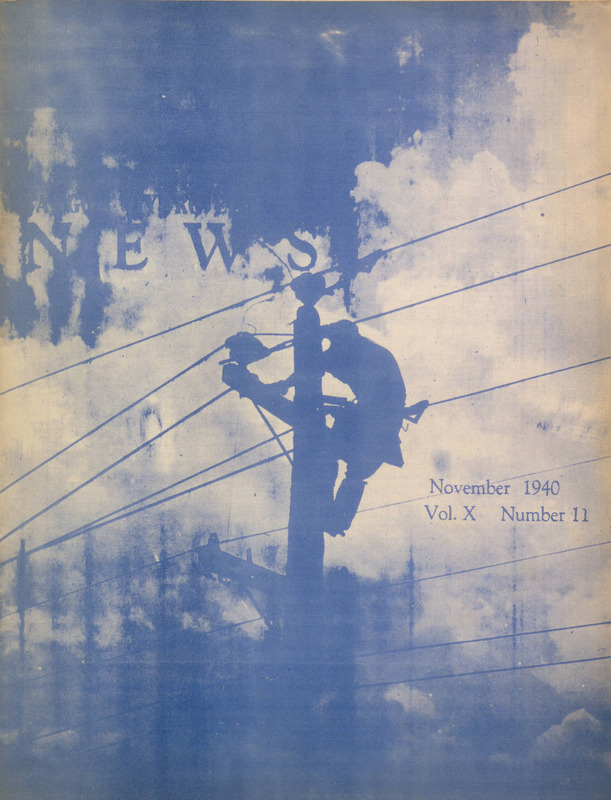
Features photographs and descriptions of crews working on working on and installing power lines, including laying a submarine 3,000 volt cable from Great Cranberry Isle to Manset.
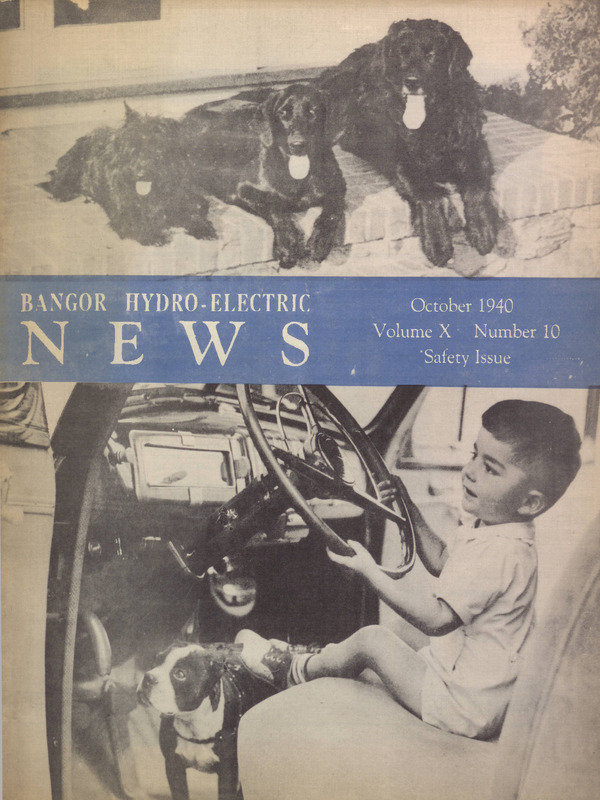
Lists some of the accidents involving Bangor Hydro-Electric Company employees in from January 1939 to September 1940. Including: "Newcomb F. Clark. Meter Reader, Bangor. March 11, 1940. Reading meters, slipped on the steps and fell, injuring his ankle. Accident not officially reported until March 20th, and he returned to work which did not require walking or standing on his fee. He lost 7 days."
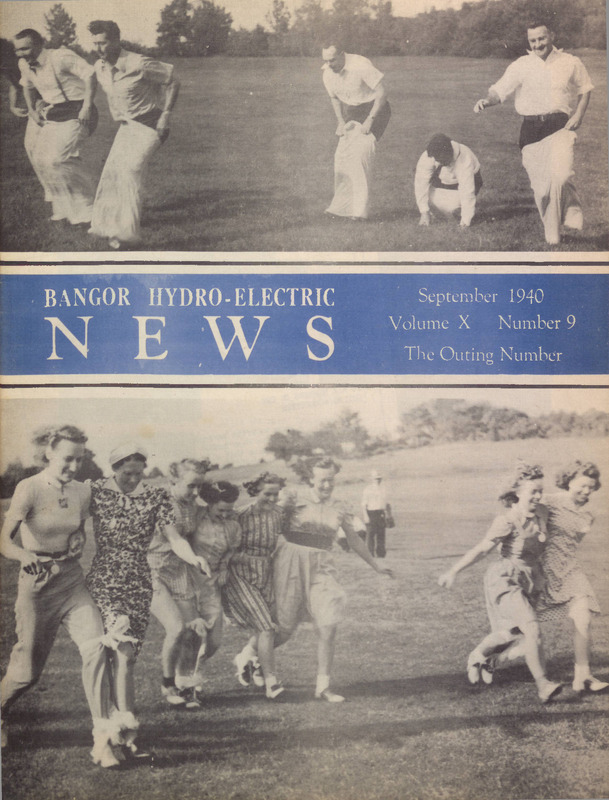
Features many photos of employees and employees' family members at the company's annual outing at Lucerne-in-Maine. Competitions were held in a variety of sports such as softball, archery, swimming, horseshoes, three-legged races, egg races, and peanut races.
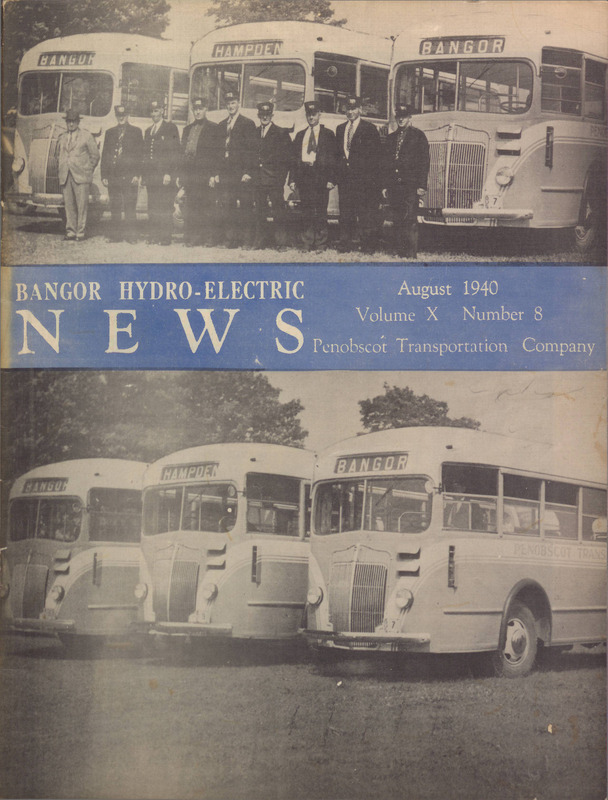
Sample paragraphs: Electric car service to Hampden should not become history without some word on the impromptu, farewell party accorded car No. 10 on the last trip Saturday night, July 27th [1940]. During the day there bad been casual conversations around the Hydro, "Are you going to see the last car off for Hampden?" "Do you realize that it was nearly forty-three years ago that Charlie Johnson ran the first street car to Hampden and that Charlie is going to take the last car down to Hampden tonight?" But, there were few that said they'd surely be at the waiting room on Post Office Sq. 11 P.M. on Saturday night. An early arrival however saw two good-looking gentlemen in earnest conversation in the waiting room. None other than Charlie Smith, now retired, in conversation with Edwin Carvell, also retired. Mr. Carvell joined the Hydro as motorman on April 7th 1894, and Mr. Smith was conductor on the first car to Hampden on Dec. 1st, 1897, with Charlie Johnson ae motorman.
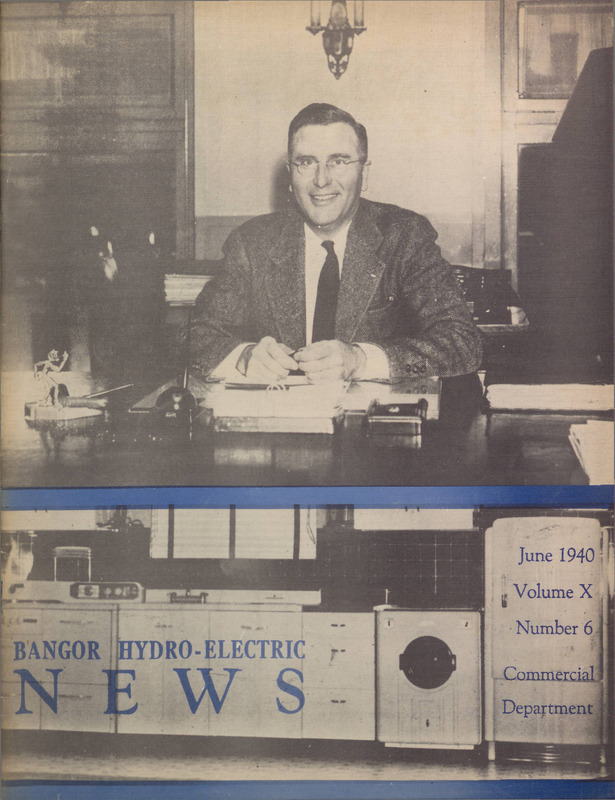
This issue focuses on the office workers for Bangor Hydro-Electric Company, including front office secretaries, and the sales, maintenance, home demonstration, promotion, and marketing departments.
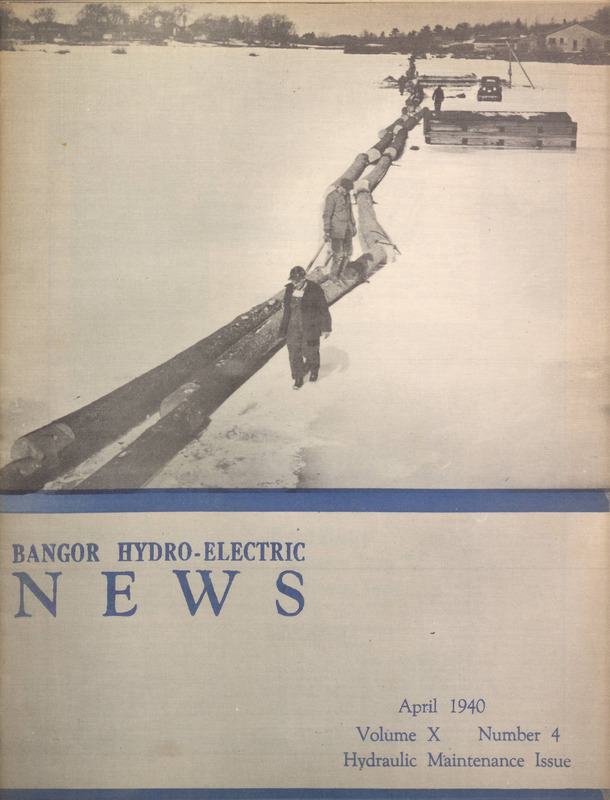
Many photographs show hydraulic equipment used in the late 1930s, early 1940s by the company as well as on-location photos at Treworgy Dam at Ellsworth Falls, Veazie, and in Milford. "It may be of interest to our readers to know that the duties of the Hydraulic Maintenance crew carry them, occasionally, to the more remote sections of our territory where we maintain and operate storage dams. One of Mr. [Fred] Murphy's duties is to make a periodic trip to three remote storage dams on the Piscataquis River namely, Schoodic, Seboois, and Endless Dams. There are no travelled ways to these dams and he makes the trip on foot, carrying with him a pack and camping out in the woods over night. These trips take anywhere from three days to a week, depending on the work required and weather conditions."
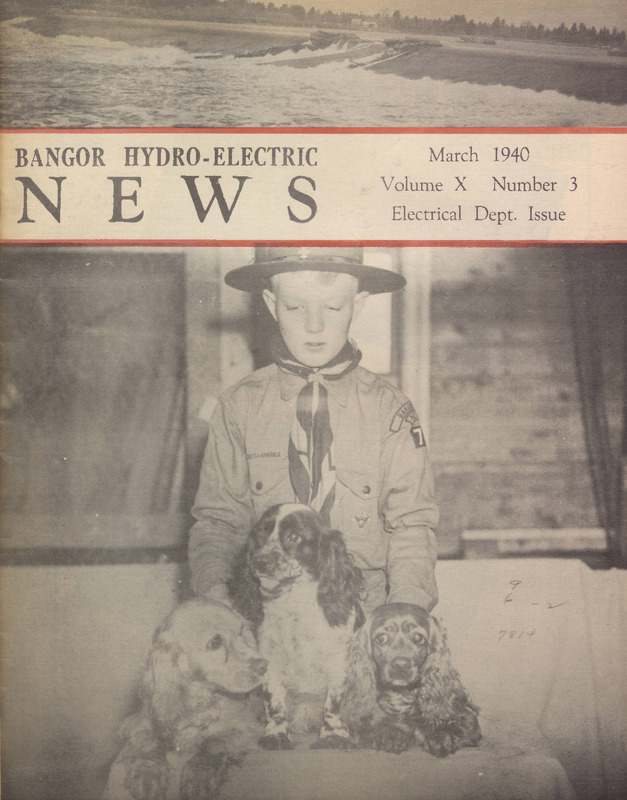
Highlights operations and innovations of the electrical department staff and engineers. Pages 6-7 show a legend indicating all of the generating stations, substations, division offices, and retail stores of Bangor Hydro-Electric Company.
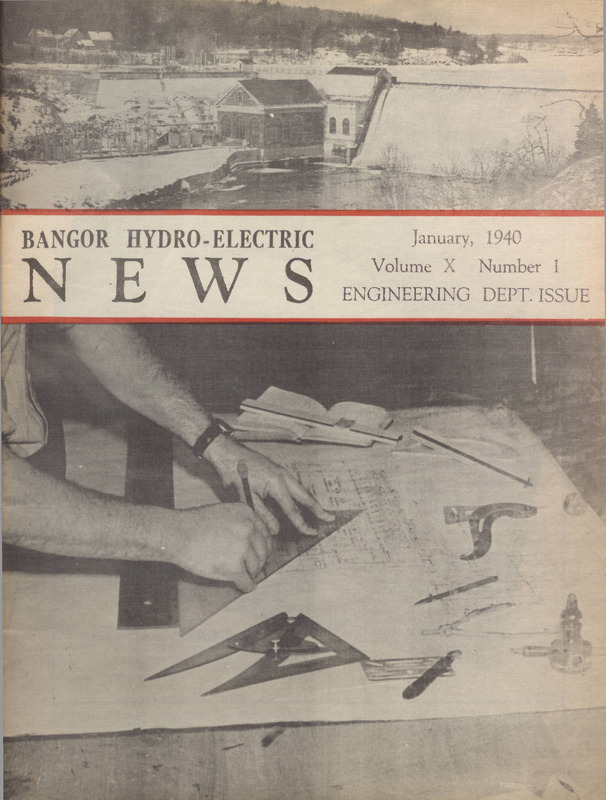
Covers the major engineering activities of the company for 1938-1939, enriched by photographs of the Ellsworth and Veazie stations, as well as many photographs from "the field."
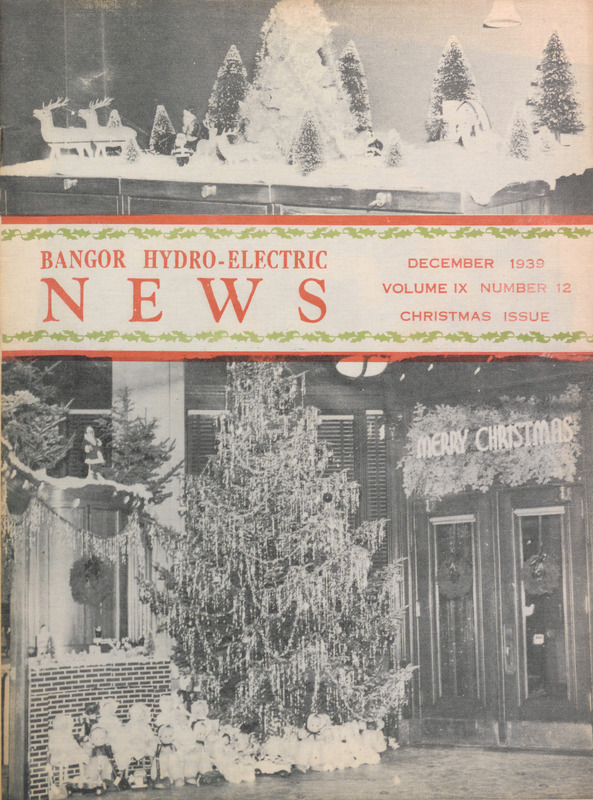
Many photos of the offices at various Bangor Hydro locations adorned in holiday decorations. Also several photos of the children of employees attending Christmas parties at the company offices, including over a dozen at the Bangor Hydro office at the corner of State and Exchange Street in Bangor.
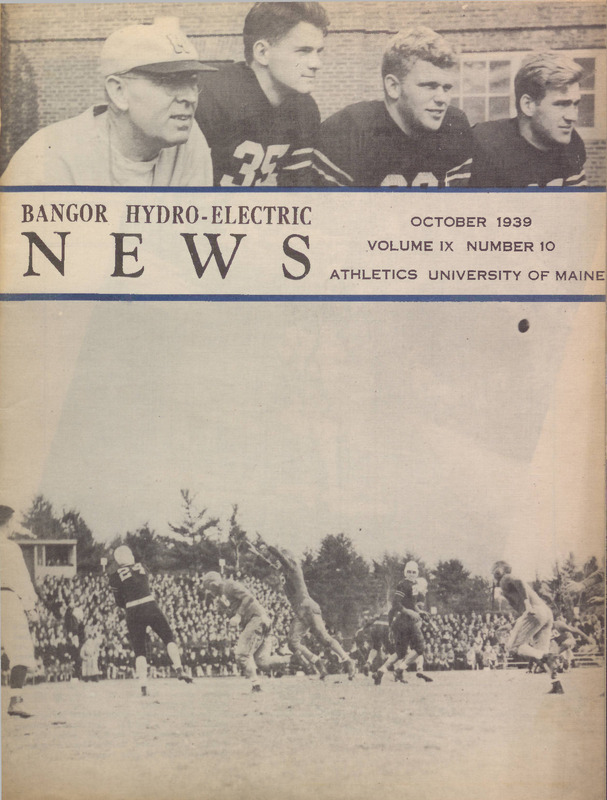
Dozens of photographs of the University of Maine, Orono, campus from 1939. Also, photographs of men's and women's athetics at the university, including a team photo of the 1939 football team, action scenes of the Bates-U-Maine football game, and pictures of women's field hockey and tennis action. In a separate section, a Bangor electrical crew installs underground cables in downtown Bangor.
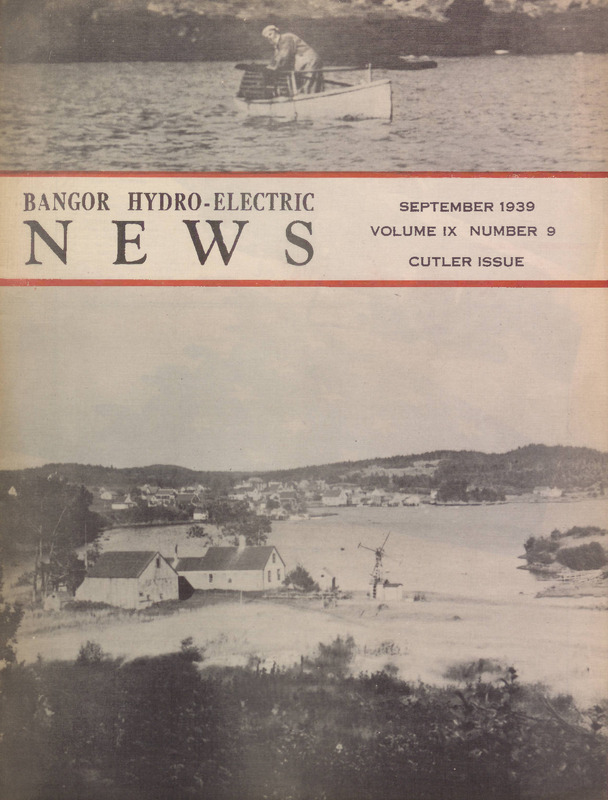
This issue covers in depth the undertaking of bringing electricity of the town of Cutler, Maine. The history of Cutler and profiiles about residents of the town at the time are also detailed.
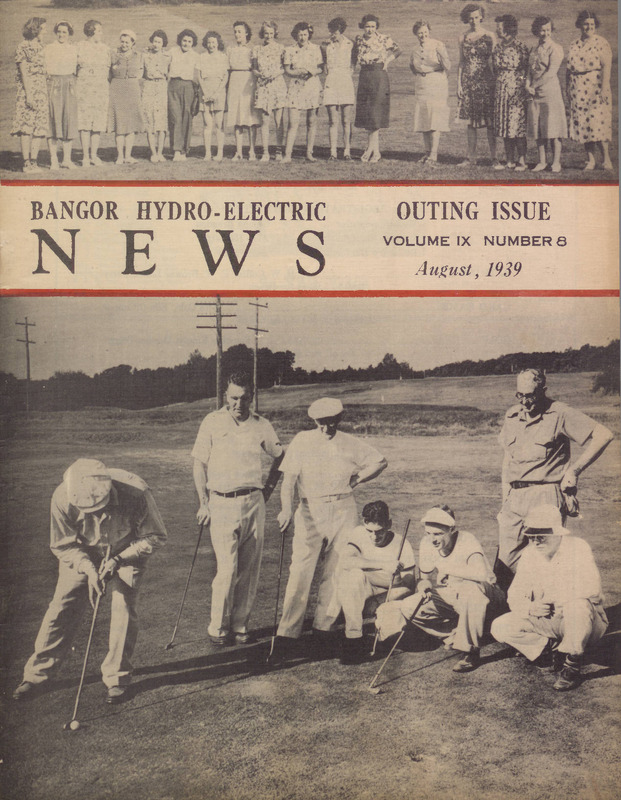
Features many photos of employees and employees' family members at the company's annual outing at Lucerne-in-Maine. Competitions were held in a variety of sports such as softball, archery, swimming, horseshoes, golf, and more.
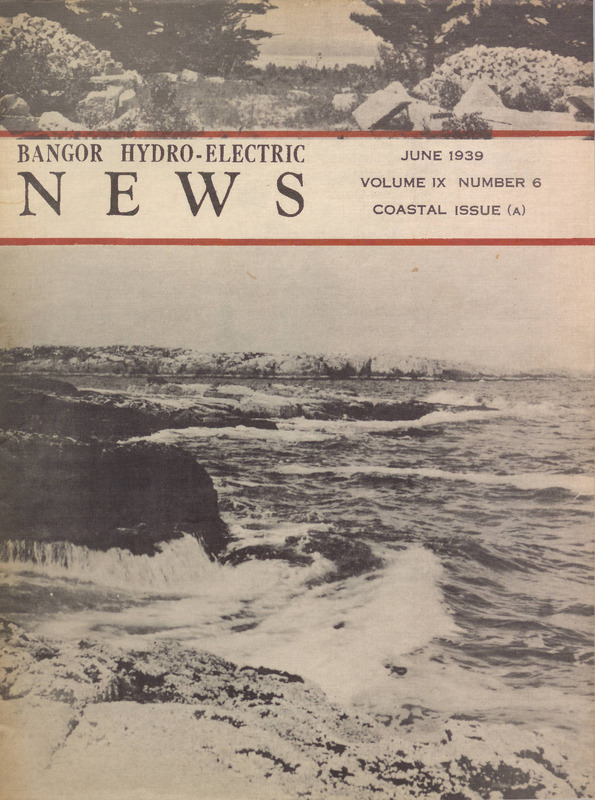
Features photographs of coastal Maine east of Ellsworth, including images from Sullivan, Winter Harbor, Frenchman's Bay, and Franklin. Includes stories about Fred Crane, "Builder of Boats and Models," the Austin castle in Franklin, and the granite quarries in Sullivan and Franklin.
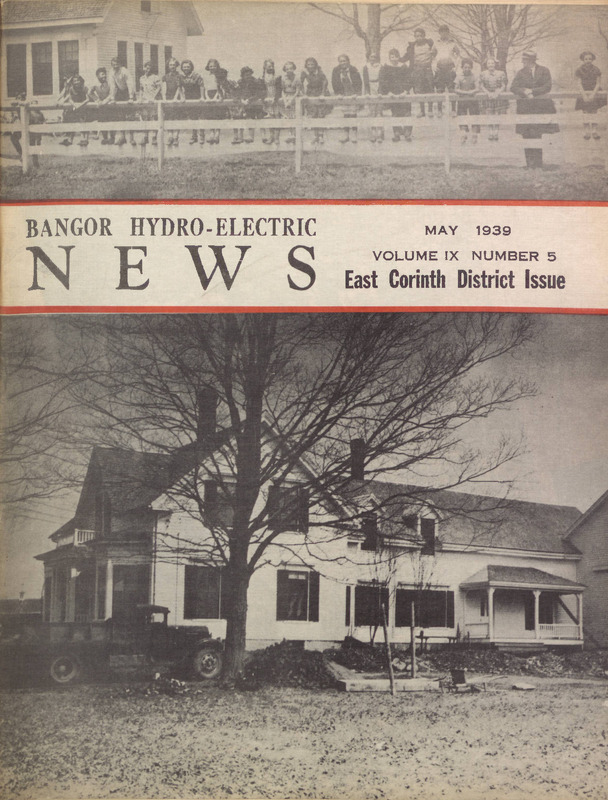
Highlights the opening of a branch office of Bangor Hydro-Electric Company at East Corinth, providing service also to Kenduskeag, Glenburn, Bradford, Charleston, Garland, and Exeter. Includes a story and photos about the Hall Brothers Poultry Farm in Garland, a photo of an H.C. Baxter & Brothers Canning Plant, and street scenes in Charleston.
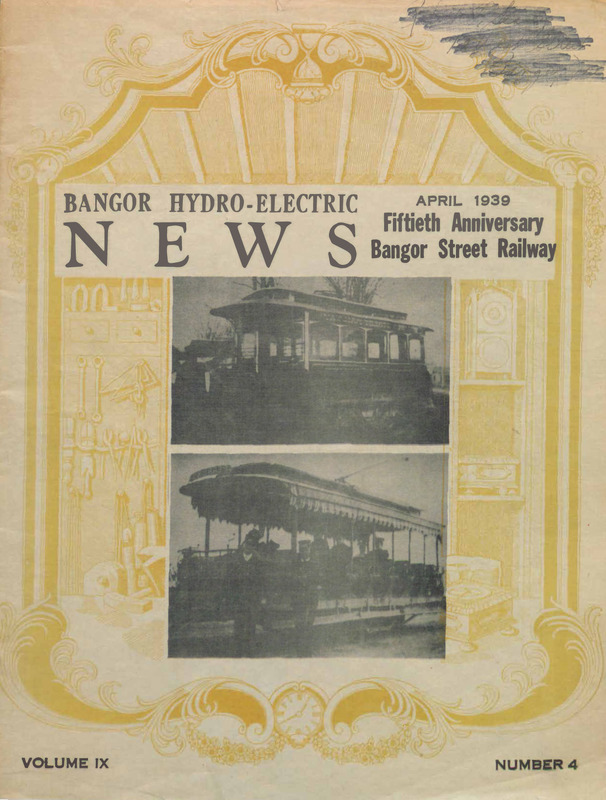
Provides a detailed and photographic history of the origins of the Bangor Street Railway from the original meetings in 1887 of city government to pursue the railway, to the 1889 introduction of the railway (the second such street railway in the U.S.), to expansion in the 1890s.
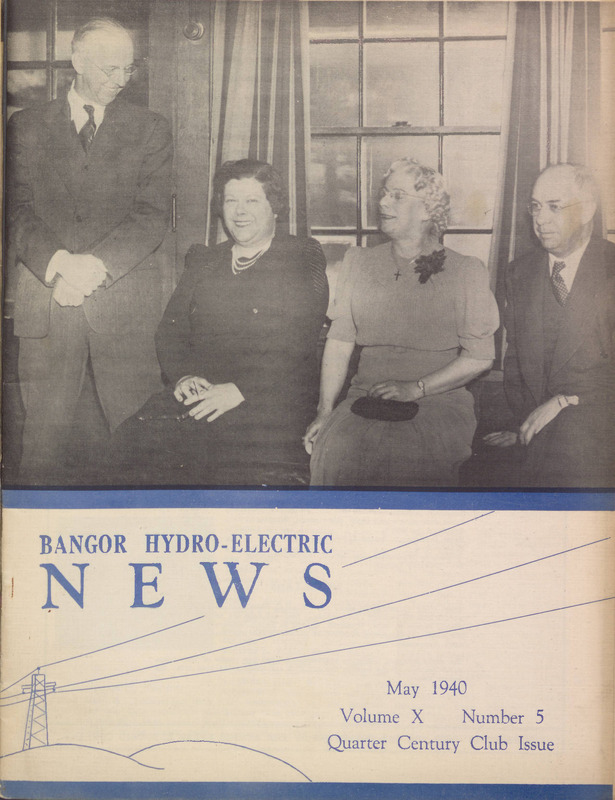
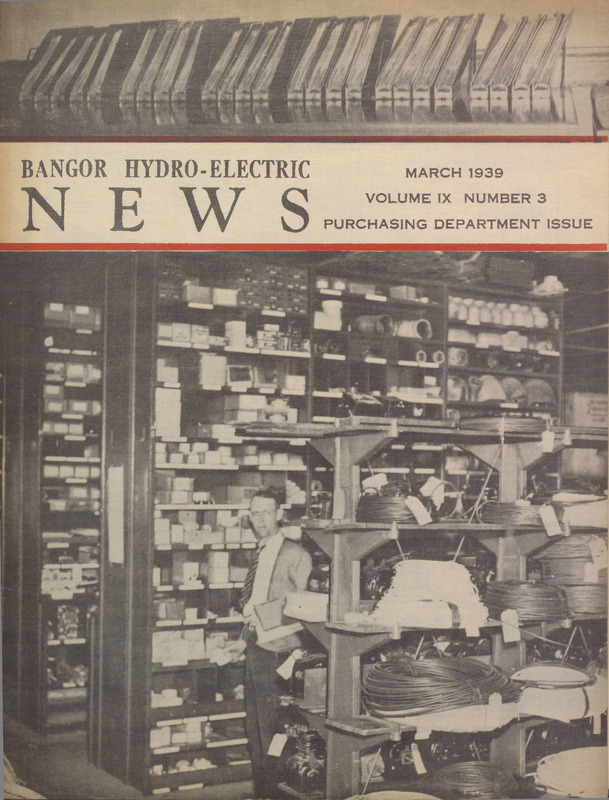
Walks the reader through the process the purchasing department undergoes to order 3,000 pounds of wire. Also includes a feature about the Quarter Century Club for Bangor Hydro employees with over twenty-five years of service to the company.
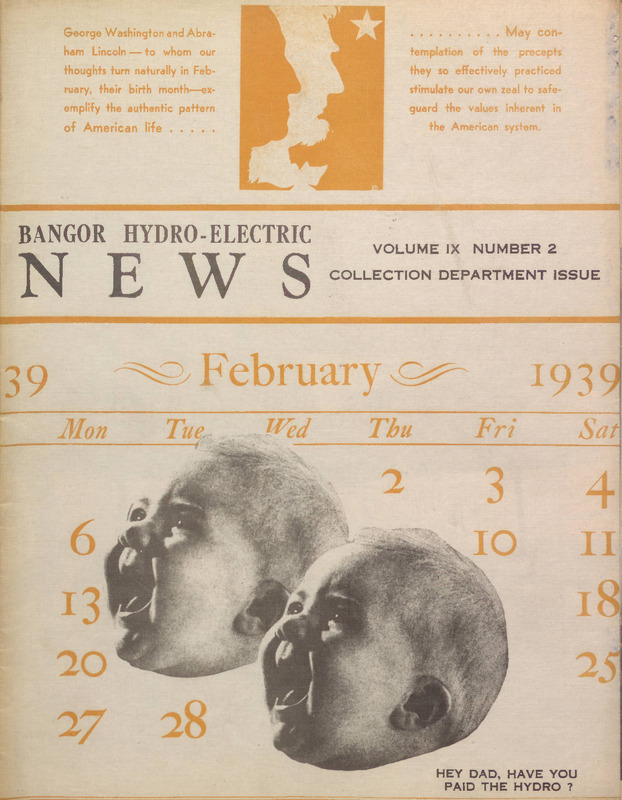
Covers the operations of the collection department, including the process for disconnection of electric service. $2.00 would be charged for reconnection of electricitiy. Issue also includes a safety program in Millinocket, a photo array of Milford employees from the late 19th century, the grand opening of an office in Bar Harbor, and more.
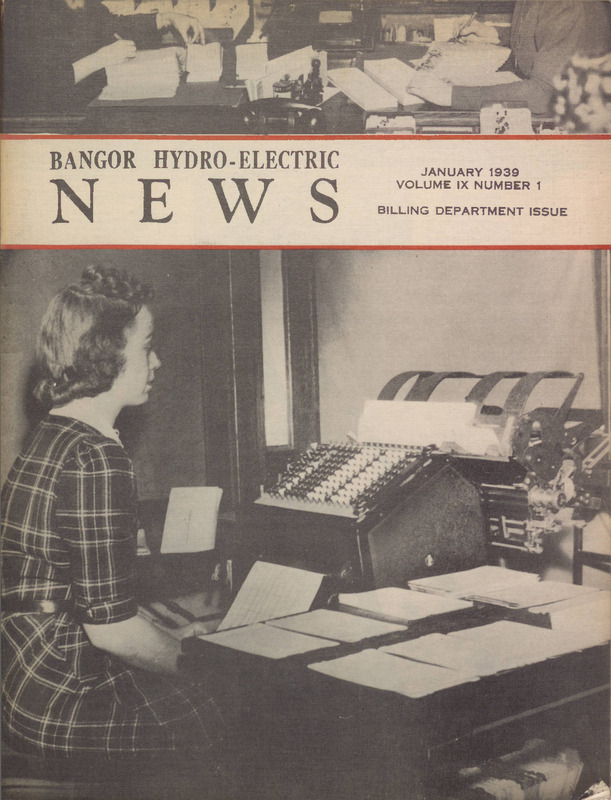
Shows the life of an electric bill from start to finish through the employees and the machines they use--machines such as a Multilith press, a graphotype machine, and addressograph machine, a postal permit and sealing machine, and a Burrough's billing machine.
"The good old Christmas spirit burst upon the Company in full force as the excited voices of 170 children echoed though offices and halls. Christmas carols, the hum of mechanical toys, and gay notes from many harmonicas seemed to blend into one happy Yuletide song as the management of Hydro entertained the children, from 2 to 12 years of age, of all divisions in the Bangor division." Many photographs from the party are included, as is the original invitation to the staff party.
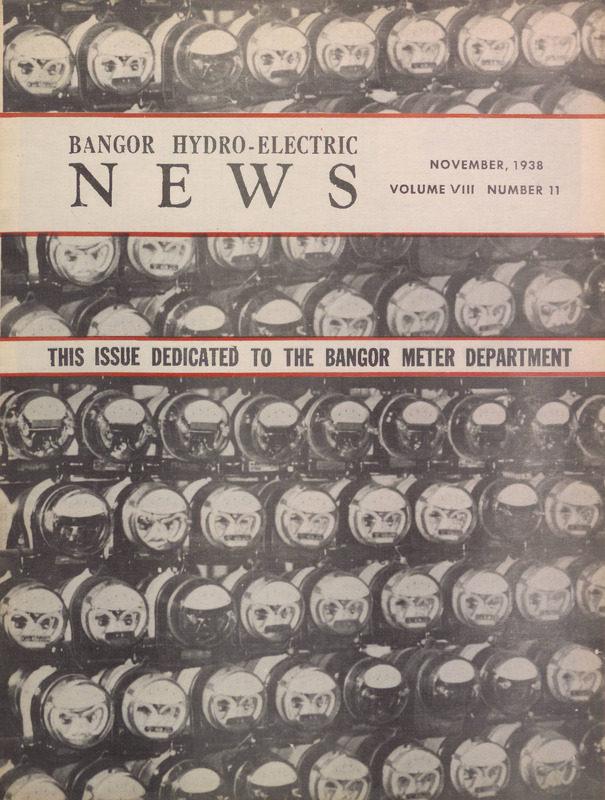
"There is something more than just training and education and environment that makes one man a good engineer and another man a clever merchant; one woman an accomplished seamstress and the next a cook with a reputation. Same are "born" engineers, "born" merchants or "born" cooks. Probably we all start thinking from the same point, the same zero hour or call it what you will. You think along one angle and I think along another, and, remember, there are 360 degrees on the compass. That doesn't mean that we have to think in opposite directions. It may be that we just don't quite see eye to eye. All of which leads to the statement that without doubt 99.9 per cent of our customers think that the meters we install in their homes or places of business are such complicated pieces of mechanism that a man must have six or eight University or Technical Institution diplomas before he can look a meter in the face without going dizzy."
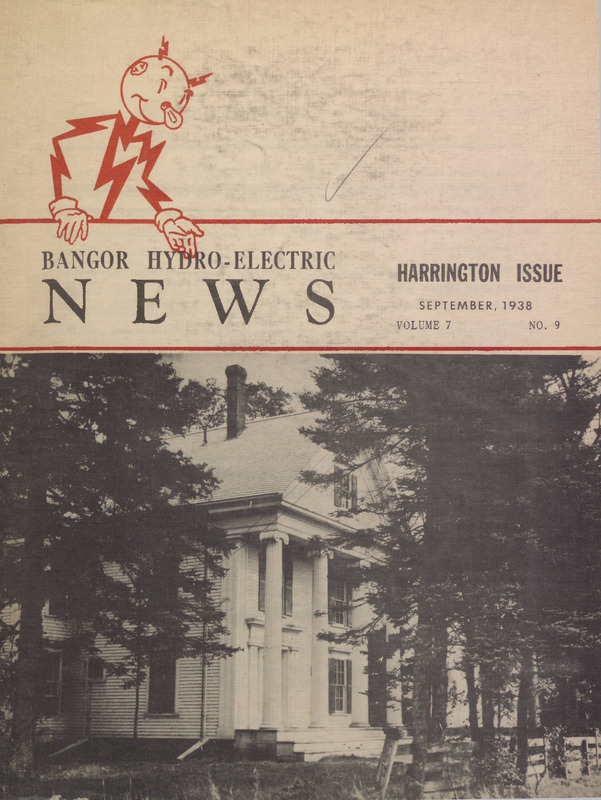
Features a history of Harrington, many photographs of the Harrington sites and buildings of the time, and the announcement of Reddy Kilowatt joining the Bangor Hydro team.